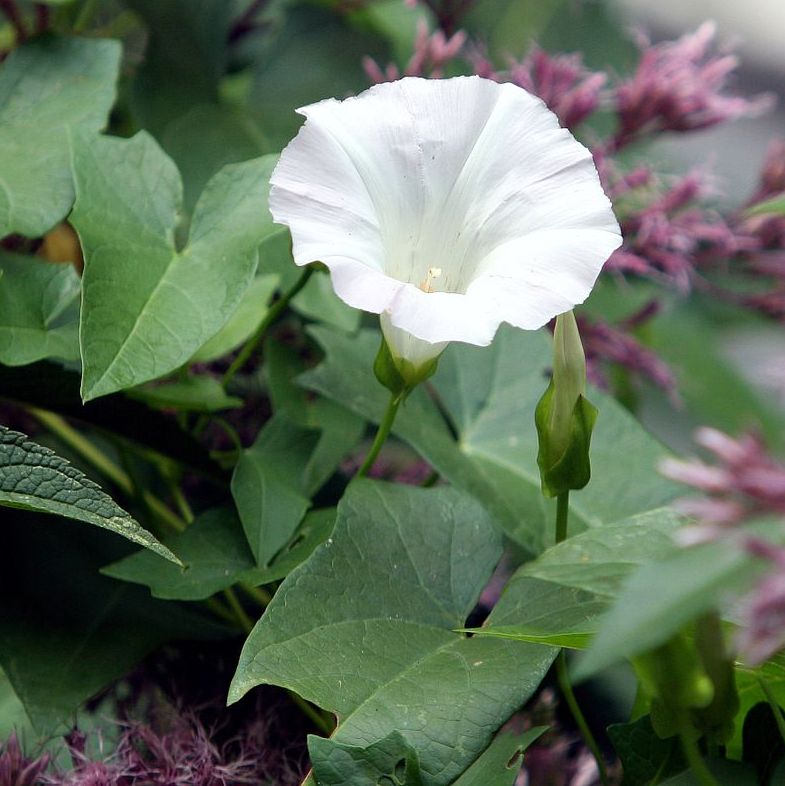
This week I would like to talk about a bit of a climbing menace known as the Common or Hedge Bindweed (Calystegia sepium). Then later about the fascinating Dodders!
The whitish rhizomes and growing shoots of Hedge Bindweed or Calystegia sepium.
Is there any use to this plant you may wonder?
Please read on and find out!
I will also write about the rest of its family; the bindweed family or Convolvulaceae!
Blue background is for general interest; pink background is for medicinal use or negative information; green background for all sorts of uses. Pictures by Matt Summers unless stated. If the plant occurs in Birmingham and the Black Country, this is mentioned as FBBC in the contents page.
The Bindweeds are in the Convolvulaceae or Bindweed family, which is number 115 in Stace in between the Boraginaceae (114) and Solanaceae (116), which is the potato family.
This family has 4 genera growing in the British Isles namely; Convolvulus, Calystegia, Ipomoea (which are ‘introduced’, mostly ornamental climbers from N. America) and finally Cuscuta or Dodder.
The ivy on our wall has been looking fabulous again last year and providing the bees and wasps, as well as the odd butterfly some late nectar.
Then afterwards the black berries lasted until late spring as a nutritious food for our resident birds, mainly wood pigeons and blackbirds seem to enjoy them!
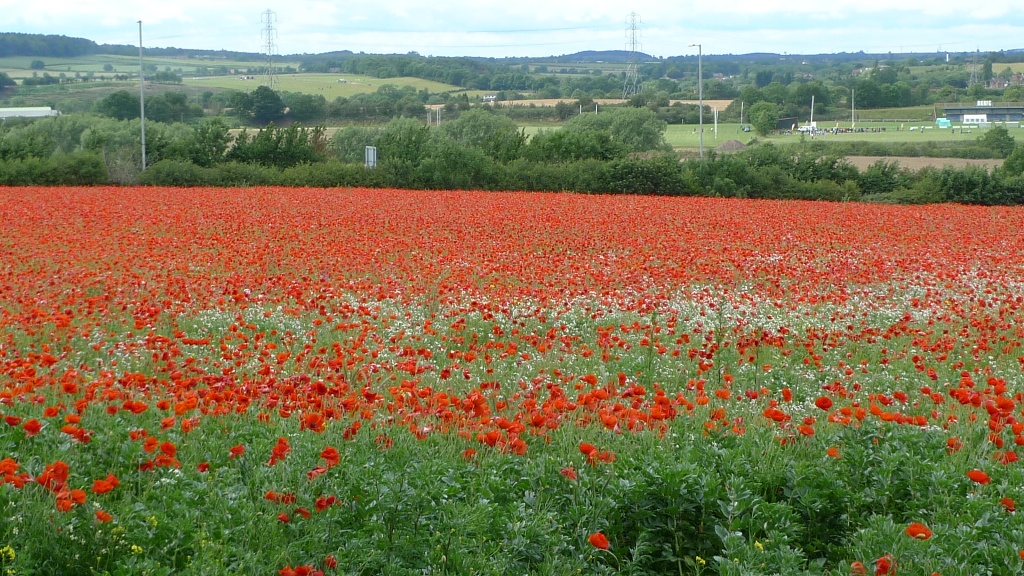
Papaver rhoeas in bean field – Lodge Lane, Kingswinford (picture by Mike Poulton)
This week I’d like to talk about the Common Poppy or Papaver rhoeas, which is a symbol in Britain for the millions of casualties in the First World War and since.
Due to the extent of ground disturbance in warfare during World War I, red poppies flowered in between the trench lines and no man’s lands on the Western front. Poppies are a prominent feature of “In Flanders Fields” by Canadian Lieutenant Colonel John McCrae, one of the most frequently quoted English-language poems composed during the First World War. During the 20th century, the wearing of a poppy at and before Remembrance Day (sometimes known informally as Poppy Day) each year became an established custom in Britain. It is also used at some other dates in some countries, such as at appeals for Anzac Day in Australia and New Zealand.
This weekend we will have Remembrance Sunday here which is always the nearest Sunday to Armistice * Day (on 11-11). This was signed at 5 am on the 11th November, 1918 to be precise but all the fighting ceased at 11 am, so exactly 100 years ago!
*Armistice means: a Ceasefire or suspension of hostilities or also an agreement made by opposing sites to stop fighting for a certain time or a truce.
Follow the links in the Contents page. Thanks to various websites for information on habitat, interesting facts and ‘uses’ for the poppies. Pictures with thanks from Mike Poulton, Matt Summers and Wikipedia Commons. Further pictures can be seen on the links provided. Such as in the gallery of Plant Atlas Online and in Wikipedia Commons. FBBC is added behind the name when the plant occurs in the Flora of Birmingham and the Black Country!