Some more useful members of Pink Family or the Caryophyllaceae Part 2

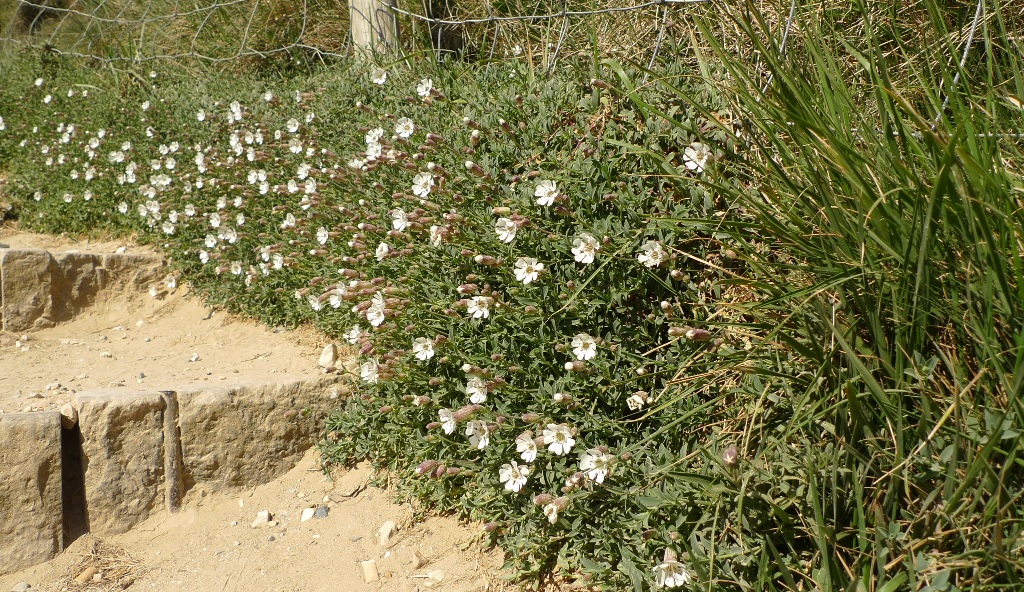
Sea campion or Silene uniflora at Lulworth Cove and Durdle Door, Dorset (picture by Mike Poulton)

This is the second part of useful (with many ornamental) members of the Pink family or officially the Caryophyllaceae. The first part can be found here.

I am very fond of this family as well and have been growing several native and non native species from seed.

In part 2 there are four more members mentioned by Julian Barker in his Medicinal Flora, which have some medicinal use, which are Herniaria glabra or Smooth Rupturewort, Spergularia rubra or Sand Spurrey, Agrostemma githago or Corn-Cockle and Saponaria officinalis or Soapwort.

Click links for more info and pictures from various websites. Scientific/Latin Name usually has link from the Online Atlas of the British Isles and Irish Flora. Pink background means a warning use (= poisonous!) or medicinal use, green for other uses and blue for plant habitat, interesting facts or wildlife use.

If described in the Flora of Birmingham and the Black Country it will be highlighted by FBBC in the Content page.

In Part 1 we covered Subfamily Alsinoideae which has 11 genera. In Part 2 we will cover another 11 genera in 2 subfamilies:

  • 2 Subfamily Paronychioideae with 5 genera (genera 12-17)
  • 3 Subfamily Caryophylloideae with 6 genera (genera 18-24)

Contents:

Subfamily 2 PARONYCHIOIDEAE

12 Corrigiola litoralis or Strapwort

13 Herniaria spp.or Ruptureworts

  • H. glabra or Smooth Rupturewort
  • H. ciliolata or Fringed Rupturewort and 2 ssp. a) Ssp ciliolata & Ssp. subciliata
  • H. hirsuta or Hairy Rupturewort

14 Illecebrum verticillatum or Coral-necklace

15 Polycarpon tetraphyllum or Four-leaved Allseed

16 Spergula spp. or Spurreys

  • S. arvensis or Corn Spurrey with also 3 different varieties. FBBC
  • S. morisonnii or Pearlwort Spurrey

17 Spergularia ssp. or Sea-spurreys

  • S. rupicola or Rock Sea-spurrey
  • S. media or Greater Sea-spurrey
  • S. marina or Lesser Sea-spurrey FBBC
  • S. rubra or Sand Spurrey FBBC
  • S. bocconei or Greek Sea-spurrey

Subfamily 3 CARYOPHYLLOIDEAE

18 Agrostemma githago or Corncockle FBBC

19 Silene spp. or Campions

20 Saponaria officinalis or Soapwort FBBC

21 Vaccaria hispanica or Cowherb FBBC

22 Petrorhagia spp. or Pinks

  • P. nanteuilii or Childing Pink
  • P. prolifera or Proliferous Pink
  • P. dubia or Hayling Island Pink
  • P. saxifraga or Tunicflower

23 Gypsophila paniculata or Baby’s-breath FBBC

G. elegans or Annual Baby’s-breath

24 Dianthus spp or Pinks

Continue reading “Some more useful members of Pink Family or the Caryophyllaceae Part 2”

Caryophyllaceae Part 1: the Alsinoideae or Sandworts, Chickweeds, Mouse-Ears, Pearlworts and Knawels.

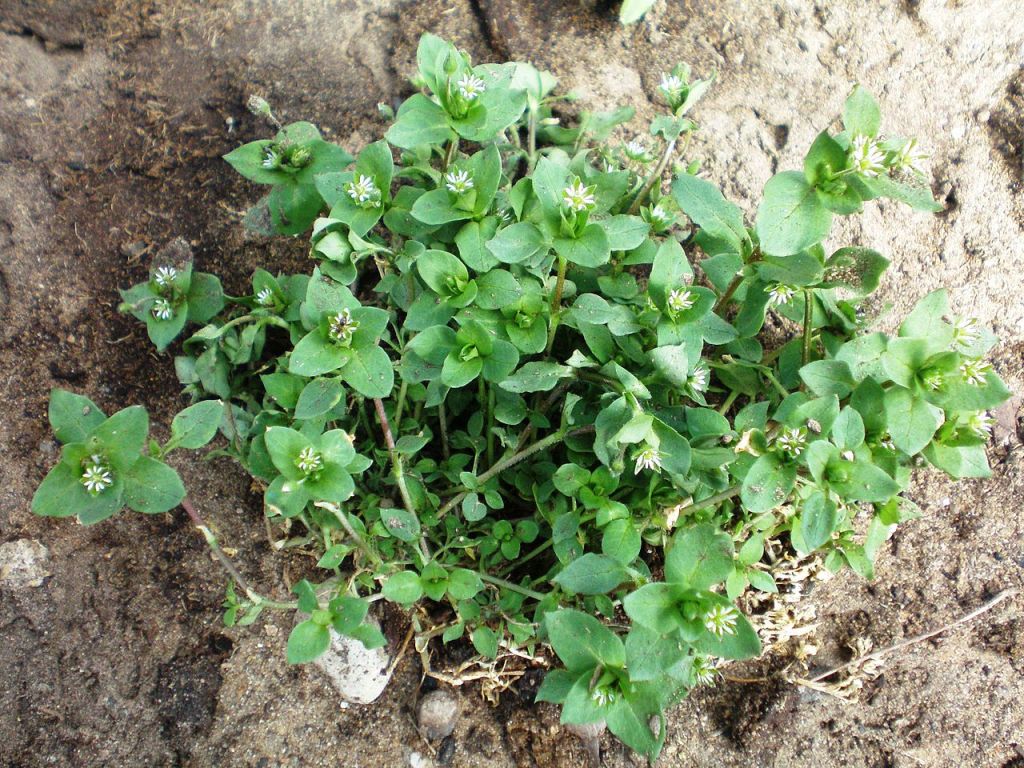
A typical sprawling plant of Chickweed (picture by I, Hugo – Wikipedia)

Chickweed or Stellaria media

is one of the weeds mentioned on the RHS site.

So a good reason for a post on this plant and its relatives!

The Caryophyllaceae or Pink/Campion Family is a large family in the B.I.   It is therefore subdivided into 3 Subfamilies:

Links on the scientific names is info from the Plant Atlas 2020. Links on the common names are often Wikipedia, where you can also find pictures in Wikipedia Commons or occasionally from another website. The coloured backgrounds are blue for the habitat information as found in the Online Plant Atlas 2020 as well as for general interesting facts. Green is for all sorts of uses such as food, ornamental, wildlife, etc. Pink is for medicinal use.

If described in the Flora of Birmingham and the Black Country it will be highlighted by FBBC in the Content page.

Contents of Subfamily Alsinoideae:

1 Arenaria spp. or Sandworts

  • A. serpyllifolia or Thyme-leaved Sandwort FBBC
  • A. leptoclados or Slender Sandwort FBBC
  • A. norvegia with 2 subspecies: ssp norvegia or Arctic Sandwort and ssp anglica or English Sandwort
  • A. ciliata or Fringed Sandwort
  • A. balearica or Mossy Sandwort FBBC
  • A. montana or Large-flowered Sandwort

2 Moehringia trinervia or Three-nerved Sandwort FBBC

3 Honckenya peploides or Sea Sandwort

4 Minuartia spp.

  • M. recurva or Recurved Sandwort

5 Sabulina tenuifolia or Fine-leaved Sandwort

  • S. verna or Spring Sandwort
  • S. rubella or Mountain Sandwort
  • S. stricta or Teesdale Sandwort

6 Cherleria sedoides or Cyphel

7 Stellaria spp or Chickweeds

Stellaria media or Chickweed FBBC

  • S. nemorum or Wood Stitchwort FBBC
  • S. pallida or Lesser Chickweed FBBC
  • S. neglecta or Greater Chickweed FBBC
  • S. holostea or Greater Stitchwort FBBC
  • S. palustris or Marsh Stitchwort
  • S. graminea or Lesser Stitchwort FBBC
  • S. alsine or Bog Stitchwort FBBC
  • S. aquatica or Water Chickweed (syn. Myosoton aquaticum) FBBC

8 Holosteum umbellatum or Jagged Chickweed

9 Cerastium spp or Mouse-Ears

  • C. cerastoides or Starwort Mouse-ear
  • C. arvense or Field Mouse-ear FBBC
  • C. arvense x C. tomentosum or Hybrid Mouse-Ear FBBC
  • C. tomentosum or Snow-in-summer FBBC
  • C. alpinum or Alpine Mouse-ear
  • C. nigrescens or Arctic Mouse-ear
  • C. fontanum or Common Mouse-ear FBBC
  • C. glomeratum or Sticky Mouse-ear FBBC
  • C. brachypetalum or Grey mouse-ear
  • C. diffusum or Sea Mouse-ear FBBC
  • C. pumilum or Dwarf Mouse-ear
  • C. semidecandrum or Little Mouse-ear FBBC

10 Moenchia erecta or Upright Chickweed FBBC

11 Sagina spp or Pearlworts

  • S. nodosa or Knotted Pearlwort FBBC
  • S. nivalis or Snow Pearlwort
  • S. subulata or Heath Pearlwort
  • S. saginoides or Alpine Pearlwort
  • S. x normaniana or Scottish Pearlwort
  • S. procumbens or Procumbent Pearlwort FBBC
  • S. apetala or Annual Pearlwort FBBC
  • S. filicaulis or Slender Pearlwort FBBC
  • S. maritima or Sea Pearlwort

12 Scleranthus spp or Knawels

  • S. perennis or Perennial Knawel with 2 subspecies: ssp. perennis and ssp. prostratus
  • S. annuus or Annual Knawewel with 2 subspecies: ssp. annuus and ssp. polycarpos FBBC
Continue reading “Caryophyllaceae Part 1: the Alsinoideae or Sandworts, Chickweeds, Mouse-Ears, Pearlworts and Knawels.”

Lesser Celandine, Buttercups and some other Ranunculaceae

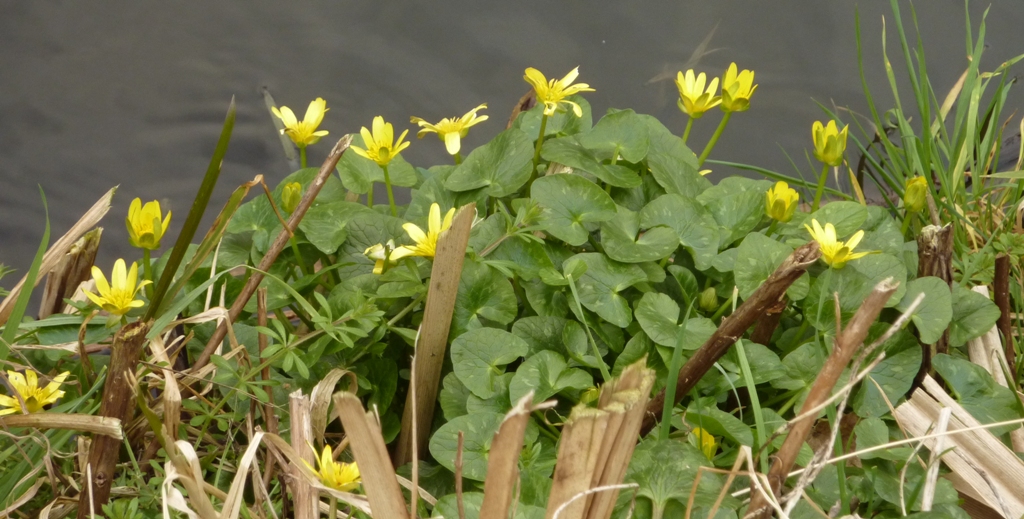
The Lesser Celandine is happy on damp soil near the river edge.

The Lesser Celandine or Ficaria verna (formerly known as Ranunculus ficaria)  and the Creeping Buttercup or  Ranunculus repens  are both mentioned as being a weed on the RHS  website.

This decided me to write about them as well as other members of this reasonably large family of the Buttercups or Ranunculaceae. It is a rather primitive family, with its simple flowers or only number 36 in Stace.

Pictures by Matt Summers unless stated otherwise.

Continue reading “Lesser Celandine, Buttercups and some other Ranunculaceae”

Comfrey, Knitbone or Symphytum spp. are wonderful weeds!

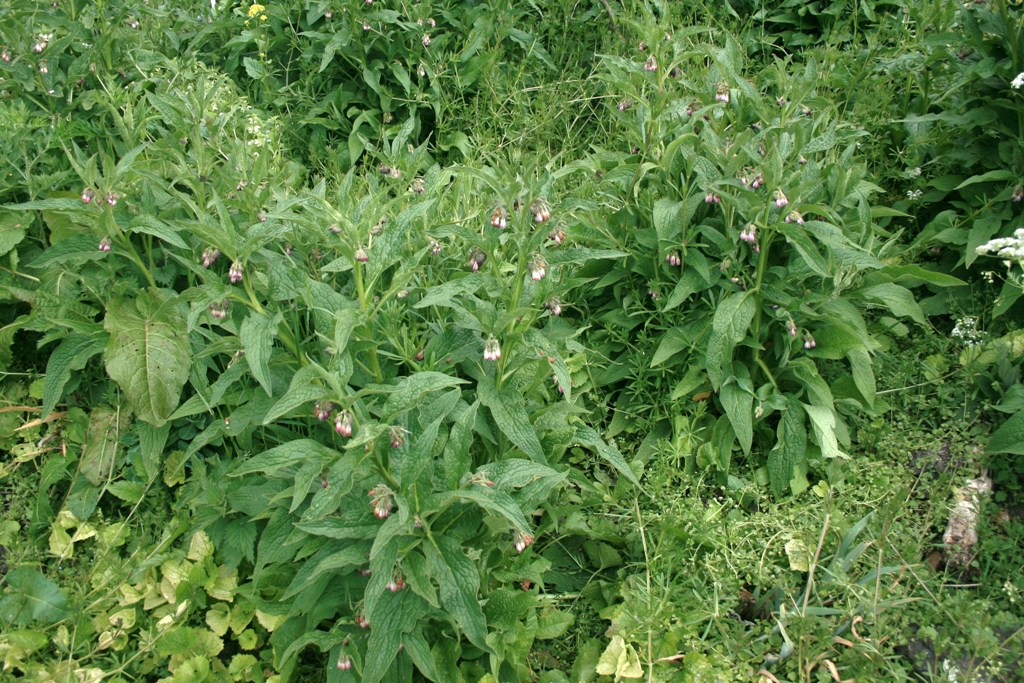
The more common Russian Comfrey thriving on the Bee Garden at Borneo Street allotment!

There is so much information concerning the comfrey which is also, like the plants in the blog of last week, in the Boraginaceae Family. This week therefore, my post will concern itself purely with comfrey.

Pictures by Matt Summers, Mike Poulton and contributors from Wikipedia Commons.

Contents:

Symphytum spp. or Comfreys in the B.I.

The Boraginaceae or Borage Family and their uses: Green Alkanet, Forget-me-not, Houndstongue, Viper’s-bugloss, Oysterplant, the Gromwells and Lungworts!

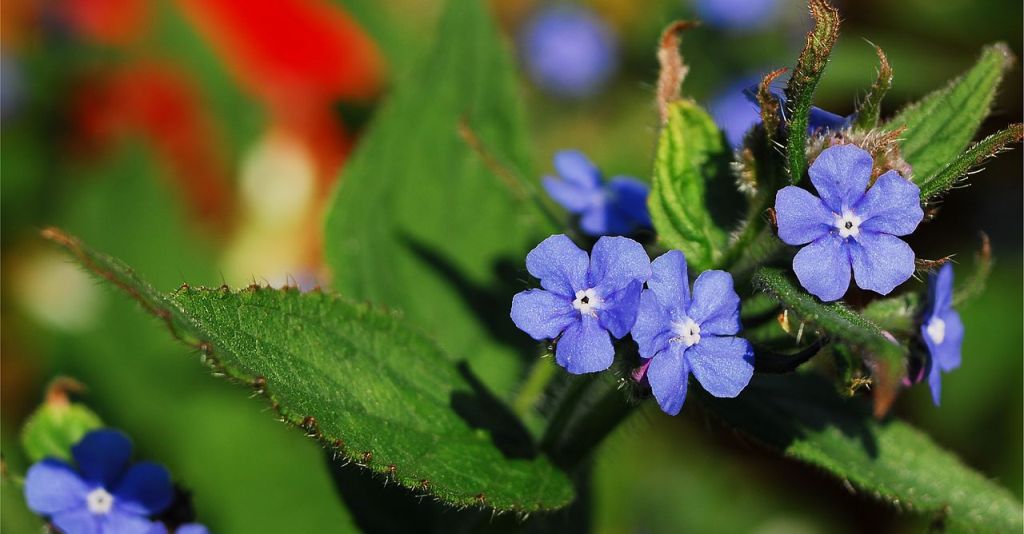
The Pentaglottis sempervirens or Green Alkanet. (picture by Ericoides-Wikipedia)

This week I would like to talk about most of our native genera of the Boraginaceae or Borage Family. This is family number 114 in Stace.

My customers sometimes complain about 2 members of the Borage family: the Green Alkanet; scientifically known as Pentaglottis.

To a less extend they complain about the abundance of seedlings of Forget-me-nots in their gardens, but I think that is just showing off! As who can be upset when you see all that magnificent blue; they are all wonderful weeds really!

All there uses and benefits will be explained in this as well as in the next post, which is entirely about the Comfrey.

Pictures by Matt Summers, unless stated.

Blue background is for general interest, Pink as a warning or medicinal use and green background for all other known uses such as food and wildlife. Please use the jump links in the contents below also for quick access. Ecology information from PlantAtlas 2020 Online, Wikipedia

Contents

General Anatomy of the Boraginaceae

Pentaglottis sempervirens  or Green Alkanet

Myosotis or the Forget-me nots

Ornamental Use

Cynoglossum officinale or Houndstongue

Medicinal Use and Warning

Echium vulgare or Viper’s-bugloss

Warning

Mertensia maritima or Oysterplant

Lithospermum spp. or Gromwell

  • Lithospermum officinale or Common Gromwell
  • Aegonychon purpureocaeruleum or Purple/ Field Gromwell

Pulmonaria spp. or Lungworts

  • Pulmonaria obscura or Suffolk Lungwort
  • Pulmonaria officinalis or Lungwort

Continue reading “The Boraginaceae or Borage Family and their uses: Green Alkanet, Forget-me-not, Houndstongue, Viper’s-bugloss, Oysterplant, the Gromwells and Lungworts!”