Last week I wrote about the purchase of my first few salvias for my new venture: Yoke’s Magic Salvias. These first few salvias were particularly important for me as they were some cuttings of my Rodbaston-named varieties, which I had been worried about that they might have gone extinct forever..
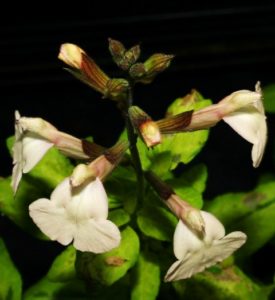
Here on the left: Salvia ‘Moonlight Over Ashwood’ has unusual yellow-green variegated foliage making the plant attractive even when not in flower!
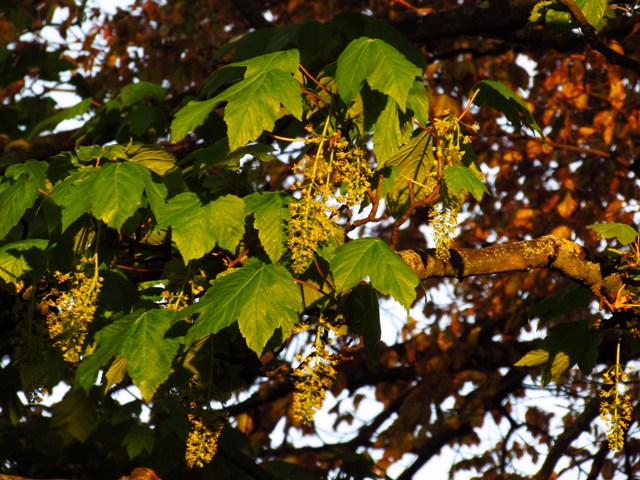
The pendulous flowers of the Sycamore in early spring with fresh palmate leaves. (All pictures by Matt Summers)
The Sapindaceae is a large family (number 77 in Stace) but in Britain it is represented by only “3 genera which all have a totally different appearance” (Stace, 370). He mentions Acer, Aesculus and Koelreuteria. Only one of those genera and one species is native and the genus Acer is what gives the Sapindacea it’s common name, ‘the Maple family’.
In the Wild Flower Key it is still called the Aceraceae and only the 3 most common Acers are mentioned here, while the Horse Chestnut, now also in the Sapindaceae, has his ‘old’ own family here too; the Hippocastanaceae.
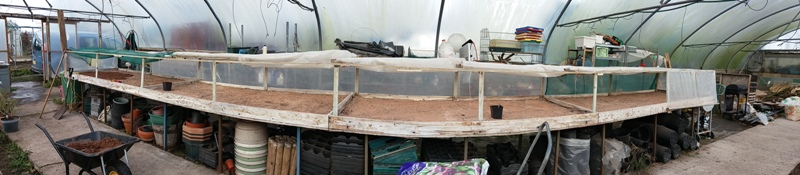
My ‘hot’ bench: complete with new sand and cloche windows!
Thought I’d do an update of the progress we are making with building up my collection of Salvias since a few weeks ago.
Our first few salvias came from Wollerton Old Hall, near Market Drayton in Shropshire. As well as a magnificent garden to visit in the season, they also have a nursery, propagating and selling specialist plants from their garden with approx 90 different varieties of salvias as well as a good number of Iris, Phlox and Cupheas.
In this post we’ll talk mostly about the medicinal uses I found in the family of Umbels or Apiaceae as they are now called.
We introduced this family with a post on one of the members, which is generally not liked amongst gardeners, called the Ground Elder which you can find here.
Wild Angelica orAngelica sylvestris is a native and less harsh ‘medicinal’ one then its garden relative, Angelica archangelica see more below. (By Matt Summers)
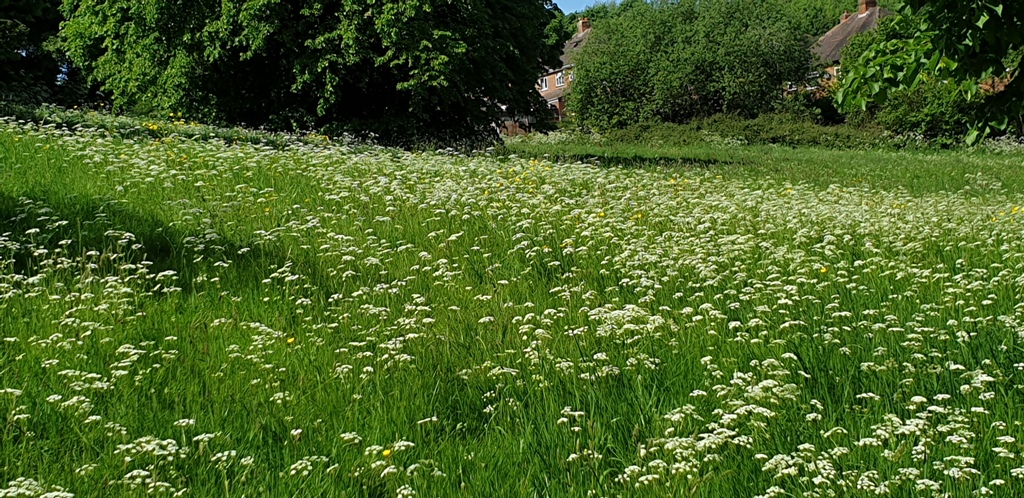
Pignut is one of the Apiaceae, flowering en masse here at Bury HillPark near Dudley(Picture by Mike Poulton)
I’ve always liked the Apiaceae or Umbelliferae as they were formerly known as! And everybody knows the carrot so it is also known as the Carrot family.
It is easily recognisable, especially the second subfamily, which are the true ‘Umbels’.
It is a large family with 50 genera and many genera have just the one native species or a few species.
Several of our root vegetables and herbs belong to this family, although these are cultivated forms and the wild species of which they originated are mostly not native (NN in list below) to the British Isles.
I’ve used Wikipedia, PFAF or other websites a lot again as they have such valuable information about the individual species and their uses.
Also links with the online atlas of the British and Irish Flora of the Biological Records Centre in order to find out the natural habitats of the plants.
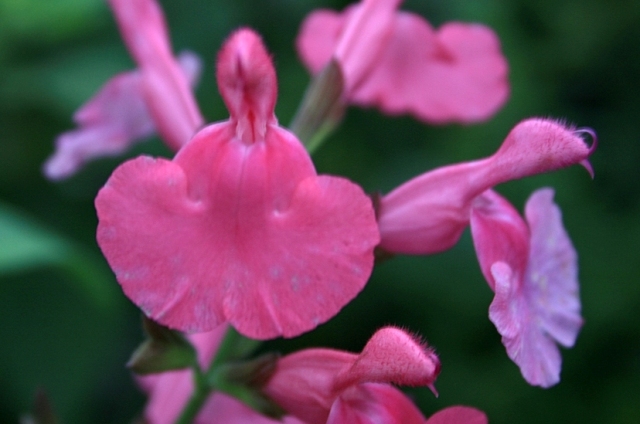
This is a beautiful Salvia found by my late friend and Salvia collector, Robin Middleton. See here
It has proved to be a very popular one, now sold by several nurserymen in Britain!
It came from seed found on the cross Salvia ‘Silkes Dream’ see here
This was the most vigorous seedling, which Robin grew on and gave it the name I suggested to him in honour of my dear friend Penny, who was a beautiful girl and left this world far too young.
She really loved the salvias of which I planted several in her late gardens. And she particularly loved this colour; so a more apt tribute couldn’t be found! To my surprise it has survived many cold winters here in the Midlands. But some shelter would be recommended.
Penny’s Smile’ is a bushy, upright plant to 1.2m high, evergreen if not cut back by frost, with small, aromatic, pale to mid-green leaves. It has large, showy individual flowers, similar size as one of its known parent, ‘Silkes Dream’ and the inflorescences are also well above the foliage and with many flowers for a long flowering season!