
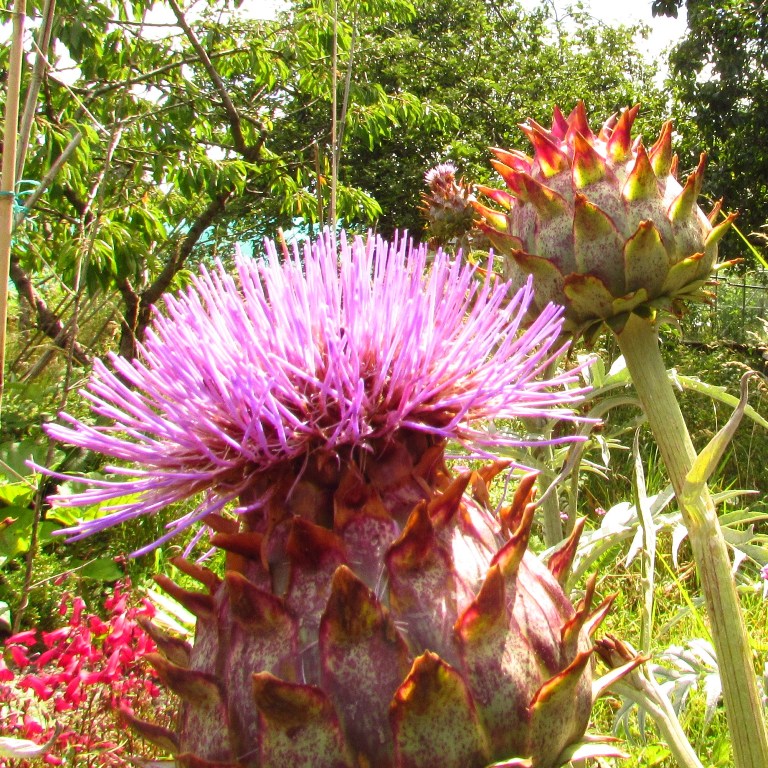

The post on Asteraceae went through the entire classification and might have been a little tedious for you?
However, I do hope you find it fascinating like myself how classification does make sense, especially in large families such as the Composites or Asteraceae.
It neatly groups similar looking plants together and when these plants ‘look similar’ they most likely also have the same properties and uses.
This week we start with the uses of this family.
Of course weeds or native plants as I like to call them, are ALWAYS useful in any habitat situation, soil and indeed for other living creatures apart from ourselves.
When we pull out the dandelion or ragwort we are taking away a valuable food source for multiples of creatures. Is it really worth that?
In the following few blogs about this family I once again will copy a lot of interesting information from ‘The Medicinal Flora of Britain and Northwestern Europe’ by J. Barker. Please get a copy for yourself as you won’t regret it!
A very nice blog to read on edible ‘thistles’ can be found here: https://www.permaculture.co.uk/articles/thistles-a-highly-nutritious-and-medicinal-weed/
Here are links to all the different posts on Asteraceae:
- About the dandelion
- part 1 about Asteraceae and classification
- About Common Ragwort or Jacobaea vulgaris
- this post! (part 2)
- The more common members of the Daisy Family and their uses (part 3))
- The more unusual members (part 4) = last part
Contents:
General Information and
Introduction to the Composites by Julian Barker
- their anatomy
Some main crops and their uses:
- as food and fodder
- as dye
- as ornamental