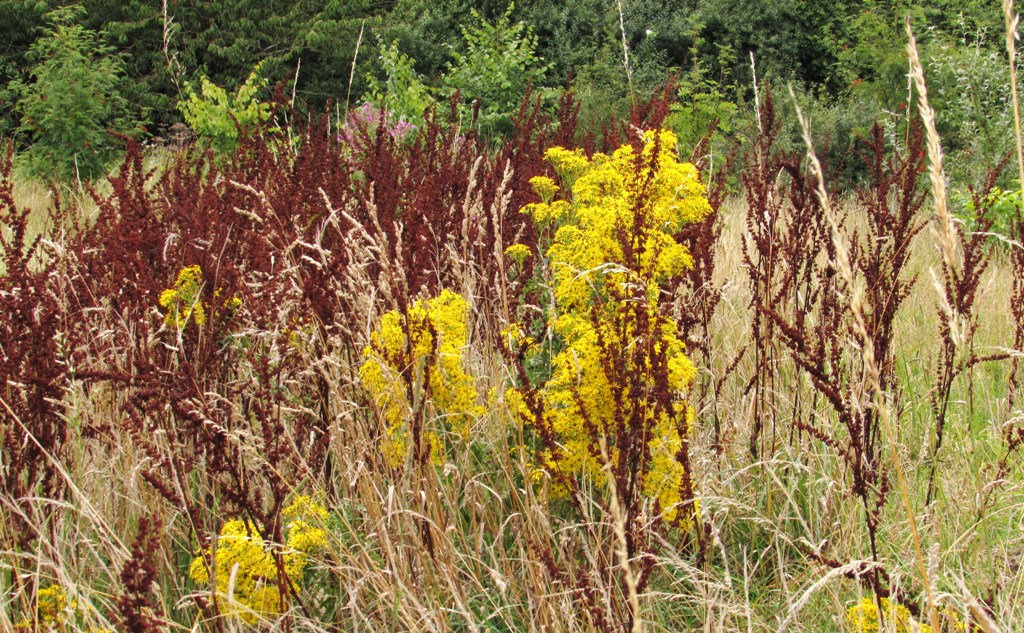
Dock and Ragwort, two of the most notorious weeds!
This week it is mainly about the title or the Dock and Sorrel (or Rumex spp.) which forms a large genus in the family of the Polygonaceae or the Dock and Knotweeds family.
As usual jump links are provided in the Contents below and links in main text to more information on individual plants. FBBC added whenever the plant occurs in the Birmingham and Black Country area. Pictures by Matt Summers unless stated.
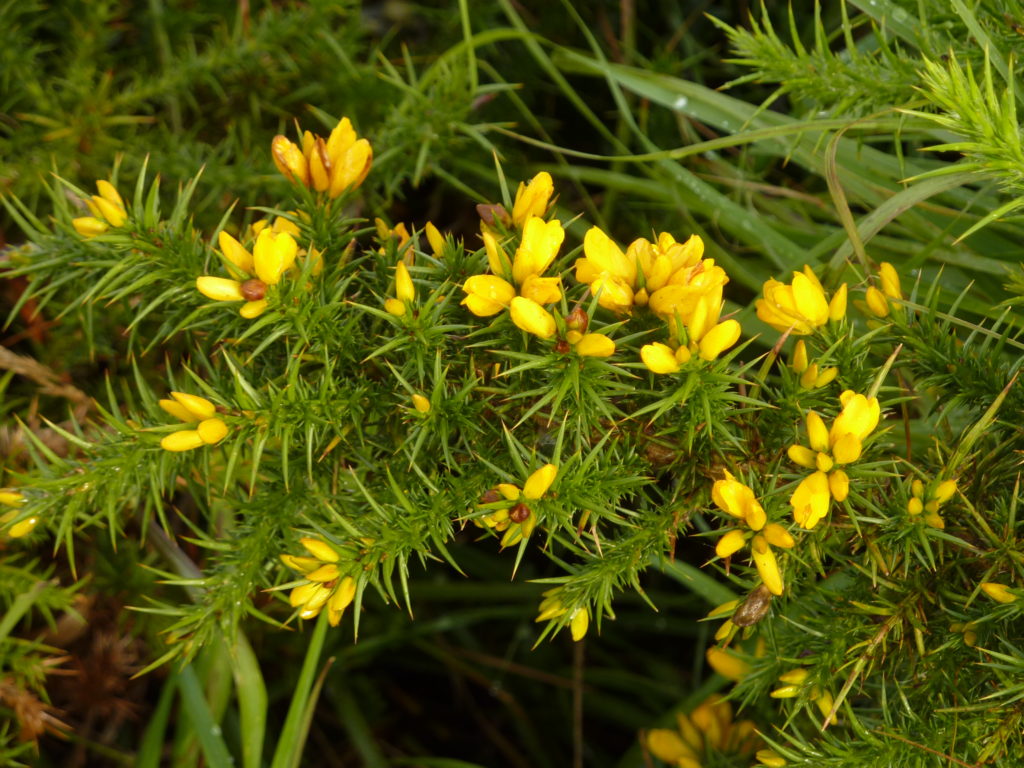
The Common Gorse or Ulex europaeus is a familiar plant in the Legume family! (by Matt Summers)
Nowadays they are called Fabaceae, but they were long known as Leguminosae and commonly known as the legume, pea, or bean family.
This is a large and economically important family in the world. It includes trees, shrubs, and perennial or annual herbaceous plants, which are easily recognized by their fruit (a ‘bean’) and/or their compound, stipulate leaves.
It is not as large a family in Britain perhaps but an interesting and useful family all the same! Credits are due once again to Stace‘s Flora, J. Barker’s Medicinal Flora, Plantlife and Wikipedia for most information. The link on the scientific names are mostly from the Plant Atlas 2020 Online and the information from the habitats is also copied from this Online Atlas. Pictures of the plant can be found in the ‘Gallery’. The link on the Common Name is from a website with usually some more info and pictures of the plant. I try and use UK sites as much as possible! Pictures, with thanks from Matt Summers (MS), Mike Poulton (MWP), Rudi Pilsel (RP), Sue Collingswood (SJC) and Chris Westall (CW) and from Wikipedia Commons.
In case there are any medical uses stated with the plants mentioned below, please take sensible advise from a qualified herbalist.
If you would like to learn a bit more about the classification of this large family I can recommend Britannica.com webpage
NN behind many of the names in the descriptions means Non-Native (which either could be an archaeophyte or more commonly a neophyte) and has been deliberately or accidentally introduced and has naturalised into the wild.
FBBC in the Contents page, behind the names, means that it also occurs in the Flora of Birmingham and the Black Country!