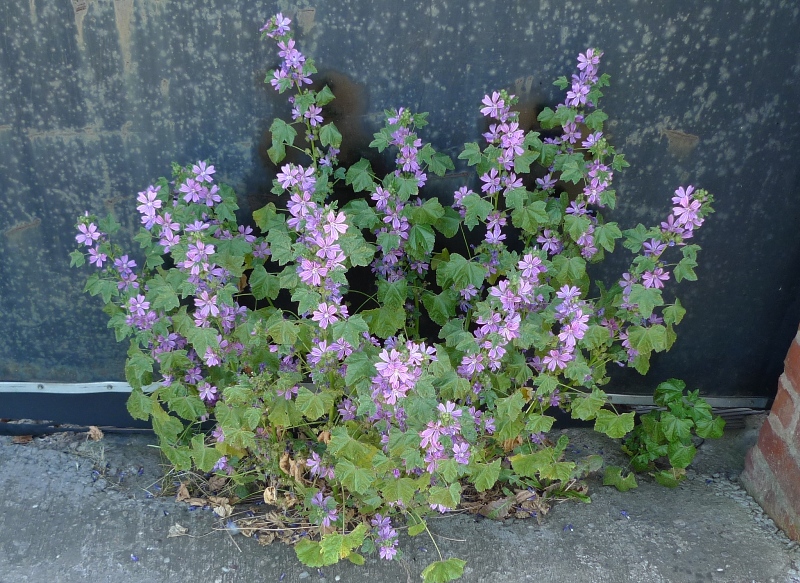
Malva sylvestris or Common Mallow; here growing as a pretty weed! (by Mike Poulton)
I was inspired to write up about the Mallows this week as I have many seedlings of the Common Mallow below a large mother plant on my allotment and I noticed that my opposite neighbour also had some. When I spoke to her she was just about to dig some large specimen up and told me she had several all over her allotment too. So this lovely, innocent looking plant can be a little invasive!
The Malvaceae includes the easy recognisable, pink flowered Mallows as well as our Lime trees. This seems very unlikely as they do not resemble each other in the slightest and therefore they have often been separated into the Tiliaceae as for example in the Wild Flower Key by F. Rose. However according to Stace the molecular evidence shows that genus Tilia should be united in the Mallow family. As there are too many Mallows to write about I will cover the Limes in a next post!
Most information is again from various websites or books and floras for which are provided links throughout the text for some more information.
I use colour coding for easy reading! Blue background is general interesting info (although I hope you find it all interesting!!). Green is about all the uses except for medicinal uses or if there is a warning in which case I use a pink background. Pictures by Matt Summers, Mike Poulton and from Wikipedia. If the plant occurs in the Flora of Birmingham and the Black Country FBBC is added behind name in contents.
The Adoxaceae is a small family consisting of five genera and about 150–200 species.
In older classifications, this entire family was part of Caprifoliaceae or the honeysuckle family. Adoxa (moschatel) was the first plant to be moved to this new group. Much later, the genera Sambucus (Elders) and Viburnum were added after careful morphological analysis and biochemical tests by the Angiosperm Phylogeny Group.
For easier reading I’ve used colour coding! Blue background for interesting facts and wildlife uses, green for edible and other uses, red for danger or medicinal uses.
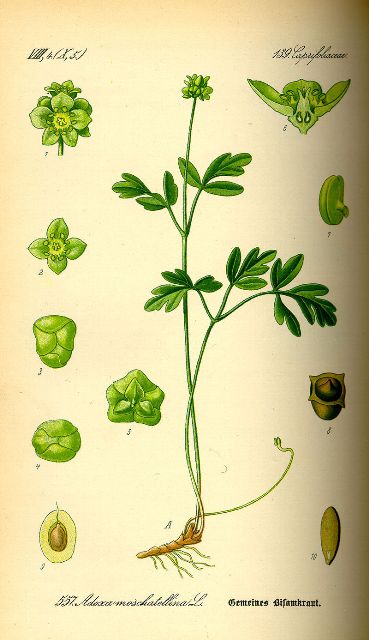
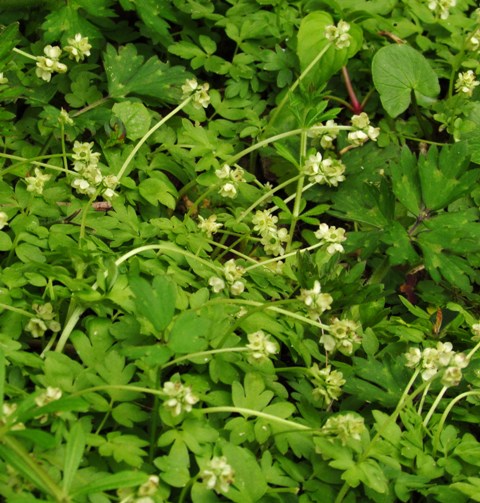
Adoxa illustration fromThomé, Flora von Deutschland, Österreich und der Schweiz (1885) (Wikipedia) Picture on right by Matt Summers
A perennial rhizomatous herb of mesic brown earth soils on the shaded banks of rivers and streams, in deciduous woodlands and shaded hedgebanks; also occasionally in shaded base-rich sites in mountains. This is a vernal species which disappears by May or June immediately after the berries are mature.
Moschatel has six other interesting common names: five-faced bishop, hollowroot, muskroot, townhall clock, tuberous crowfoot and Good Friday plant!
Distribution:
It has a boreal, circumpolar distribution in Europe, Asia and North America. It is widespread and common in most parts of the British Isles, preferring damp shady situations, but becomes scarce in the north and west of Scotland and parts of eastern England.
No known uses to people, just an interesting little plant! The plant and its flowers have a musk-like scent, which it emits towards evening when the dew falls. If the plant is bruised this scent disappears.
Viburnumis a genus of about 150–175 species of evergreen or deciduousshrubs or (in a few cases) small trees native throughout the temperate Northern Hemisphere.
It has only two known native species and about 6 species occasionally occurring in the wild which are escaped from gardens and naturalized.
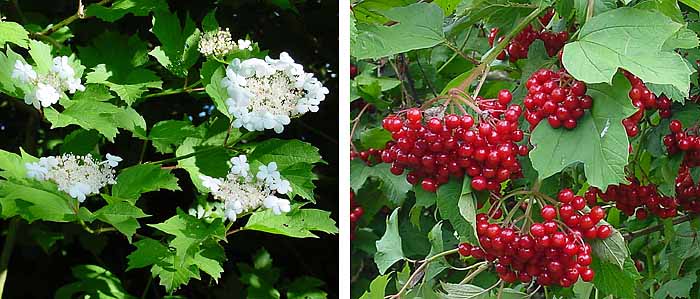
Viburnum opulus flowers and berries (photo Wouter Hagens- Wikipedia)
A deciduous shrub of neutral or calcareous soils favouring damp, winter-wet areas within and on the edge of woodland, scrub, plantations and hedgerows (especially well-established ones), in fen-carr, alder and willow thickets, marsh edges and on stream banks. It is also occasionally found in drier habitats such as tracksides, road verges, waste ground and in rough grassland. It is now widely planted, and bird-sown plants which spread from planted sites to the wild sometimes include yellow-fruited cultivars.
The common name ‘guelder rose’ relates to the Dutch province of Gelderland, where a popular cultivar, the snowball tree, supposedly originated.
It is a rare shrub and is an ancient-woodland indicator. If you spot it while you’re out exploring, it could be a sign you’re standing in a rare and special habitat.
The red berries are an important food source for birds, including bullfinch and mistle thrush. The shrub canopy provides shelter for other wildlife. The flowers are especially attractive to hoverflies.
It is a useful and beautiful hedgerow plant also grown as an ornamental plant for its flowers, autumn colour and berries, growing best on moist, moderately alkaline soils, though tolerating most soil types well.
Several cultivars have been selected, including ‘Roseum’ (synonym ‘Sterile’, ‘Snowball’), in which all the flowers are only of the larger sterile type, with globular flower heads.
Guelder Rose is able to relieve muscle tension, both in skeletal muscles and in the smooth muscle of the intestines, lungs and uterus. It is used on its own for cramps and muscle spasms, including uterine cramps, back pain, fibromyalgia and irritable bowel syndrome. Also in formulae for high blood pressure, arthritis and nervous tension.
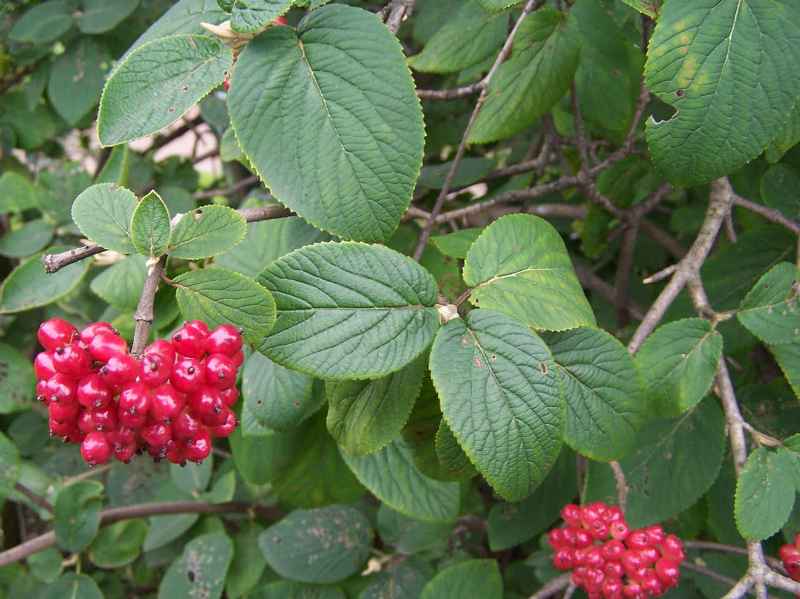
A deciduous shrub of woods and wood borders, scrub, hedgerows and rough grassland on base-rich soils, especially in chalk and limestone districts. It is now frequently planted on road- and canal-sides, in parks, shrubberies, habitat creation schemes (often in areas where the species is native) and may also appear when used as a stock for other cultivated species of Viburnum. Bird-sown populations also occur on waste ground and in other ruderal situations and its unpalatability to rabbits allows it to invade areas of high warren densities.
These days, cultivated varieties of the wayfaring tree are often planted as an ornamental.
Traditionally, however, it was used for other purposes. Its strong bendy stalks used to be used to tie hay bales, and there is evidence that, in Europe at least, its straight wood was used to make arrows.
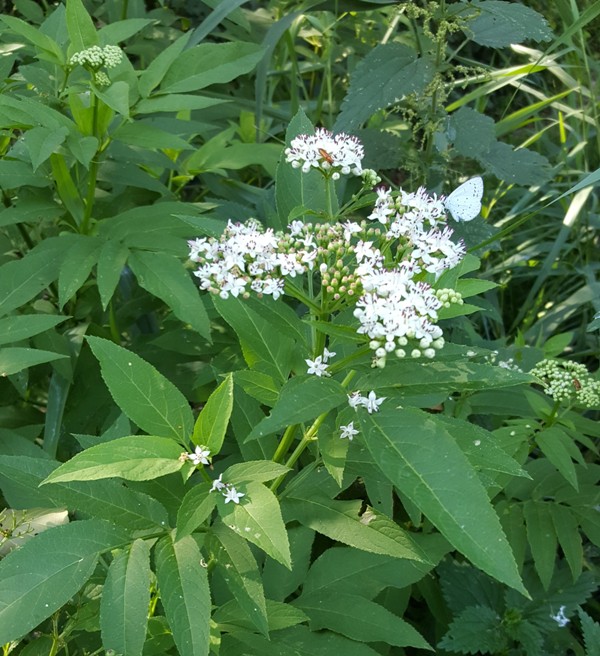
Dwarf Elder (picture taken at Heemtuin Nieuwkoop, Netherlands by Matt Summers)
A robust herbaceous perennial, spreading vigorously by rhizomes, and formerly widely planted for medicinal use and the production of a blue dye. It occurs infrequently in hedgerows, on roadsides and waste ground, usually in small numbers but locally forming thickets (Lavin & Wilmore, 1994) where it can be very persistent.
This is a less known herbaceous species of Elder also known as danewort, dane weed, danesblood, European dwarf elder, walewort, dwarf elderberry, elderwort and blood hilder. It is native to southern and central Europe and southwest Asia. It is an archaeophyte in the B.I. according to Stace
The name danewort comes from the belief that it only grows on the sites of battles that involved the Danes. The term ‘walewort’ or ‘walwort’ meant ‘foreigner plant.’ The plant’s stems and leaves turn red in autumn and this may explain the link with blood. The word Dane may link to an old term for diarrhoea.
Fruit – cooked. It is used as a flavouring in soups. Leaves are used as a tea substitute.
The fruit of this species has been known to cause stomach upsets to some people. Any toxin the fruit might contain is liable to be of very low toxicity and is destroyed when the fruit is cooked.
Medicinal Uses:
Dwarf elder is one of the best known medicinal herbs since ancient times. In view of its benefits as a widely applicable phytomedicine, it is still used in folk medicine of different parts of the world. In addition to its nutritional values, dwarf elder contains different phytochemicals among which flavonoids and lectins are responsible for most of its therapeutic effects. Dwarf elder has been used for different ailments including: joint pains, cold, wounds, and infections.
A deciduous shrub that is planted and naturalized along railway banks, hedges and roadsides, and also occurs in scrub and on waste ground. It reproduces by seed, which may be bird-sown, and vegetatively by suckering.
Similarly as the Common Elder, the flower is edible, as are the ripe berries. A drink can be made from soaking the flower heads in water for eight hours. Other uses for the fruit include wine, jelly and dye. The leaves and inner bark can be used as an insecticide and a dye. The leaves are also traditionally used topically in herbalism.
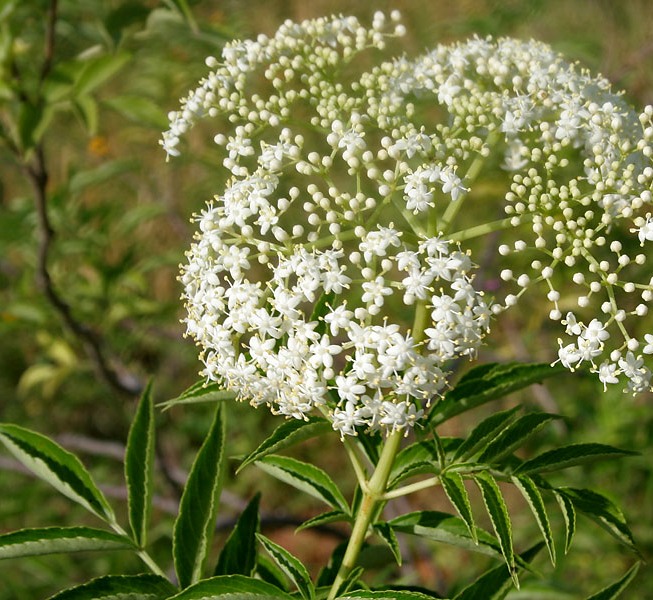
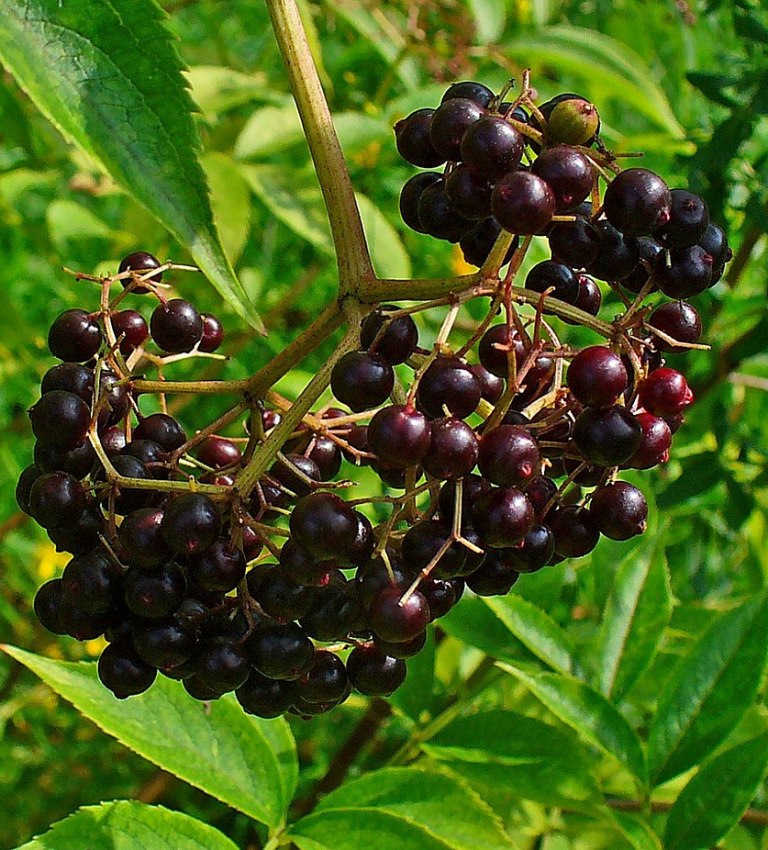
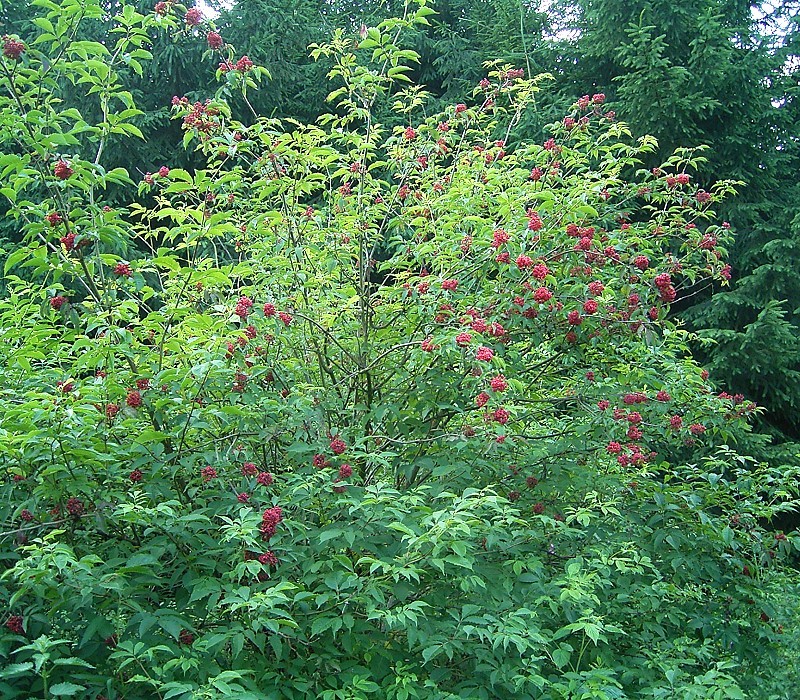
Sambucus nigra or Common Elder is a hugely useful plant and therefore cannot be called a weed at all!
It used to be a member of the Caprifoliaceae but now it belongs in the Adoxacea together with Viburnum and Adoxa with the most modern thinking in Plant Taxonomy.
I use colour coding for easy reading! Blue background is general interesting info (although I hope you find it all interesting!!). Green is about all the uses except for medicinal uses or if there is a warning in which case I use a pink background. Pictures and the poem on the end by Matt Summers. Most information in the post comes from Plants for a Future and Wikipedia and links are provided to their websites and relevant pages.
A deciduous shrub or small tree of fertile soils found in a wide range of habitats including woodland, hedgerows, grassland, scrub, waste ground, roadsides and railway banks. It is resistant to rabbit grazing and often occurs around warrens
For centuries, people have used the elderberry plant for its therapeutic properties. It was Hippocrates, the ‘father of medicine’, who first recognised the extraordinary health credentials of elderberries, using them to combat colds, flu, and allergies.
Elderberries are rich in tons of antioxidants, too (anthocyanidins, flavonols, and vitamin C, to be precise), meaning they also have the power to fight inflammation and free radical damage in the body. A report published in the Journal of International Medical Research revealed that when elderberries were consumed within the first 48 hours of catching flu, the symptoms dissipated approximately four days earlier than the average i. Plus, the use of pain relief was considerably less amongst those who received the elderberry compared to the placebo. When cold and flu season strikes, make sure your kitchen is well stocked with plenty of elderberry juice.
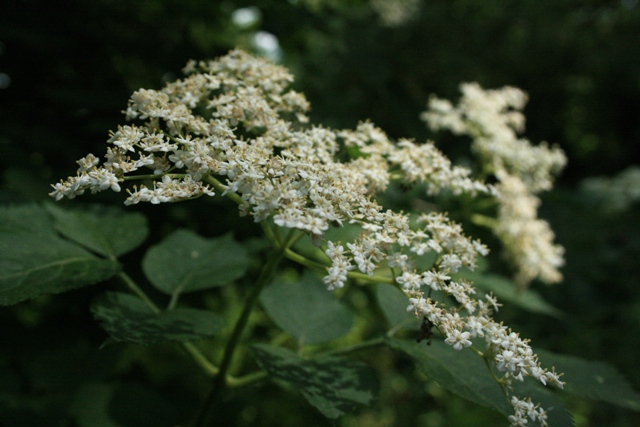
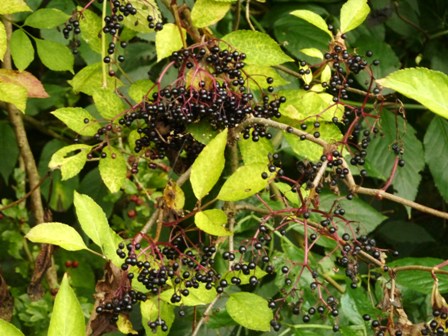
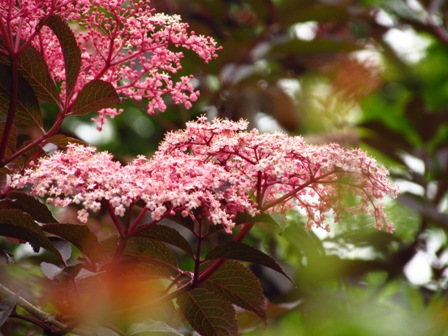
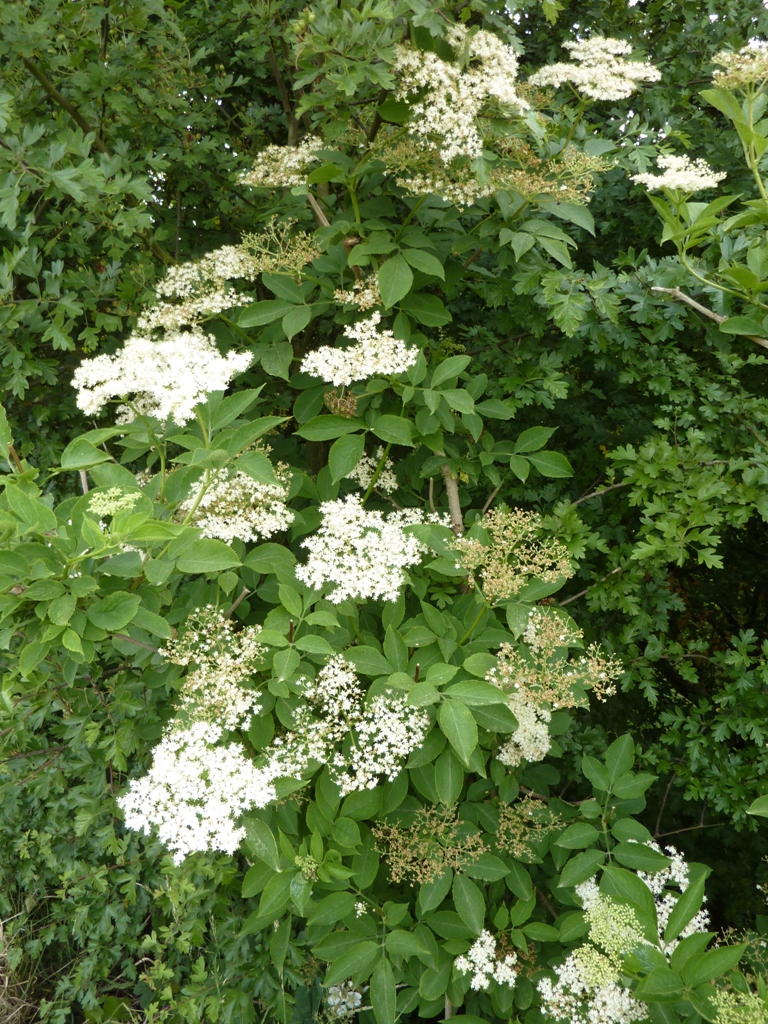
The common Elder is an attractive large shrub in all seasons for the garden and in farm hedges. The fragrant, creamy flower heads and dark burgundy bunches of berries are attractive for wildlife as well as for us.
Even in autumn the pungent leaves (when bruised) are attractive when they colour creamy yellow to peach and burgundy.
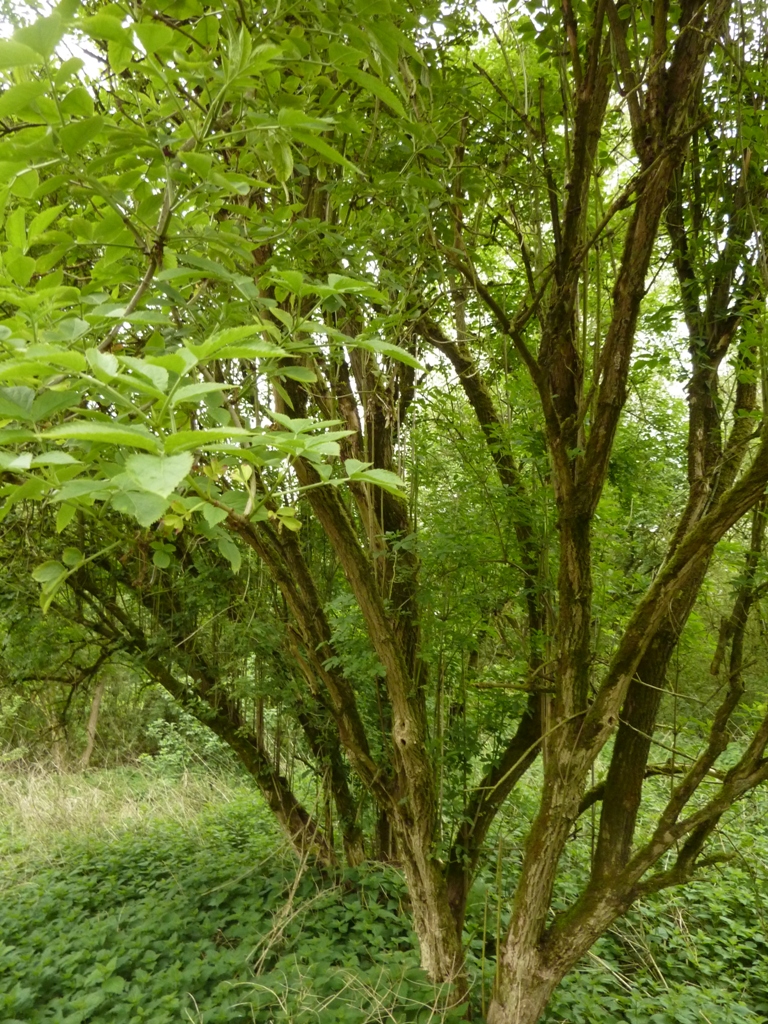
In winter when it’s leafless its silhouette is distinct with furrowed bark and sometimes with a common bright yellow lichen (Xanthoria parietina) decorating its branches!
It is also host of the Common Ear-fungus orAuricularia auricula-judae often seen on dying or dead branches in older specimens.
If the common Elder is not attractive enough for the ornamental garden there are many named cultivars with various coloured and shaped leaves. ‘Hilliers Manual of Trees and Shrubs (my 5th Edition)’ mentioned 11 cultivars, but there are many more in the latest 2019 edition and also to be seen on the RHS website!
There are many selected cultivars nowadays of the common elder with larger sized fruit, flowers and other qualities. See for many cultivars at the Agroforestry Research Trust shop.
Flowers:
The flowers can be eaten raw and apparently a delicious crisp and somewhat juicy snack on a summer’s day.
They can also be used in elderflower-fritters.
The flowers are used to add a muscatel flavour to stewed fruits, jellies and jams (especially gooseberry jam).
They are often used to make a sparkling wine.
A sweet tea is made from the dried flowers.
Fruit:
The flavour of the raw fruit is not acceptable to many tastes, though when cooked it makes delicious jams, preserves, pies and so forth.
The fruit is used to add flavour and colour to preserves, jams, pies, sauces, chutneys etc.
It is also often used to make wine.
Leaves:
These are used to impart a green colouring to oils and fats.
Most of this information has been copied of the PFAF website-database ( Plants For A Future and I cannot take any responsibility for any adverse effects from the use of plants. Always seek advice from a professional before using a plant medicinally.
Elder has a very long history of household use as a medicinal herb and is also much used by herbalists. The plant has been called ‘the medicine chest of country people’.
The flowers are the main part used in modern herbalism, though all parts of the plant have been used at times.
Flowers:
The fresh flowers are used in the distillation of ‘Elder Flower Water’. It is mainly used as a vehicle for eye and skin lotions.
An infusion is very effective in the treatment of chest complaints and is also used to bathe inflamed eyes. It is a very good spring tonic and blood cleanser.
Externally, the flowers are used in poultices to ease pain and abate inflammation. Used as an ointment, it treats chilblains, burns, wounds, scalds etc.
Fruit:
The fruit is depurative, weakly diaphoretic and gently laxative.
A tea made from the dried berries is said to be a good remedy for colic and diarrhoea.
The fruit is widely used for making wines, preserves etc., and these are said to retain the medicinal properties of the fruit.
Leaves:
The leaves can be used both fresh and dry. The leaves are purgative, but are more nauseous than the bark. They are also diaphoretic, diuretic,expectorant and haemostatic.
The juice is said to be a good treatment for inflamed eyes. An ointment made from the leaves is emollient and is used in the treatment of bruises, sprains, chilblains, wounds etc.
Bark and Pith:
The inner bark is diuretic, a strong purgative and in large doses emetic. It is used in the treatment of constipation and arthritic conditions. An emollient ointment is made from the green inner bark.
The pith of young stems is used in treating burns and scalds.
A homeopathic remedy is made from the fresh inner bark of young branches. It relieves asthmatic symptoms and spurious croup in children. The German Commission E Monographs, a therapeutic guide to herbal medicine, approve Sambucus nigra for cough and bronchitis, fevers and colds.
The plant is a valuable addition to the compost heap, its flowers are an alternative ingredient of ‘QR’ herbal compost activator and the roots of the plant improve fermentation of the compost heap when growing nearby.
The leaves are used as an insect repellent; very effective when rubbed on the skin.
The flowers are used in skin lotions, oils and ointments.
Tolerant of salt-laden gales, this species can be grown as a shelter hedge in exposed maritime areas.
This is an excellent pioneer species to use when re-establishing woodlands. It is very tough and wind-resistant, grows quickly and provides shelter for longer-lived and taller woodland species to establish.
As Dye:
bark of older branches and the root have been used as an ingredient in dyeing black.
A green dye is obtained from the leaves when alum is used as a mordant.
The berries yield various shades of blue and purple dyes.
They have also been used as a hair dye, turning the hair black.
The blue colouring matter from the fruit can be used as a litmus to test if something is acid or alkaline. It turns green in an alkaline solution and red in an acid solution.
Pith and Wood Uses:
The pith in the stems of young branches pushes out easily and the hollow stems thus made have been used as pipes for blowing air into a fire.
They can also be made into musical instruments.
The pith of the wood is used for making microscope slides and also for treating burns and scalds.
The mature wood is white and fine-grained. It is easily cut and polishes well. Valued highly by carpenters, it has many used, for making skewers, mathematical instruments, toys etc.
Finally a poem by my partner Matt Summers about the virtue of the Elder:
I was just reminded that The Elder does not belong into the Caprifoliaceae family any longer but is now in the Adoxaceae family together with genus Viburnum which also used to be in the Caprifoliaceae!
Adoxacea is now family number 137 and Caprifoliaceae follows with number 138 in Stace.
But the Lonicera or Honeysuckle remains in the Caprifoliaceae or Honeysuckle family.
I use colour coding for easy reading! Blue background is information of the habitat from Plant Atlas 2020 and for the general interesting info (although I hope you find it all interesting!!). Green is about all the uses except for medicinal uses or if there is a warning in which case I use a pink background. The link on the Scientific name is mostly from Online Plant Atlas 2020 and the link on the Common Name is from Wikipedia or other websites for more information on Uses and pictures of the plants. Pictures by Matt Summers unless stated.
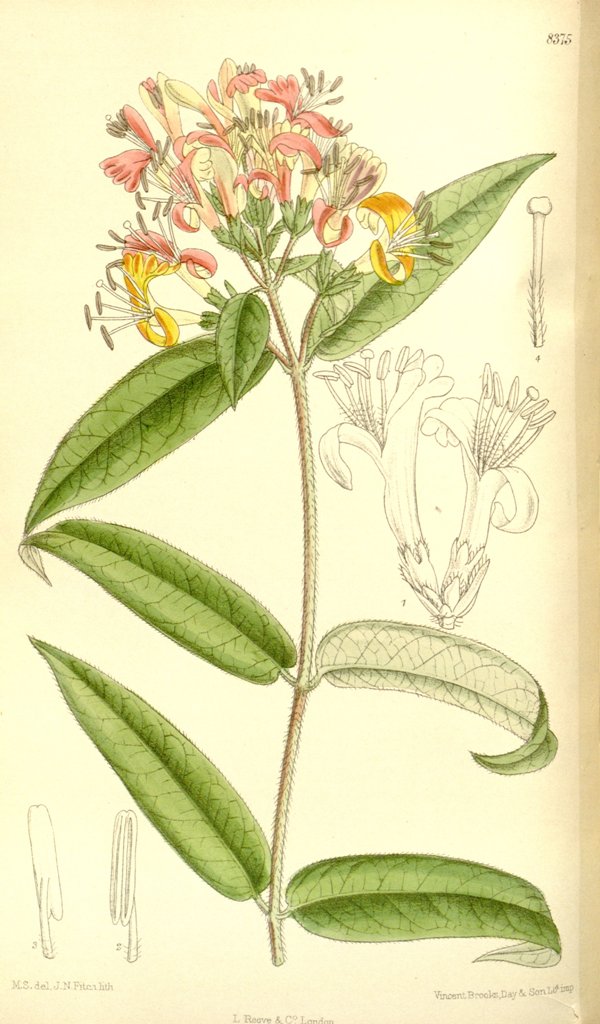
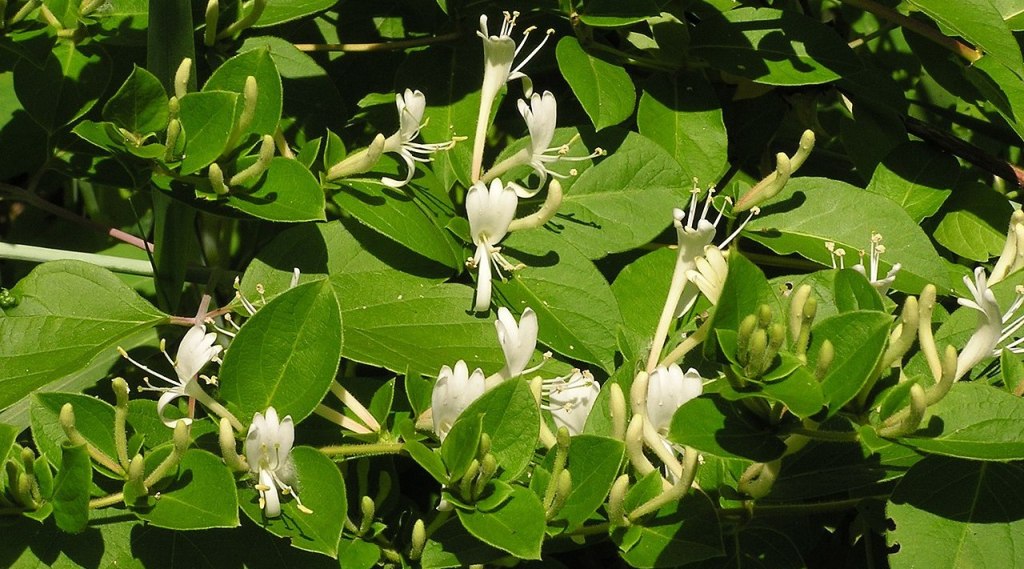
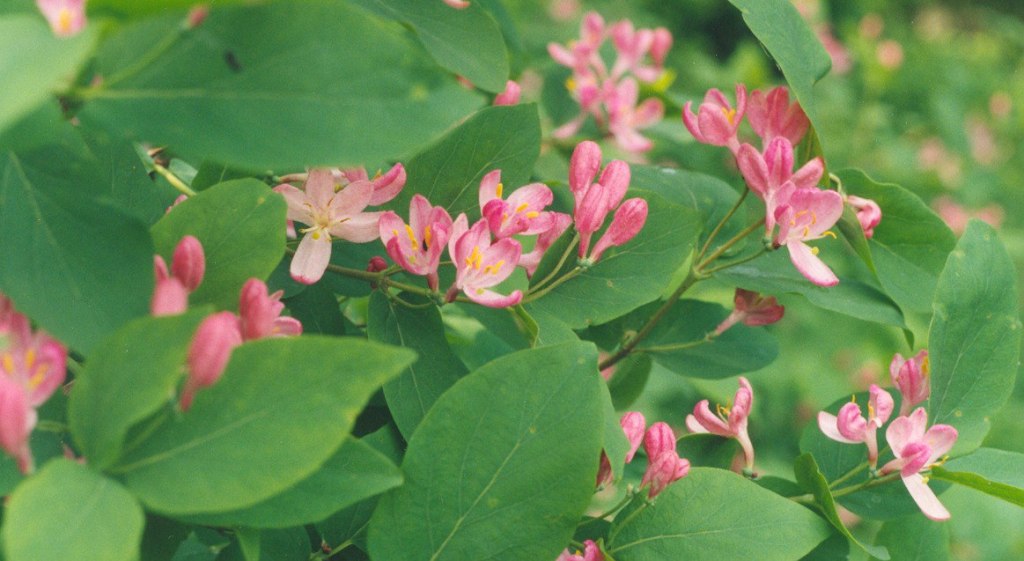
There are 5 different species of the climbing and shrubby honeysuckles mentioned in the Wild Flower Key and 11 are mentioned in the Plant Atlas 2020 but only one is native.
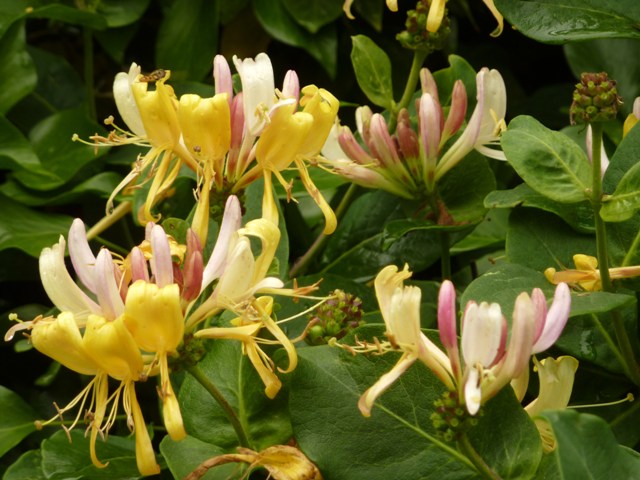
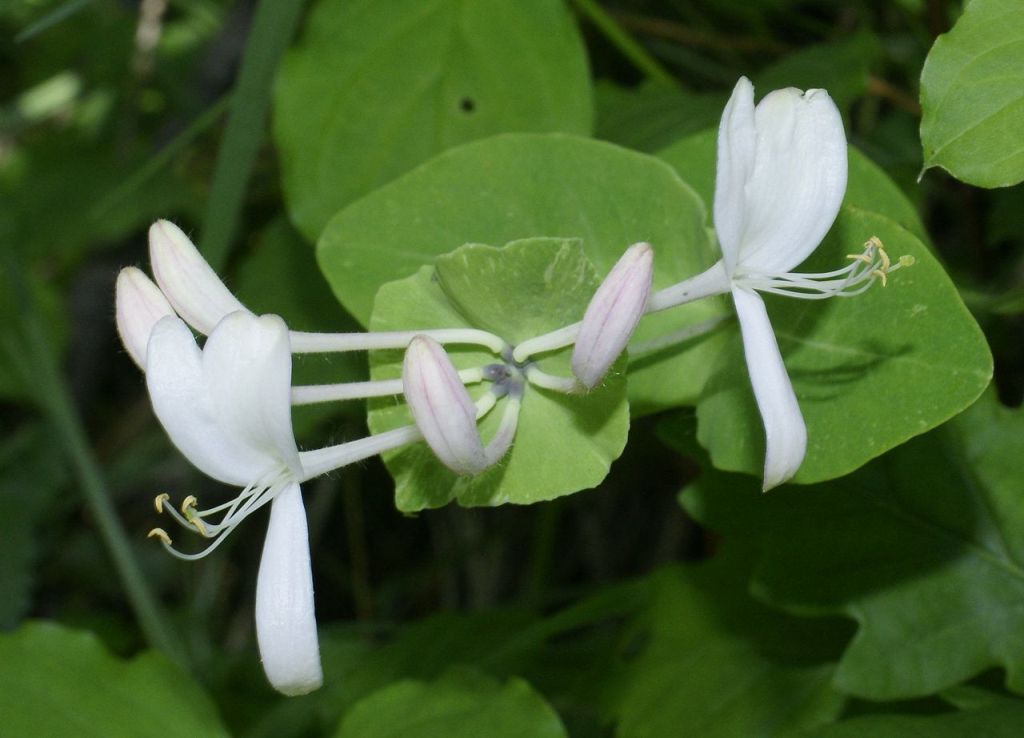
A perennial deciduous twining shrub or woody climber, found in woodland, scrub and hedgerows, and on shaded rocks. It prefers freely drained, moderately basic to acidic soils, but also grows on poorly drained base-rich clays.
It is a much loved wild flower as the flowers are highly scented by night, much less so by day. The plant is usually pollinated by moths or long-tongued bees and develops bright red berries.
It was once believed that if honeysuckle grew around a home’s entrance, it would bring good luck and stop any evil spirits from entering. It has also long been considered a symbol of fidelity, and in Victorian times young girls were banned from bringing honeysuckle into the house because it was believed the strong smell would make them have suggestive dreams!
Lonicera periclymenum is one of several honeysuckle species valued in the garden, for its ability to twine around other plants, or to cover unsightly walls or outbuildings; and for the intense fragrance of its profuse flowers in summer. It needs to be planted with its roots in the shade, and its flowering top in sun or light shade.
Honeysuckle has been used to make beautiful walking sticks which were once popular with Scots music hall performers. They were created as the honeysuckle entwined itself around branches, causing the branches themselves to become twisted.
While the berries are poisonous, the leaves, flowers and seeds have been used for medicinal purposes for a variety of conditions.
Dormice make summer nests for their young from honeysuckle bark; they also eat the flowers, which are a good source of energy-rich nectar. Night-flying moths such as the hummingbird hawk-moth can detect the scent of honeysuckle flowers up to a quarter of a mile away. The clusters of red berries are eaten in the autumn by birds such as thrushes, bullfinches and warblers.
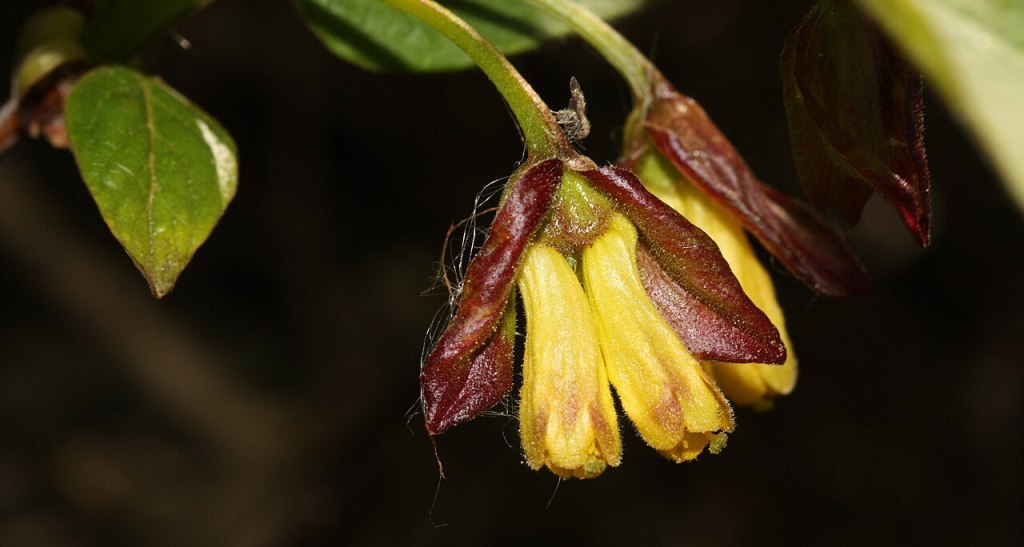
A deciduous shrub, formerly considered to be native in woodland on chalk in south-eastern England but also widely naturalized on free-draining basic or neutral soils in open woodland, hedgerows and scrub.
L. xylosteum was being cultivated in Britain by 1596. It was first recorded in the wild as a casual in 1770, it has been known from the chalk escarpment of the South Downs near Amberley (West Sussex) since 1801, where it grows in ancient woodland, hedgerows and scrub. Although arguably native there, it is considered to be an introduction given the lateness of its discovery, use as a garden plant and the frequency of introduction elsewhere (Webb, 1985; Pearman, 2007).
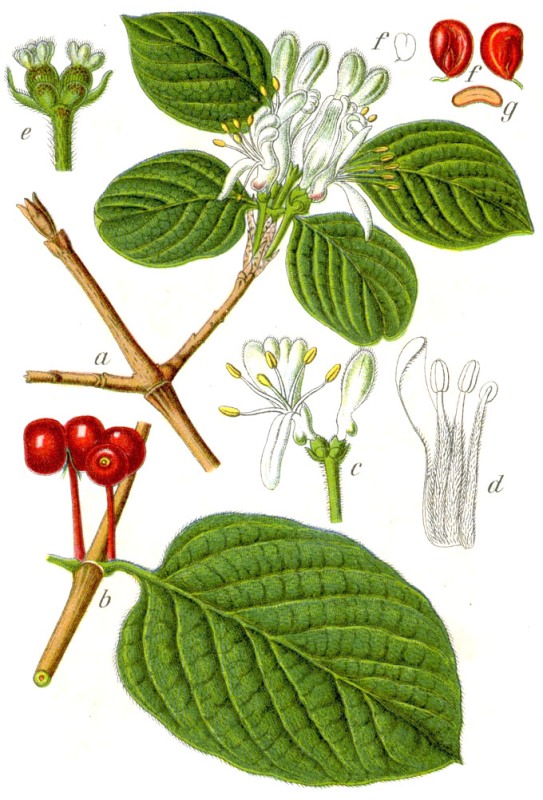
This is a dense, bushy, deciduous shrub, to 3m tall, with grey-green foliage. Small, tubular, two-lipped, creamy-white flowers are produced in pairs along the shoots in late spring and early summer, followed by showy red, or rarely yellow, berries
The glossy red (or occasionally yellow) berries of this shrub are mildly poisonous to humans – children who ingest a large number (c. 30) of berries may experience abdominal pain and vomiting.
A winter-green or semi-deciduous climbing shrub, naturalized on woodland margins and in hedgerows and rough grassland. It arises as a garden escape or throw-out, and is seldom found far from human habitations. It is also capable of reproducing from seed, which can be bird-sown.
A partially winter-green climbing shrub, widely grown in gardens and frequently spreading to woodland margins, scrub, hedgerows and on waste ground, sometimes forming extensive thickets but seldom far from human habitations. Naturalized plants are often self- or bird-sown, but occasionally originate from dumped garden waste.
Japanese honeysuckle flowers are edible to humans and appreciated for their sweet-tasting nectar. The flowers can also be a significant source of food for deer, rabbits, hummingbirds, and other wildlife.
It is an effective groundcover and has strong-smelling flowers.
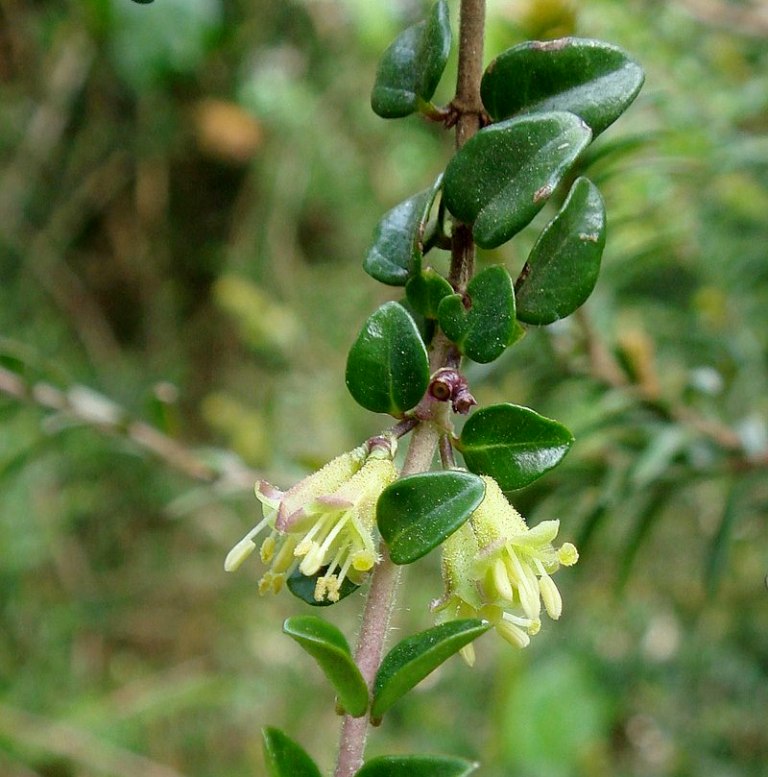
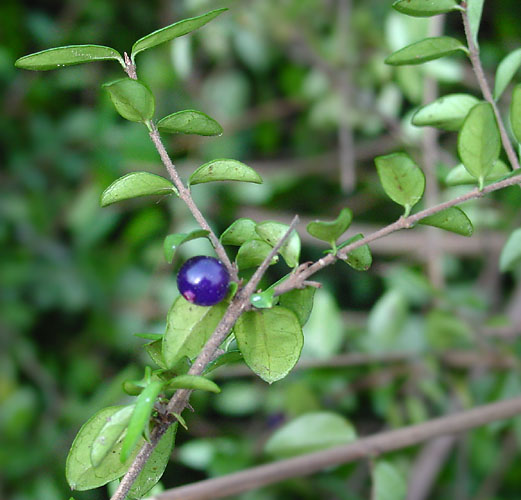
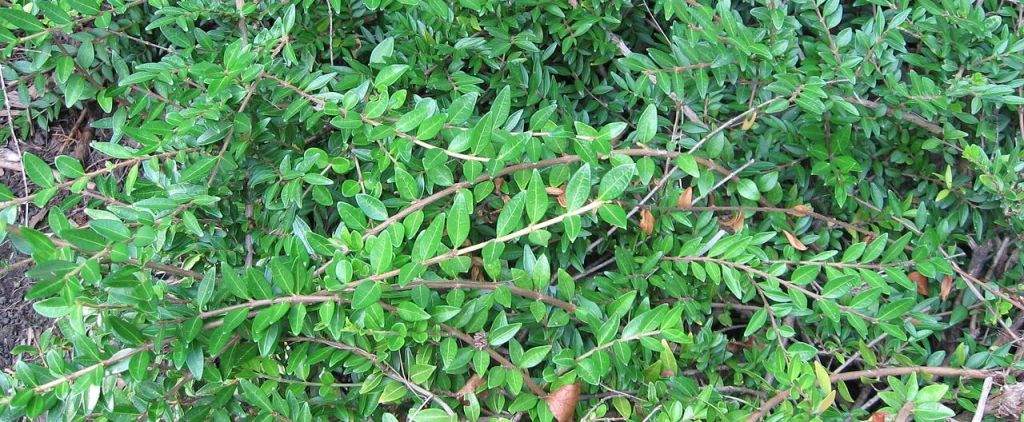
Lonicera nitida or Wilson’s Honeysuckle(flowers & fruit by Wouter Haagens)
A mat-forming creeping perennial herb of native pinewoods and plantations of Pinus sylvestris, occasionally in birchwoods, and rarely, as a relict of former woodland cover. Populations are fragmented, as a result of loss of pinewood habitat, into a series of (mainly) self-incompatible populations.
The genus Linnaea was first formally described by Carl Linnaeus. The name had been used earlier by the Dutch botanist Jan Frederik Gronovius, and was given in honour of Linnaeus. Linnaeus adopted the name in 1753 inSpecies Plantarum for the then sole species Linnaea borealis, because it was his favourite plant.
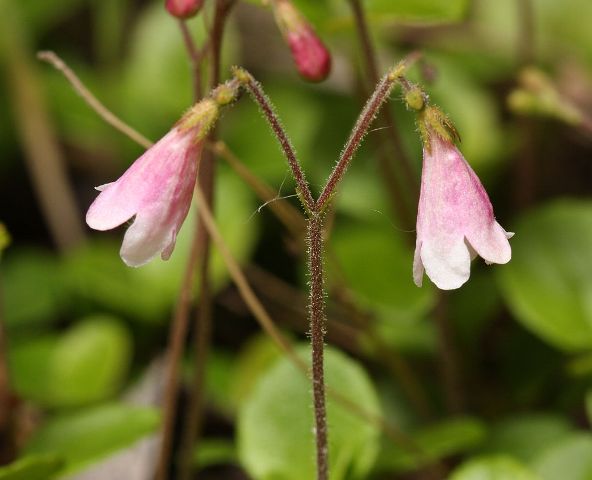
L. borealisis a creeping, mat-forming shrub with small, glossy, dark green leaves with buff undersides. In summer pairs of small, pale pink, nodding, bell-shaped flowers are produced from the tips of leafy side shoots. Overall the plant is only 8cm high, but can spread to a metre or more across.
A deciduous shrub, widely grown in gardens, and frequently established as a garden escape on walls and at the base of hedgerows, in woodland and shrubberies and on waste ground, mainly in urban areas. Most plants appear to be bird-sown but it is also planted as cover for pheasants.
Uses:
This is a lovely and interesting ornamental which was favoured by the Victorians. It has occasionally escaped into the wild. Also attractive to wildlife for its flowers as well as berries.
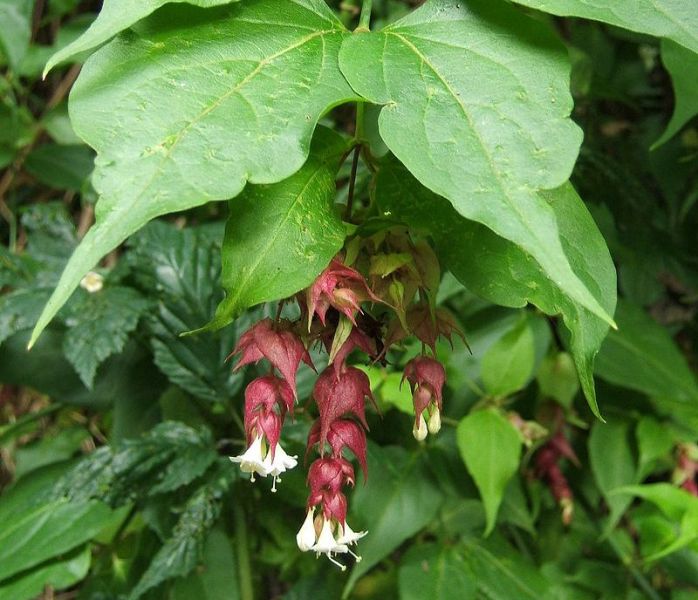
Leycesteria formosa, or the Himalayan honeysuckle, Flowering nutmeg, Himalaya nutmeg, granny’s curls or pheasant berry, is a deciduous shrub in the family Caprifoliaceae, native to the Himalaya and southwesternChina. It is considered a noxious invasive species in Australia, New Zealand, the neighbouring islands of Micronesia, and some other places.
From Plants for a Future: One unconfirmed report said that the fruit is edible. In the better forms, the fully ripe and very soft fruit is very sweet with a treacle-like flavour, though in other forms it has a very bitter taste and is not very desirable.
A deciduous shrub, spreading by vigorous suckering, widely planted in both gardens and in the wider countryside in hedges and for game cover in woodland. It reproduces by suckering and fruits freely, but regeneration from seed is unknown.
Uses:
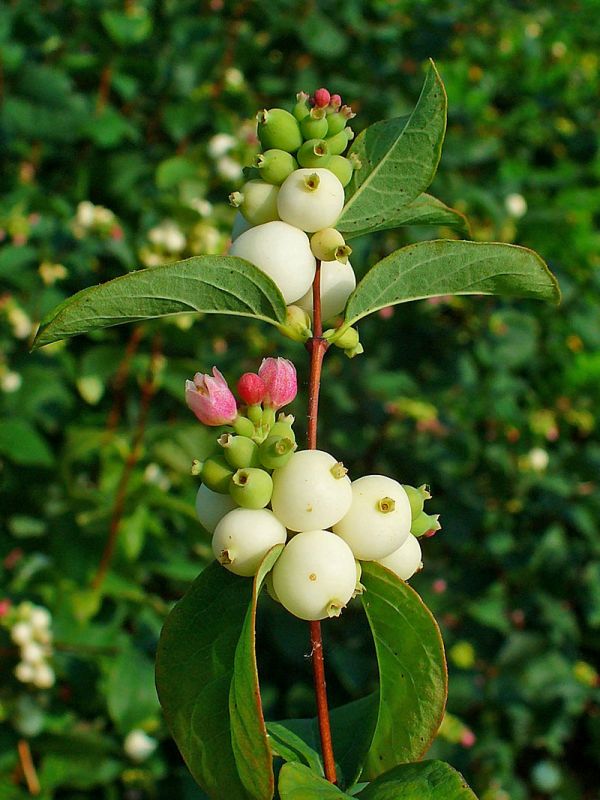
It can be excused for its invasive habits as it is a very useful wildlife plant and beautiful en mass with the large, long lasting white berries.
The fruit and shrub itself are poisonous to humans, causing vomiting.
Native Americans used the plant as a medicine and a soap, and sometimes for food, and the wood was good for arrow shafts. In Russia, the berries are crushed in the hands and rubbed about for a soothing folk-remedy hand lotion.
This shrub is used for erosion control in riparian areas, and it is planted in ecological restoration projects on disturbed sites such as abandoned mines.