
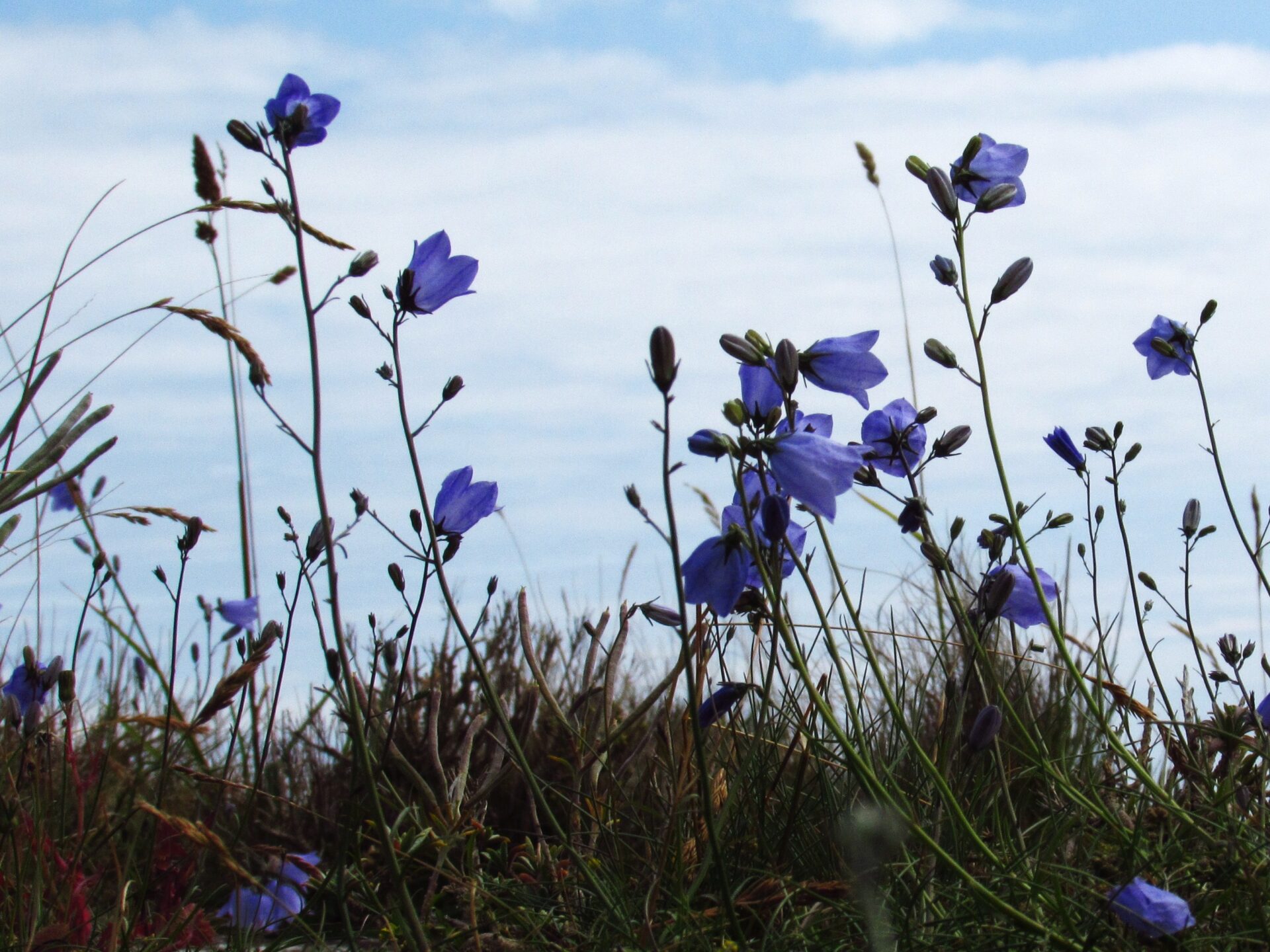
Campanulaceae family

The Harebell or Campanula rotundifolia is a delicate wildflower here seen on our coast (by Matt Summers)

The Campanulaceae or Bellflower family is another family with many useful ornamental garden varieties but also has several native species in the main genus Campanula as well as in the genera: Legousia, Wahlenbergia, Phyteuma, Jasione and Lobelia.

The Campanulaceae are now in Family 133 according to Stace in between the interesting Lentibulariaceae or Bladderwort family and the Aquifoliaceae or Holly family!

See on the next page for all the main species in this family and about their ethnobotanical uses. This blog cannot provide all the info, such as where you can find them, what soil conditions, etc. But this is why I provide the links of some other marvelous websites out there! Green background is for the usual Edible or Wildlife uses and pink background for Medicinal uses. Blue background for where it grows in the B.I. (from PlantAtlas 2020) and ‘Interesting facts’ , although I hope you find all my information interesting!

Contents:

Campanula spp. or Bellflowers

There are 5 native species (number 1-5) and 4 introduced/garden escapes which are often much more abundant than the native species.
1) C. patula or Spreading Bellflower
C. rapunculus or Rampion Bellflower
C. persicifolia or Peach-leaved Bellflower
2) C. glomerata or Clustered Bellflower
C.portenschlagiana or Adria Bellflower
C.poscharskyana or Trailing Bellflower
3) C. latifolia or Giant Bellflower
4) C. trachelium or Nettle-leaved Bellflower
5) C. rotundifolia or Harebell
C. garganica or Adriatic Bellflower

Other genera and species:

Legousia hybrida or Venus’s-looking-glass
Wahlenbergia hederacea or Ivy-leaved Bellflower
Phyteuma spicatum or Spiked Rampion
Phyteuma orbiculare or Round-headed Rampion
Jasione montana or Sheep’s-bit
Lobelia urens or Heath Lobelia
Lobelia dortmanna or Water Lobelia
Pratia angulata or Lawn Lobelia
Pratia pedunculata or Blue Star Creeper
Continue reading “Campanulaceae family”

Geraniaceae or the Crane’s-bills and Stork’s-bills family

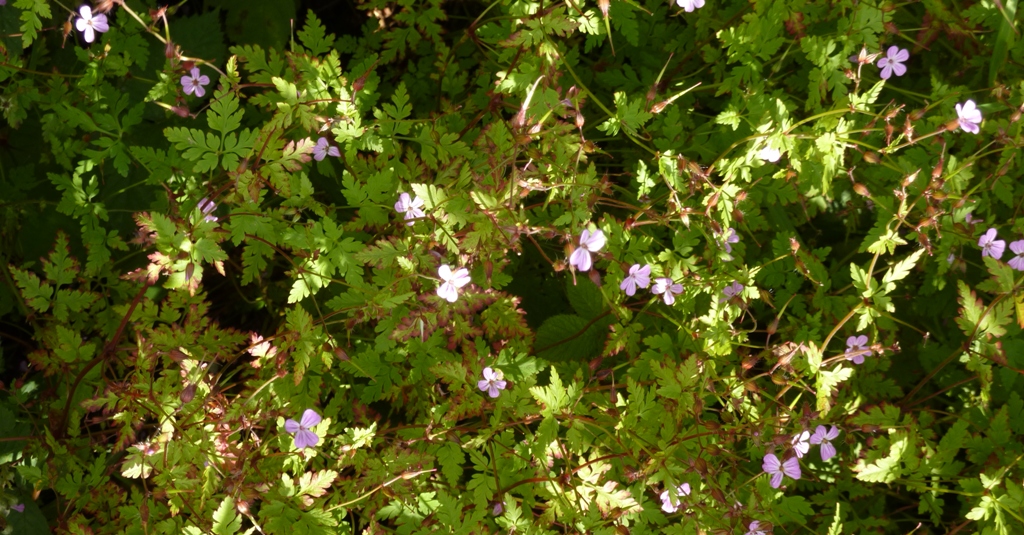
Probably the most common Crane’s-bill is Herb Robert or Geranium robertianum!

This week another pretty and mostly common native ‘weed’ which can even be useful! It easily could have been called the ‘Geranium’ family instead of Crane’s-bill family as the genus Geranium is its largest member here!

But the genus Erodium, has also several native species on the B.I. and has a fruit similar to a stork’s bill.

So what is the difference in those bird bills to give these plants their common name?

Found this information online from Bird expert Quentin Kalis. “The easiest way is to look at the bill; storks have large heavy bills and cranes have short bills.” Herons have intermediate bills between the two, and you can see pictures of those birds in the link here.

A few native Geranium and Erodium species are ‘useful’ for us people. Various insects find the plants a good food source. Below is the contents of all the species described on the next page and which are native according to Stace.

Contents:

Geranium:

from Subgenus Geranium:

G. rotundifolium or Round-leaved Crane’s-bill
G. sylvaticum or Wood Crane’s-bill
G. pratense or Meadow Crane’s-bill
G. sanguineum or Bloody Crane’s-bill
G. columbinum or Long-Stalk Geranium
G. dissectum or Cut-leaved Crane’s-bill

from Subgenus Robertium: · 

G. pyrenaicum or Hedgerow Crane’s-bill
  G. pusillum or Small-flowered Crane’s-bill
  G. molle or Dove’s-foot Crane’s-bill·
  G. lucidum or Shining Crane’s-bill
  G. purpureum or Little Robin·
  G. robertianum or Herb-Robert

Erodium spp.

Erodium maritimum or Sea Stork’s-bill
E. moschatum or Musk Stork’s-bill
E. cicutarium or Common Stork’s-bill
E. lebelii or Sticky Stork’s-bill
E. x anaristatum (is a cross of E. cicutarium x E. lebelii)
  • Erodium crinitum or Eastern Stork’s-bill
  • Erodium manescavii or Garden Stork’s-bill
Continue reading “Geraniaceae or the Crane’s-bills and Stork’s-bills family”