The Brassica family and their useful plants; Part 3

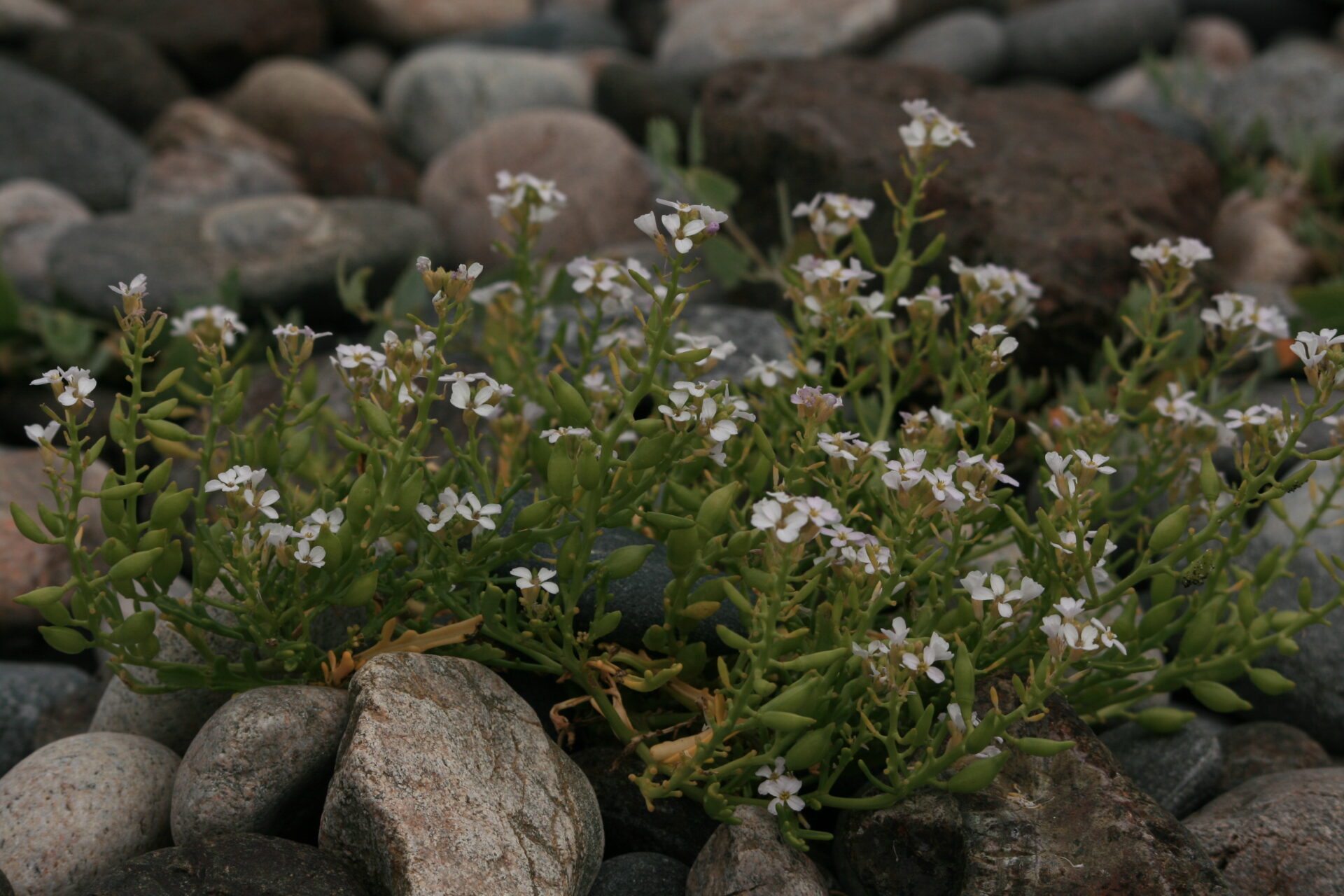
Cakile maritima or Sea Rocket as growing on the Lizard peninsula, Cornwall (Matt Summers)

Mostly the yellow flowered plants in the Brassica or Crucifer family were covered in the previous Part 2.

In Part 3, I will write about the pink and/or white flowered Crucifers which inhabit these Isles.

I follow the order of The Wild Flower Key as this has useful pictures which make identifying this somewhat unfamiliar and confusing family a lot easier!

I use the Online Atlas of the British and Irish Flora link on the First, italic, scientific names, so you can find out where it is likely to be found growing in the wild. You can also find other useful information here, especially its growing habitat and conditions!

On the Common Name link you can also find more information as well as useful pictures. Pictures in this post are by Matt Summers, Mike Poulton and sourced through Wikipedia Common with thanks.

Please use Jump-links in contents to read more about the individual genera & species on the next page!

Contents:

Group 5: Pink and/or white flowered Crucifers with elongated fruits.

Matthiola, Hesperis, Cakile & Lunaria
  • Matthiola incana or Hoary Stock
  • Matthiola sinuata or Sea Stock
  • Hesperis matronalis or Dame’s-violet
  • Cakile maritima or Sea Rocket
  • Lunaria annua or Honesty
Cardamine
Nasturtium
Arabis & Arabidopsis
Alliaria petiolata or Jack-by-the-Hedge/ Garlic Mustard
Draba & Drabella

Group 6: White flowered Crucifers with short fruits

Microthlaspi, Noccaea and Thlaspi
  • Microthlaspi perfoliatum or Cotswold (Perfoliate) Penny-cress
  • Noccaea caerulescens or Alpine Penny-cress
  • Thlaspi arvense or Field Penny-cress
Lepidium
TEESDALIA
  • Teesdalia nudicaulis or Shepard’s Cress
Capsella, Iberis, Erophila
  • Capsella bursa-pastoris or Shepard’s-purse
  • Iberis amara or Wild Candytuft
  • Erophila verna or Common Whitlowgrass
Cochlearia, Lobularia, Hornungia
  • Cochlearia officinalis agg or Common Scurvygrass
  • Cochlearia danica or Danish scurvygrass
  • Cochlearica anglica or English Scurvygrass/ Long-leaved Scurvygrass
  • Lobularia maritima or Sweet Alison
  • Hornungia petraea or Hutchinsia

Group 7: White flowered Crucifers with very large leaves

Crambe & Armoracia
  • Crambe maritima or Sea-kale
  • Armoracia rusticana or Horse-radish
Continue reading “The Brassica family and their useful plants; Part 3”

Index of Native Plant Families

Below a table of all the Native Plant Families I hope to write about in the coming future and links on all those families already covered. This will also be displayed on one of my pages, as it gets easily lost in between my posts!

The reasons for doing my blog is also best explained in these earlier posts:

Introduction to my ‘Wonderful Weed Weekly’ blog

My dream for an Ethnobotanical Garden in the British Isles

Here you can find my page that goes through the classification of all the Vascular plants based on Clive Stace’s New Flora of the British Isles 3rd Edition. I am still in the process of updating it to the latest 4th Edition.

Continue reading “Index of Native Plant Families”

The Brassica family and their useful plants; Part 2

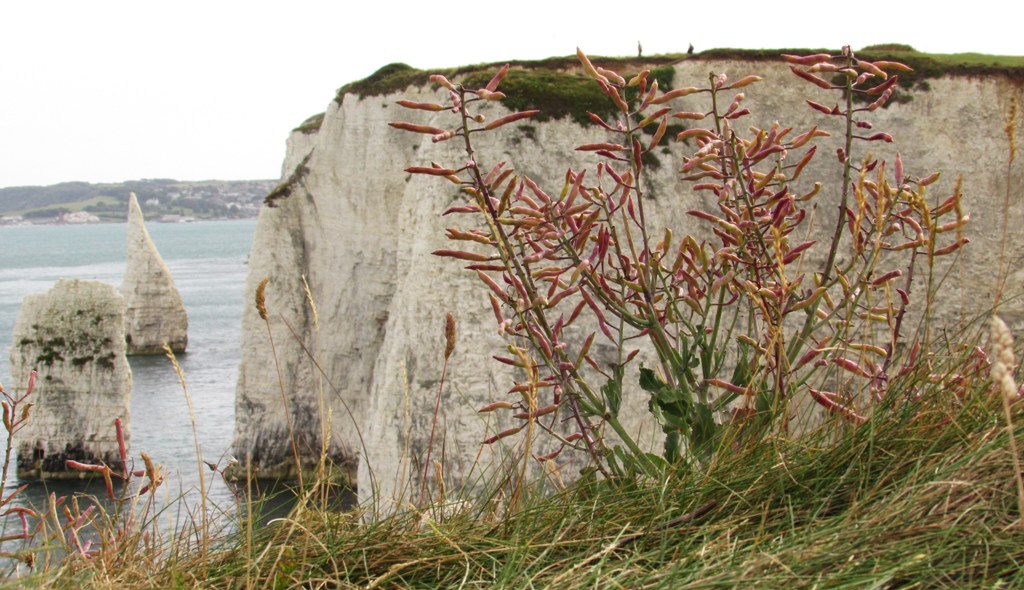
Wild Cabbage at Old Harry Rocks, Dorset
Wild Cabbage growing near Old Harry Rocks in Dorset! (by Matt Summers)

In this post some more useful members of the Brassica or Crucifer family. It covers most of the yellow flowered ones!

In Part 3, I will write about the pink and/or white flowered Crucifers which inhabit these Isles.

And these are the plants I covered earlier in Part 1- just to give a small variety of useful Crucifers!

  • Erophila verna or Common Whitlowgrass 
  •  Cardamine pratensis or Cuckoo Flower, Lady’s Smock
  • Capsella bursa-pastoris or Shepard’s purse 
  • Arabidopsis thaliana or Thale Cress 
  •  Cochlearia danica or Danish Scurvygrass
  • Alliaria petiolata or Jack-by-the-Hedge , Garlic Mustard and Hedge Garlic
  •  Cardamine hirsuta or Hairy Bitter-cress
  •  Rorippa nasturtium-aquaticum or Water-cress

Family 87: the Brassica, Crucifer or Cabbage Family, scientifically known as the Brassicaceae, has approx 52 genera in the British Isles according to Stace! Not all are strictly native but it is an important family for our well known vegetables such as all types of cabbages, radishes, and root vegetables such as Swedes and Turnips!

I use colour coding for easy reading! Blue background is general information about the plant from Online Atlas. Green is about all the uses except for medicinal uses or if there is a warning in which case I use a pink background. This time most pictures are from Wikipedia and illustrations by Köhler–s Medizinal-Pflanzen , Johann Georg Sturm (Painter: Jacob Sturm) – Figures from Deutschlands Flora in Abbildungen at http://www.biolib.de, Public Domain as well as other illustrations as added in links.

Please use the Jump-links in the Contents in order to get easily to the plants described on next page!

Contents:

How to identify the Brassicas/Crucifers and the 7 main groups

Group 1: yellow flowered Crucifers with jointed fruits
Brassica
COINCYA
  • Coincya monensis ssp. monensis or Isle-of-Man Cabbage
  • Coincya wrightii or Lundy Cabbage
SINAPIS
Diplotaxis
Sisymbrium officinale or Hedge Mustard
Hirschfeldia incana or Hoary Mustard
Raphanus
Group 2: yellow or orange flowered Crucifers with elongated fruits
Barbarea
Erysimum cheiranthoides or Treacle-mustard
Descurainia sophia or Flixweed
Sisymbrium

Other less known spp. (Neophytes):

  • Sisymbrium erysimoides or French Rocket
  • Sisymbrium irio or London-rocket
  • Sisymbrium loeselii or False London-rocket
  • Sisymbrium polyceratium or Horned Mustard
Group 3: yellow flowers in erect racemes, petals very small compared with other yellow Crucifers.
RORIPPA
Turritis glabra (syn. Arabis glabra) or Tower Mustard
Erysimum cheiri or Wallflower
Isatis tinctoria or Woad
Group 4: yellow flowers and fruit not obviously composed of 2 parallel valves.
Rapistrum rugosum or Bastard Cabbage
Continue reading “The Brassica family and their useful plants; Part 2”

Ferns and all their uses Part 2

in Part 2 we continue with the:

‘TRUE’ or LEPTOSPORANGIATE FERNS

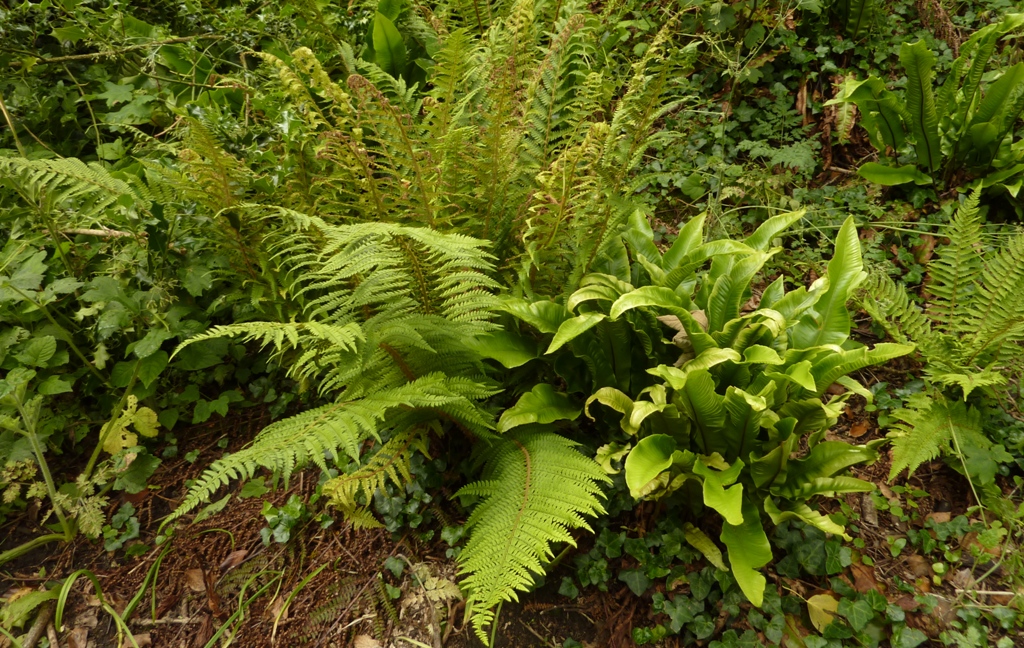
Several types of ferns on a shady bank in summer
Several types of ‘True’ ferns on a shady bank in summer!

This has 16 families described in Stace, and on the next page, we continue with family 10 to the last family 21, which all grow in the British Isles in various habitats.

I use colour coding for easy reading! Blue background is general interesting info (although I hope you find it all interesting!!). Green is about all the uses except for medicinal uses or if there is a warning in which case I use a pink background. Pictures by Matt Summers & Mike Poulton unless stated.  FBBC is added if the plant in question occurs in the Flora of Birmingham and the Black Country.

I added contents where you can jump to the correct fern family or genus on next page.

See for Part 1 here:

Classification of fern families in Stace:

Contents:

10 DICKSONIACEAE –Tree fern Family

11 DENNSTAEDTIACEAE – Bracken family

Pteridium aquilinum or Bracken FBBC

12 PTERIDACEAE – Ribbon Fern family

  • Cryptogramma crispa or Parsley Fern
  • Anogramma leptophylla or Jersey Fern
  • Adianthum capillus-venerisor Maidenhair Fern
  • Pteris vittata and P. cretica or Ribbon Fern

13 CYSTOPTERIDACEAE

Gymnocarpium
  • Gymnocarpium dryopteris or Oak Fern FBBC
  • G. robertianum or Limestone Fern FBBC
Cystopteris
  • Cystopteris fragilis or Brittle Bladder-fern
  • C. diaphana or Diaphanous Bladder-fern
  • C. alpina or Alpine Bladder-fern
  • C. dickieana or Dickie’s Bladder-fern
  • C. montana or Mountain Bladder-fern

14 ASPLENIACEAE –Spleenwort family

  • Asplenium scolopendrium (Syn. Phyllitis scolopendrium) or Hart’s-tongue Fern FBBC
  • A. adiantum-nigrum or Black Spleenwort FBBC
  • A. marinum or Sea Spleenwort
  • A. trichomanes or Maidenhair Spleenwort FBBC
  • A. ruta-muraria or Wall-rue FBBC
  • A. ceterach (syn. Ceterach officinarum) or Rustyback FBBC

less common species are:

  • Asplenium fontanum or Smooth Rock-spleenwort
  • A. obovatum or Lanceolate Spleenwort
  • A. onopteris or Irish Spleenwort
  • A. trichomanes subsp. pachyrachis or Lobed Maidenhair Spleenwort
  • A. septentrionale or Forked Spleenwort
  • A. viride or Green Spleenwort

15 THELYPTERIDACEAE – Marsh Fern family

  • Thelypteris palustris or Marsh Fern FBBC
  • Phegopteris connectilis or Beech Fern
  • Oreopteris limbosperma or Lemon-scented Fern FBBC

16 WOODSIACEAE  or Woodsia family

  • Woodsia ilvensis or Oblong Woodsia
  • W. alpina or Alpine Woodsia

17 ATHYRIACEAE – Lady-ferns and allies

  • Athyrium filix-femina or Lady-fern FBBC
  • A. distentifolium or Alpine Lady-fern

18 BLECHNACEAE – Hard-fern family

  • Blechnum spicant or Hard-fern FBBC
  • B. penna-marina or Little Hard-fern
  • B. cordatum or Greater Hard-fern

19 ONOCLEACEAE – Ostrich fern family

  • Onoclea sensibilis or Sensitive Fern (neophyte) FBBC
  • Onoclea (formerly Matteuccia) struthiopteris or Ostrich Fern (neophyte)

19A DAVALLIACEAE (for ornamental Davallia canariensis)

20 DRYOPTERIDACEAE – Buckler-fern family

  • Cyrtomium falcatum or House Holly-fern (neophyte)
  • C. fortunei or Fortune’s Holly-fern (neophyte)
Polystichum
  • Polystichum setiferum or Soft Shield-fern FBBC
  • P. aculeatum or Hard Shield-fern FBBC
  • P. lonchitis or Holly-fern
Dryopteris or Buckler-ferns
  • Dryopteris oreades or Mountain Male-fern
  • D. filix-mas or Male-fern FBBC
  • D. affinis agg. or Golden-scaled Male-fern FBBC
  • D. × ⁠complexa agg (D. affinis agg. × filix-mas) FBBC
  • D. cambrensis
  • D. remota or Scaly Buckler-fern
  • D. aemula or Hay-scented Buckler-fern
  • D. submontana or Rigid Buckler-fern
  • D. carthusiana or Narrow Buckler-fern FBBC
  • D. cristata or Crested Buckler-fern FBBC
  • D. dilatata or Broad Buckler-fern FBBC
  • D. expansa or Northern Buckler-fern

21 POLYPODIACEAE – Polypody family

  • Polypodium vulgare or Polypody FBBC
  • P. interjectum or Intermediate Polypody FBBC
  • P. cambricum or Southern Polypody
Continue reading “Ferns and all their uses Part 2”

Ferns and all their Uses Part 1

This is part 1 of all those ferns and fern- allies growing on the British Isles as well as many other countries in the temperate or even tropical world!

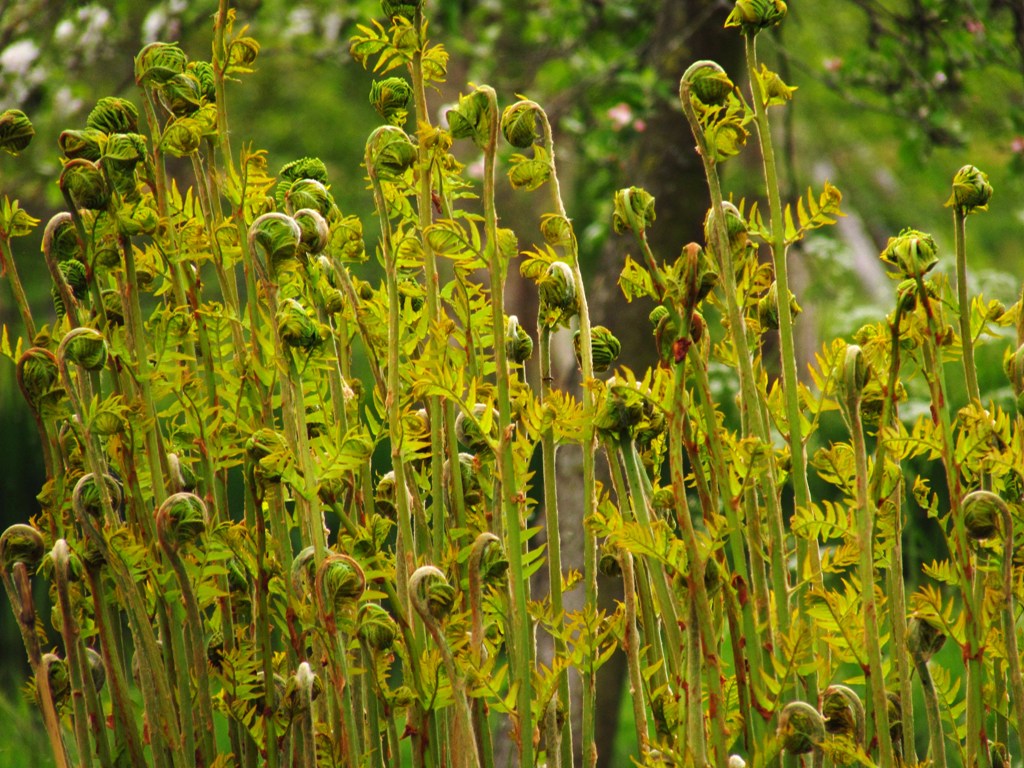
The fiddleheads of our Royal Fern are very ornamental and can be eaten as food!

Ferns flourished before all the flowering plants came on earth and still thrive in many niche areas all over the world.

It is a large and divers group and a short account of their classification follows on the next page. For each group there may be one or two important species which have some story to tell or ethnobotanical use!

Below is a lovely short poem about the Ferns, written for the former students of and by Ian Trueman, Emeritus Professor in Plant Ecology, University of Wolverhampton several years ago.

Ferns

When the green weeds rose from the sea

We, the great-leaved plants, were the last to raise our heads.

But we soon became perfect in the horsetail forests,

When the coal was being made in sun and steam.

And there, quiet under the bristle-leaved trees

We became perfect, as you see us now.

And quiet, and secret, and everlasting

We still unfold our ancient dance

Under the proud stems of our seed-borne sons.

Links are provided from various websites for you to look into each group or plant a bit further. Such as the Online Atlas of the British and Irish Flora, where you can find out exactly where it grows in the B.I. This time I used copies of prints of ‘The Ferns of Great Britain and Ireland’ as well as pictures sourced through Wikipedia Common. Medicinal uses from ‘The Medicinal Flora of Britain and Northwestern Europe’ by Julian Barker. But please note this is an educational blog only and going out harvesting rare plants is not advisable for use as medicine and should be left to a qualified herbalist! Pictures by Matt Summers unless stated.  FBBC is added behind name in the Contents page if the plant in question is mentioned or/and described in the Flora of Birmingham and the Black Country.

You can listen to this radio play by Brett Westwood called Natural Histories: Ferns: https://www.bbc.co.uk/sounds/play/m000b80h

General information and classification of Ferns:

The PTERIDOPHYTES or Ferns & Fern-allies have varied habit and leaf structure but are distinctive from the flowering plants in that they do not bare flowers but have spores and spore structures, which are an important identification feature.

The life cycle of the fern has two different stages;

  • sporophyte, which releases spores, and
  • gametophyte, which releases gametes.

Gametophyte plants are haploid, sporophyte plants diploid. This type of life cycle is called alternation of generations. To follow the life cycle of the fern, begin at number one in the diagram of this link.

Stace divides all the ferns and fern-allies into 4 informal large groups:

  • Lycophytes with 1) Lycopodiaceae – Clubmoss family 2) Selaginellaceae -Lesser clubmoss family and 3) Isoetaceae – Quillwort family
  • Eusporangiate ferns with 4) Ophioglossaceae- Adder’s tongue family
  • Calamophytes with 5) Equisetaceae – Horsetail family AND
  • Leptosporangiate ferns or True ferns with 16 families (see with entry there)

Please use the jump-links provided in the Contents to quickly get to the family you want on the next page.

Contents:

The LYCOPHYTES

1 LYCOPODIACEAE – Clubmoss family

Huperzia selago or Fir Clubmoss FBBC

  • Lycopodium clavatum or Stag’s-horn Clubmoss
  • L. annotinum or Interrupted Clubmoss
  • L. lagopus or Hare’s-foot Clubmoss

2 SELAGINELLACEAE – Lesser clubmoss family

  • Selaginella selaginoides or Lesser Clubmoss
  • S. kraussiana or Krauss’s Clubmoss (neophyte) FBBC

3 ISOETACEAE – Quillwort family

  • Isoetes lacustris or (Lake) Quillwort
  • I. echinospora or Spring Quillwort
  • I. histrix or Land Quillwort

The EUSPORANGIATE FERNS

4 OPHIOGLOSSACEAE – Adder’s-tongue family

  • Ophioglossum vulgatum or Adder’s-tongue FBBC
  • O. azoricum or Small Adder’s-tongue
  • O. lusitanicum or Least Adder’s-tongue
  • Botrychium lunaria or Moonwort FBBC
  • B. nordicum or Nordic Moonwort

CALAMOPHYTES   or Horsetails

See also here:

https://wonderfulweedweekly.co.uk/the-horsetails/

5 EQUISETACEAE – Horsetail family

  • Equisetum arvense or Field Horsetail FBBC
  • E. fluviatile or Water Horsetail FBBC
  •  E. × ⁠litorale (Equisetum arvense × fluviatile) or Shore Horsetail FBBC
  • E. hyemale or Rough Horsetail FBBC
  • E. palustre or Marsh Horsetail FBBC
  • E. pratense or Shady Horsetail
  • E. ramosissimum or Branched Horsetail
  • E. sylvaticum or Wood Horsetail FBBC
  • E. telmateia or Great Horsetail FBBC
  • E. variegatum or Variegated Horsetail
  • E. × ⁠trachyodon (Equisetum hyemale × variegatum) or Mackay’s Horsetail

The TRUE FERNS or LEPTOSPORANGIATE FERNS

6 OSMUNDACEAE or Royal Fern family

Osmunda regalis or Royal Fern FBBC

7 HYMENOPHYLLACEAE – Filmy-fern family

  • Hymenophyllum tunbrigense or Tunbridge Filmy-fern
  • H. wilsonii or Wilson’s Filmy-fern
  • Trichomanes speciosum or Killarney Fern

8 MARSILEACEAE – Pillwort family

Pilularia globulifera or Pillwort FBBC

9 SALVINIACEAE – Water fern family

Azolla filiculoides or Water Fern FBBC

9A CYATHEACEAE

Continue reading “Ferns and all their Uses Part 1”