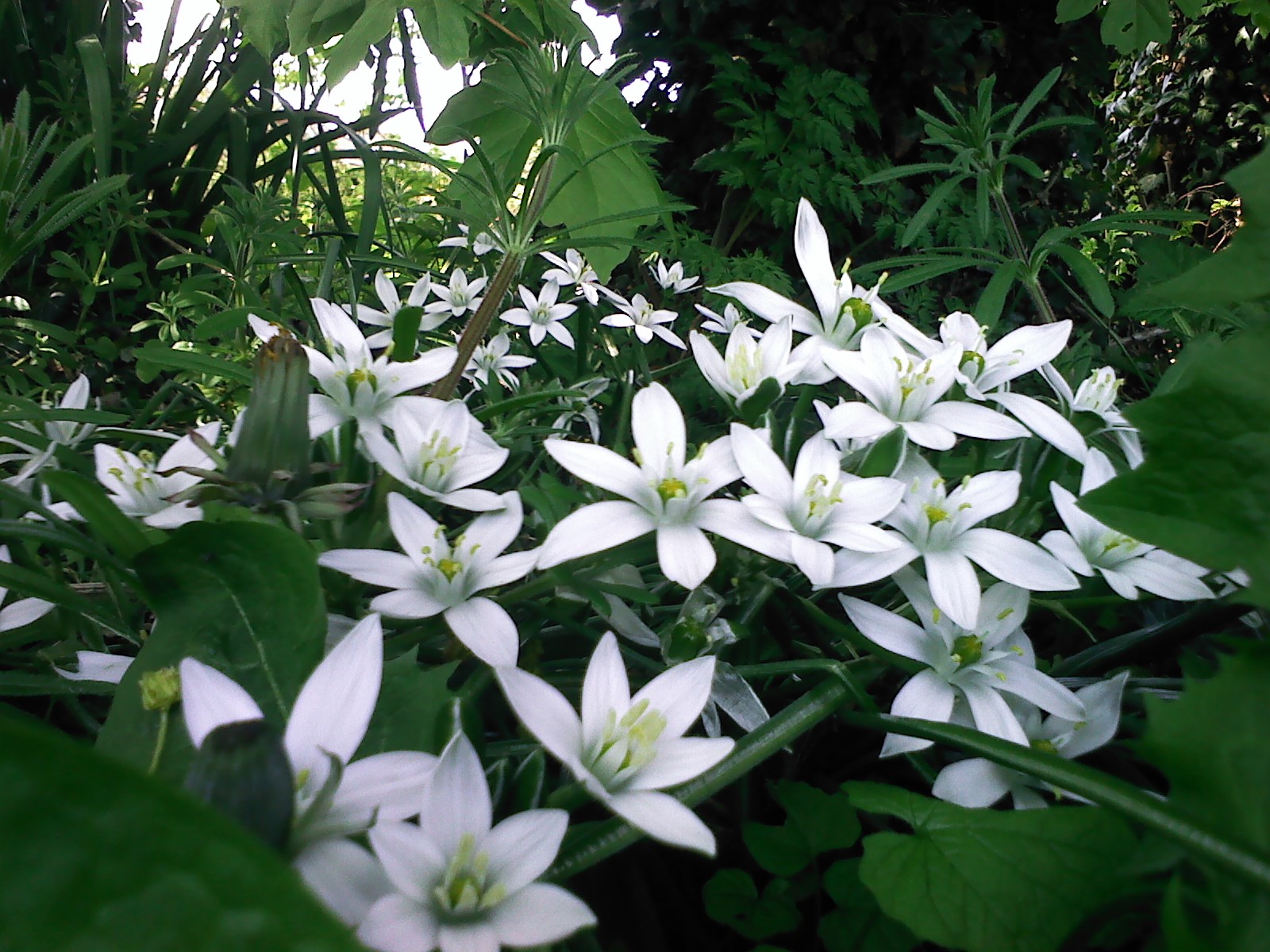
The Star-of-Bethlehemis one attractive and native member in the Asparagaceae (Picture by Matt Summers)
This and the previous post are about a number of native families which in the ‘Wild Flower Key’ are lumped together into the one Liliaceae but are in fact classified in different families according to Stace.
Again, similar to the previous post this has several good garden plants which have established themselves often very happily in the wild!
The debate of native and non-native and what to include in my blog will be more and more difficult in future as rare endemics will not be known by many and certainly should not be ‘used’ in any way! Common, ornamental plants will be more accessible to all and get established in the wild more and more for everybody to use! They will become in fact our new ‘weeds’!
Click links for more info and pictures of the plants from various websites. Scientific/Latin Name usually has a link from the Online Atlas of the British Isles and Irish Flora. Pink background means a warning (such as poisonous!) or medicinal use, green for edible or other uses and blue for habitat where it can be found in B.I. , interesting facts or wildlife use.
Contents are included to easily jump to right genus on next page!
Pictures with thanks by Matt Summers, Mike Poulton of Ecorecord and Wikipedia .
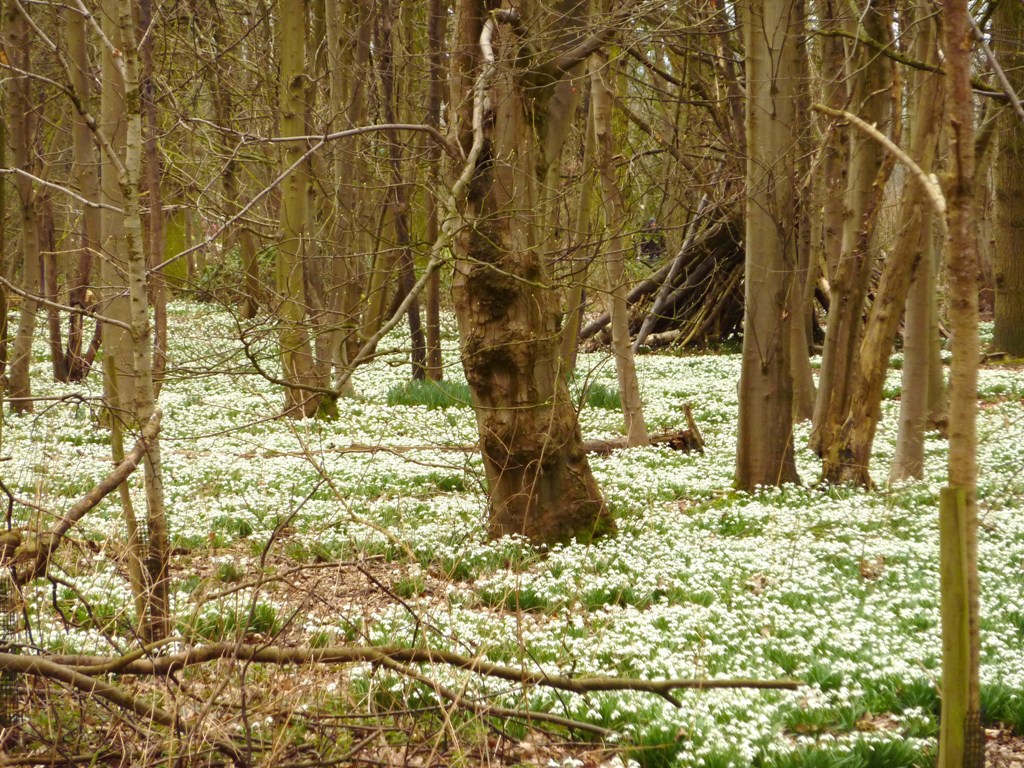
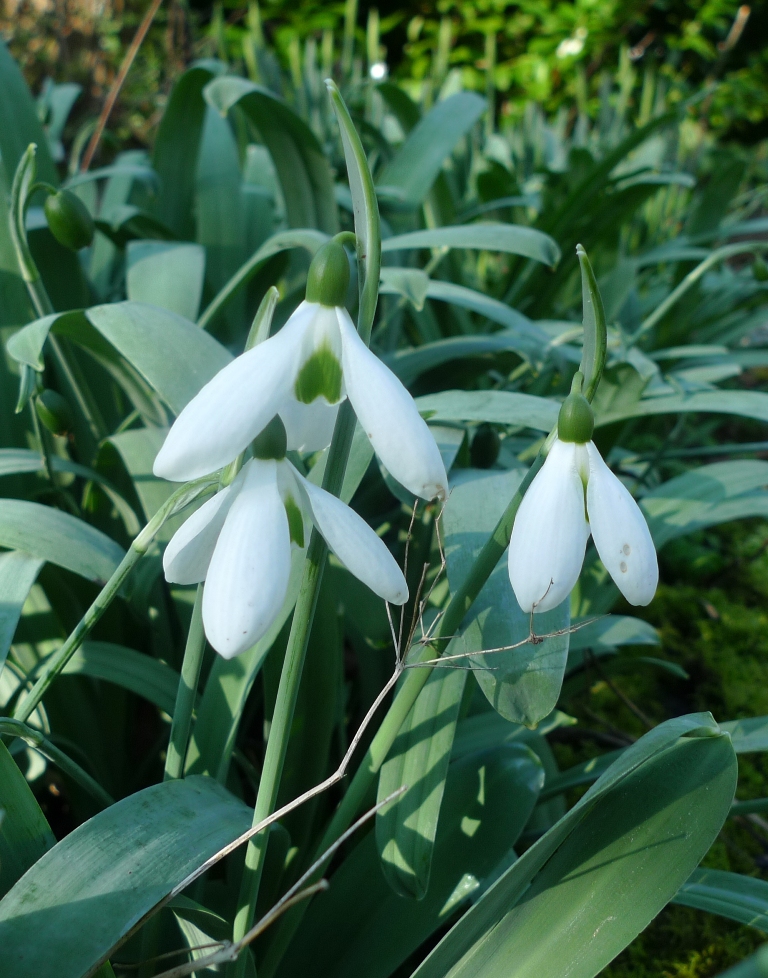
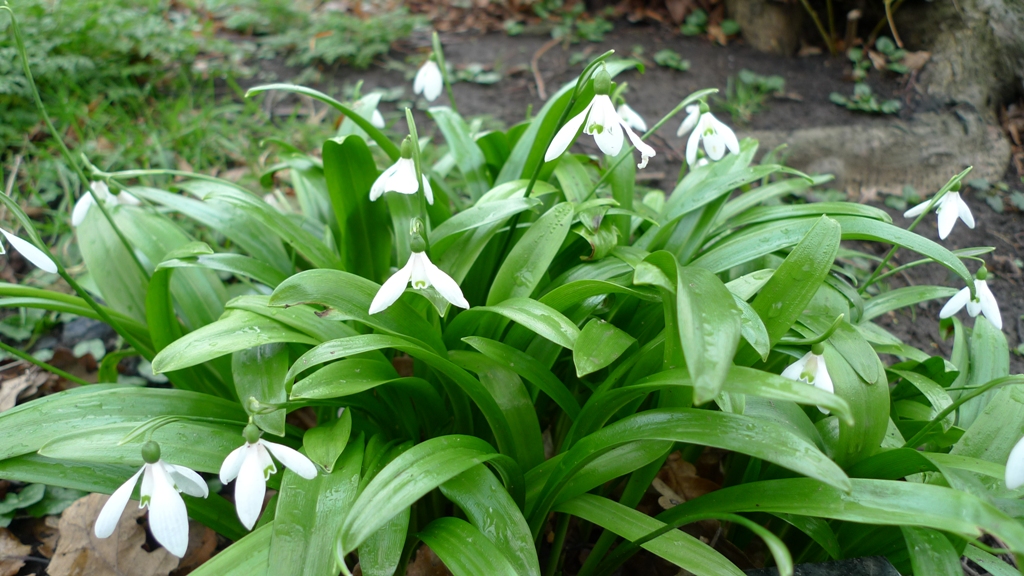
‘Snowdrops’ and Spring is on its way! These are part of the large Lily-family-see below (by Matt Summers)
This and the next posts are about a number of native families which in the ‘Wild Flower Key’ is lumped together into the one Liliaceae.
But according to Stace this family is split into several families.
This is what he has to say about it:
‘It has long been known that Cronquist‘s very broad Liliaceae should be subdivided, some of the segregate families belonging to different orders. This has now been confirmed by molecular data; the taxa in our flora should be divided into at least the 9 families recognised here.’
The debate of native and non-native and what to include in my blog will be more and more difficult in future as rare endemics will be less known by many and the neophytes will get more widespread! They often are or will become in fact our new ‘weeds’!
Click the links for more info and pictures from various websites. Scientific/Latin Name usually has link from the Online Atlas of the British Isles and Irish Flora. Pink background means a warning (such as poisonous!) or medicinal use, green for edible, ornamental or other uses and blue for habitat where it can be found in B.I. , for interesting facts or wildlife use. Pictures with thanks from Mike Poulton (MWP), Rudi Pilsel, Matt Summers and Wikipedia Commons.
Below you can find the Liliaceae and Amaryllidaceae (included the Alliaceae).
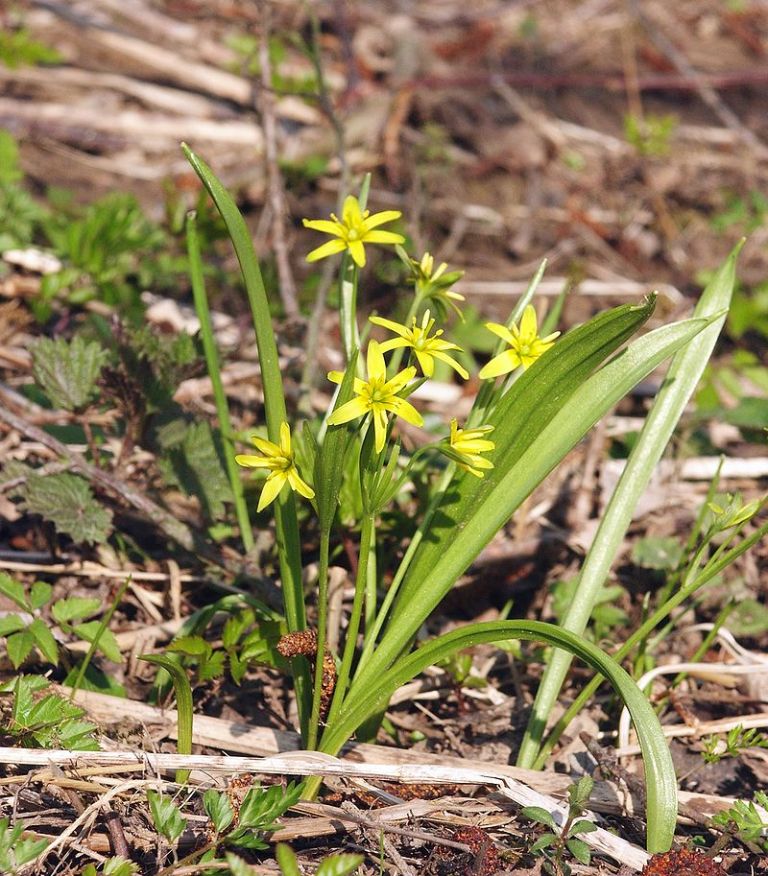
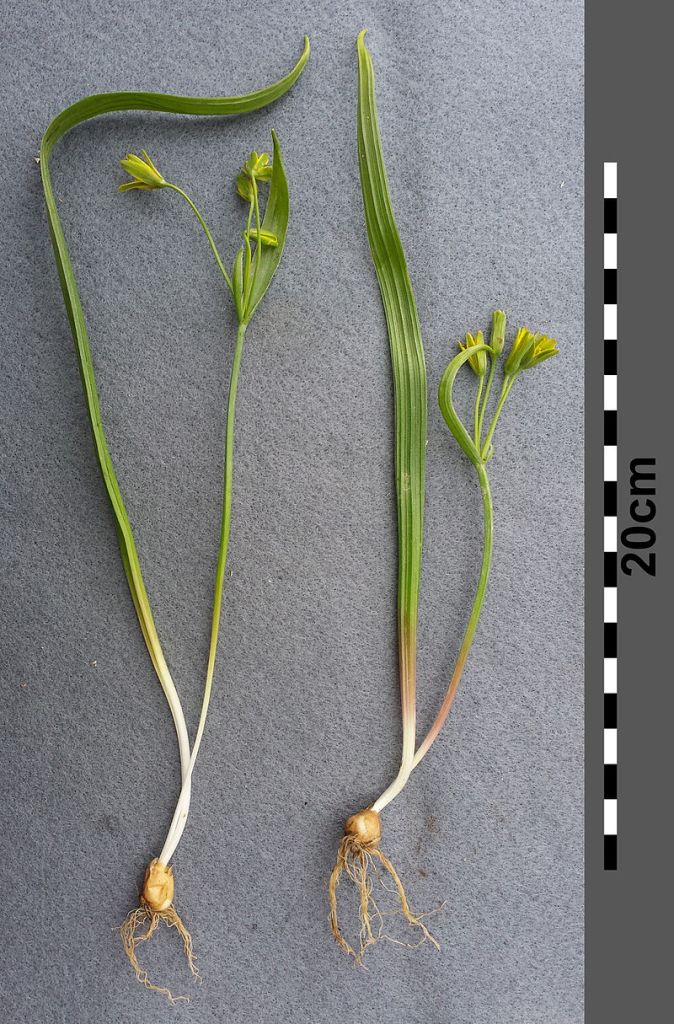
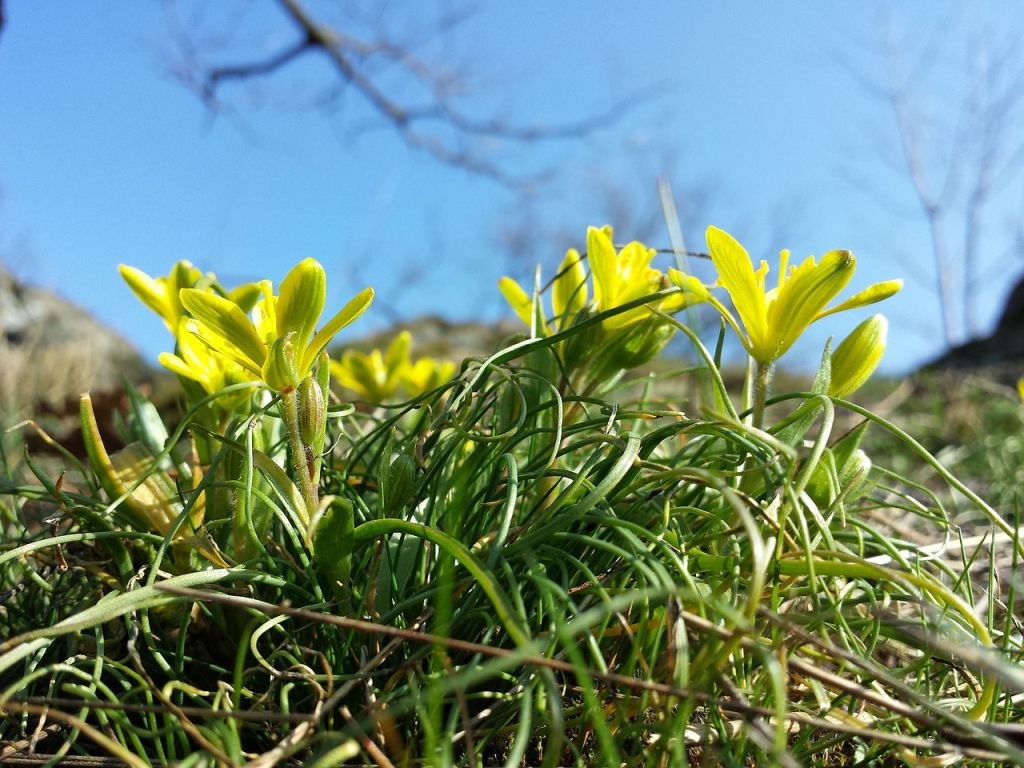
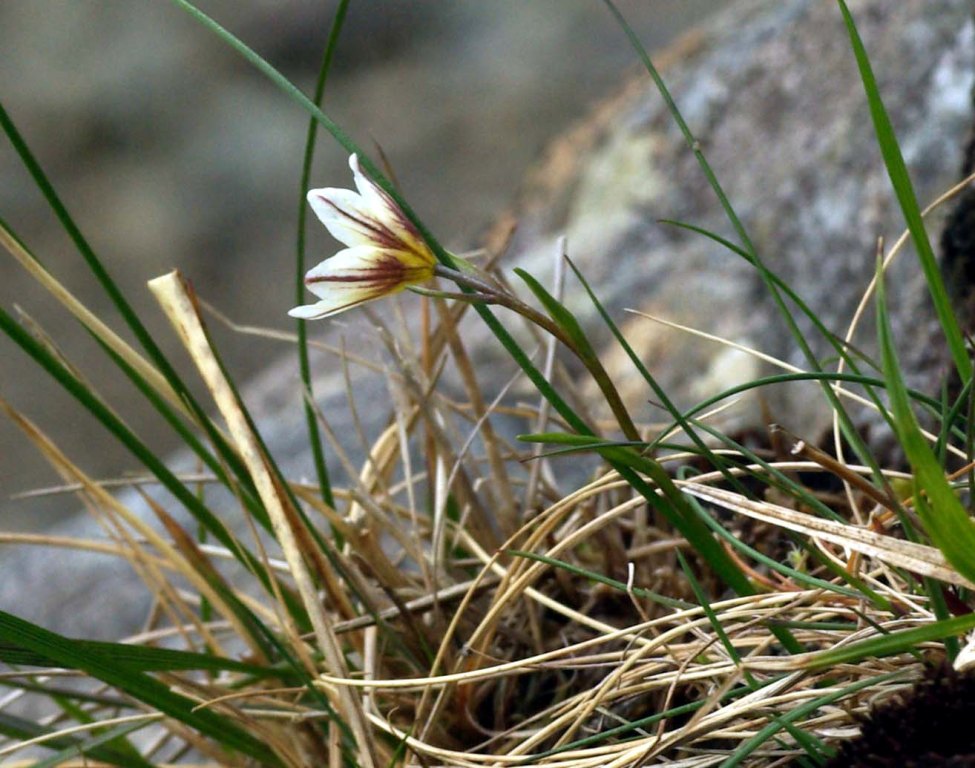
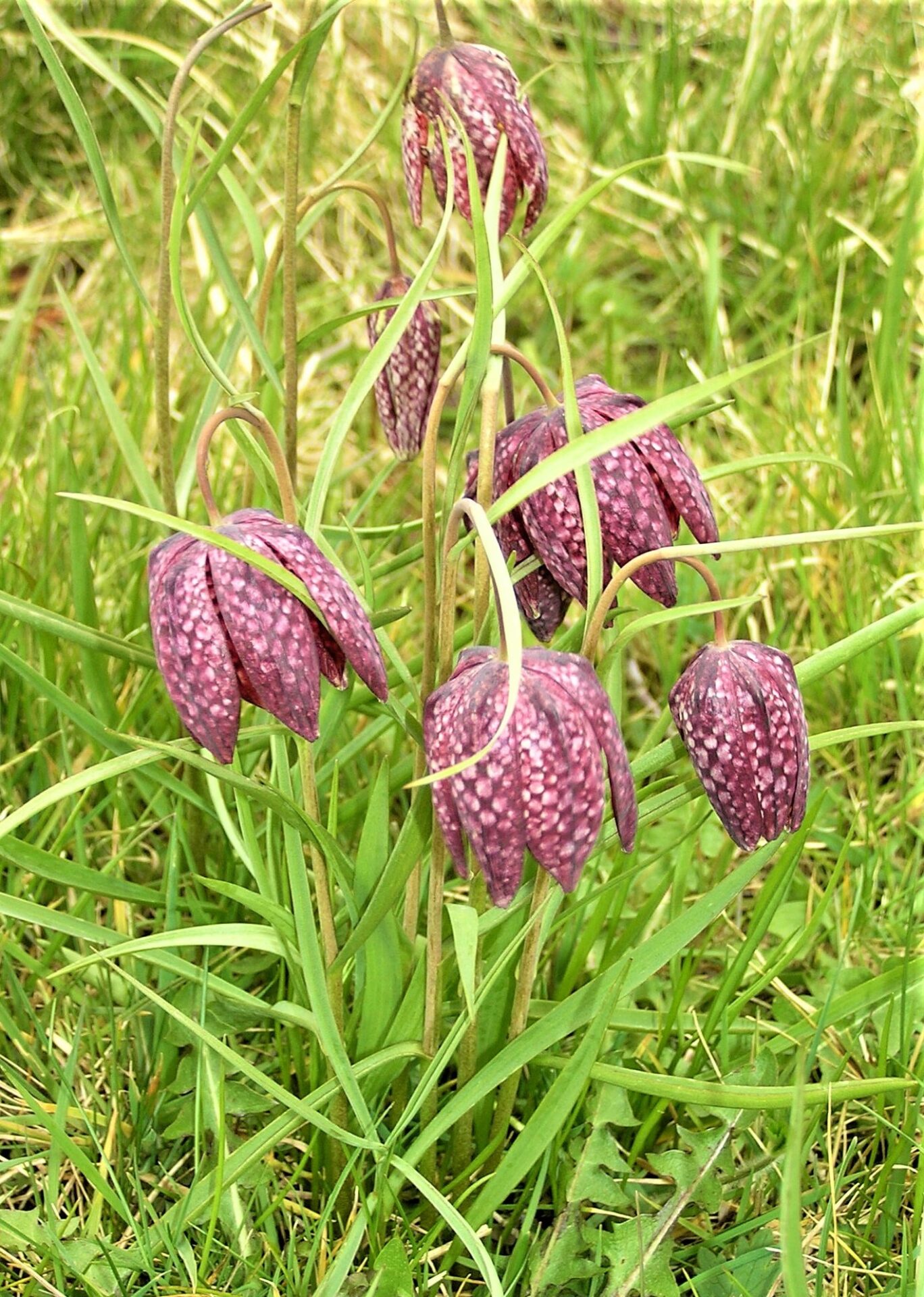
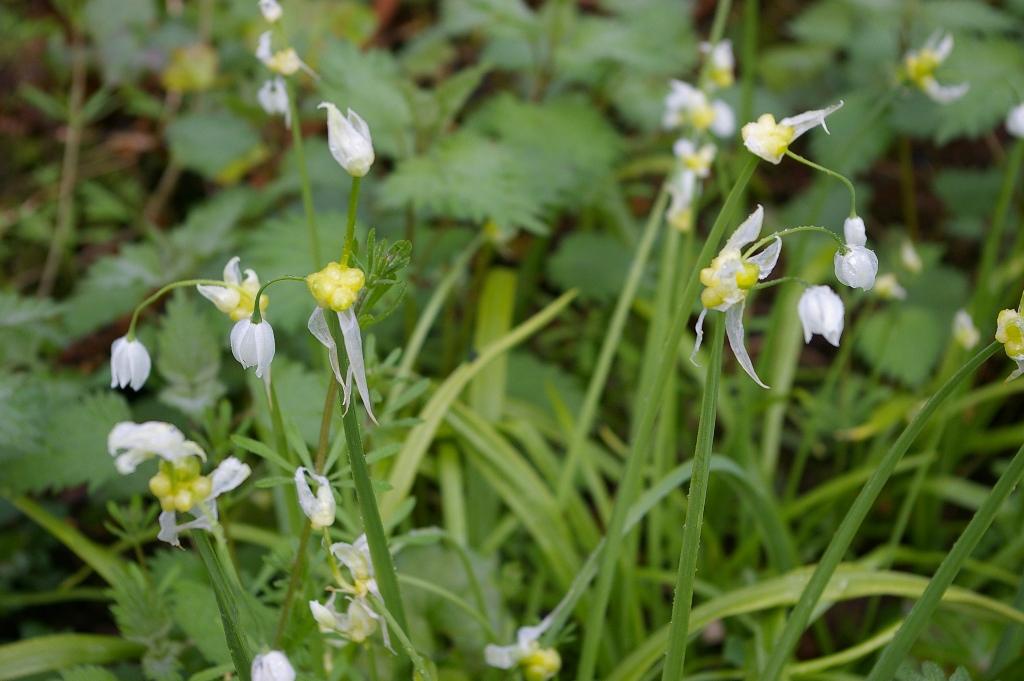
We start of with the Liliaceae family, which in factonly has Fritillaria meleagris and 3 native species in the genus Gagea.
A bulbous perennial herb of moist, base-rich, shady habitats including woods, hedgerows, limestone pavements, pastures, riverbanks and stream banks; sometimes washed down on alluvium in riverine woodland subject to seasonal flooding. A new plant for me and I do like the common name.
A bulbous perennial herb growing in shallow pockets of soil in crevices, on ledges and in small, grazed patches of turf on S.- and E.-facing slopes overlying dolerite.
A bulbous perennial herb confined to damp ledges and crevices of mildly acidic rocks, usually on N.- to N.E.-facing cliffs, frequently in shaded sites and often sheltered by overhangs. Seeds are rarely produced and most reproduction is by rhizome-like structures. 550-760 m (Snowdonia, Caerns.).
A bulbous perennial herb of damp, sometimes winter-flooded, neutral grasslands, usually those managed for hay with aftermath grazing. It is frequently planted in other grassland habitats and sometimes becomes naturalised.
There is some disagreement amongst botanists as to whether F. meleagris is a native species or a long-established garden escapee. The plant was first described in the 16th century by herbalist John Gerard who had only known of it as a garden plant and it was not recorded in the wild until 1736, which has led some to argue that it must be an escapee. However, the fact that its habitat is usually confined to ancient hay meadows and it does not easily spread to adjoining land, leads others to the conclusion that it is a native species which became isolated from the European population when Britain was cut off from mainland Europe after the last glacial period. Clive Stace (2010) says that it is “doubtfully native”.
Now easily available as an ornamental spring bulb for the garden, it is commonly sold as a mixture of different coloured cultivars. The species and the pure white-flowered variety F. meleagris var. unicolor subvar. alba have gained the Royal Horticultural Society‘s Award of Garden Merit.
Like many plants in the lily family, F. meleagris is susceptible to the scarlet lily beetle, which can seriously damage or kill it.
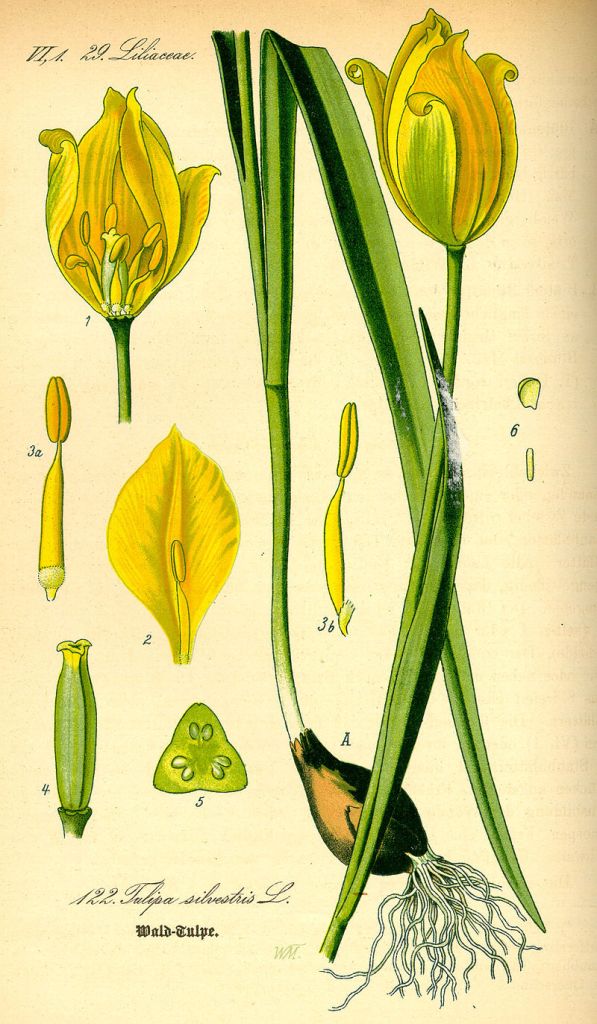
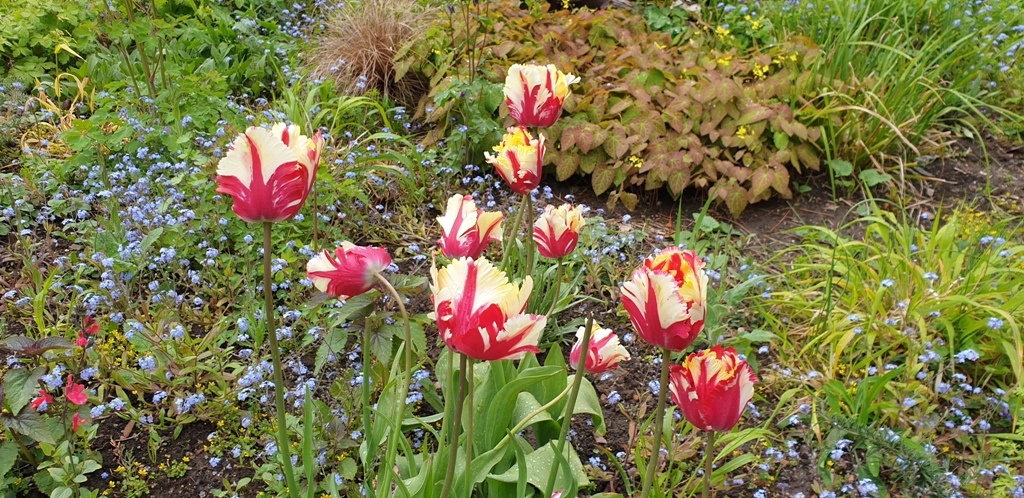
Three more plants mentioned in Stace could easily be mistaken as native but are all garden plants sometimes found naturalized in the B.I. Please refer to links for further information:
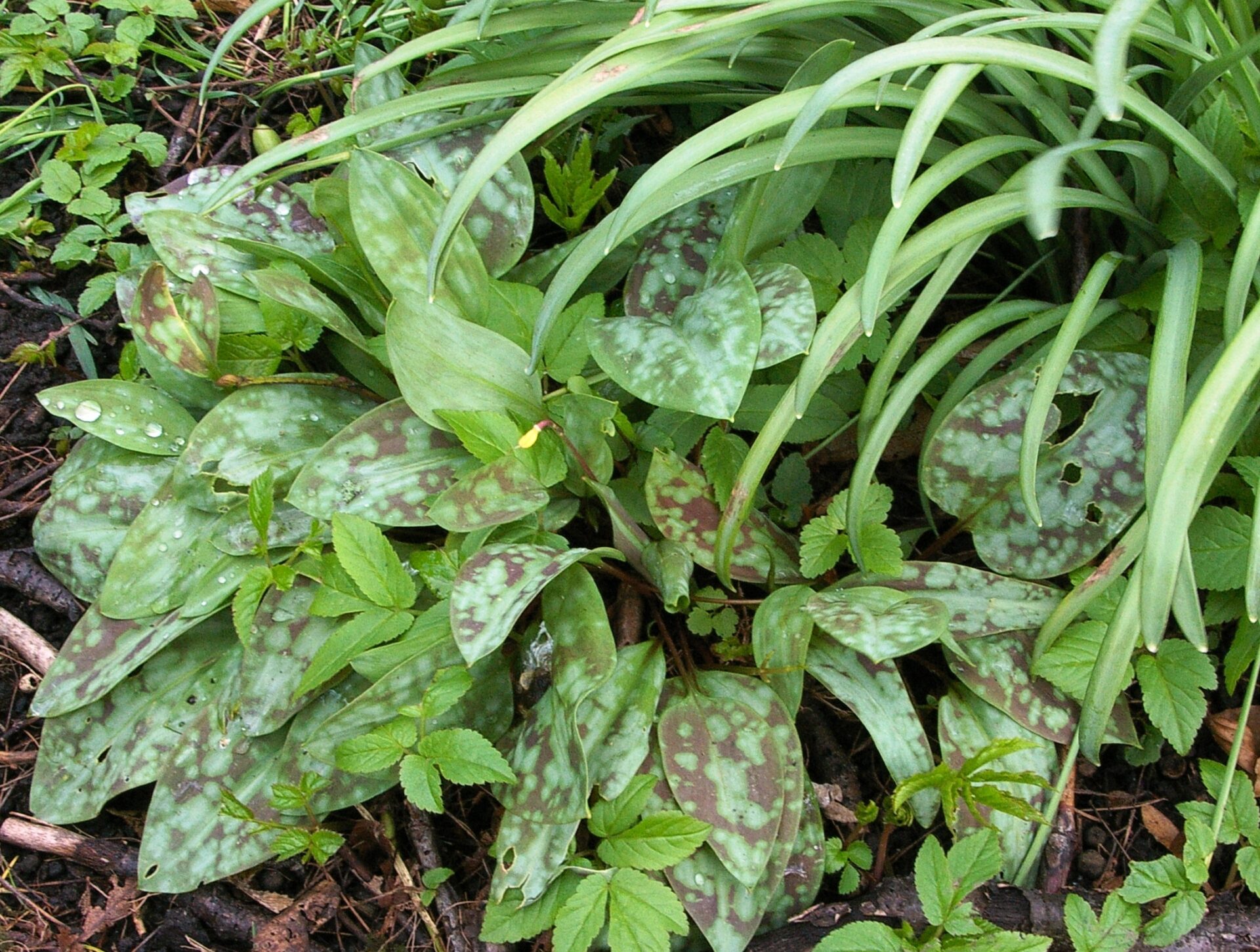
A bulbous perennial herb which is naturalized in woodland, parks and rough grassland, where it is originally planted or occurs as a relic of cultivation. Reproduction by seed can be prolific.
This is an occasional escaped garden plant. It is native to central and southern Europe from Portugal to Ukraine. It is the only naturally occurring species of Erythronium in Europe. Despite its common name, it is not closely related to the true violets of genus Viola.
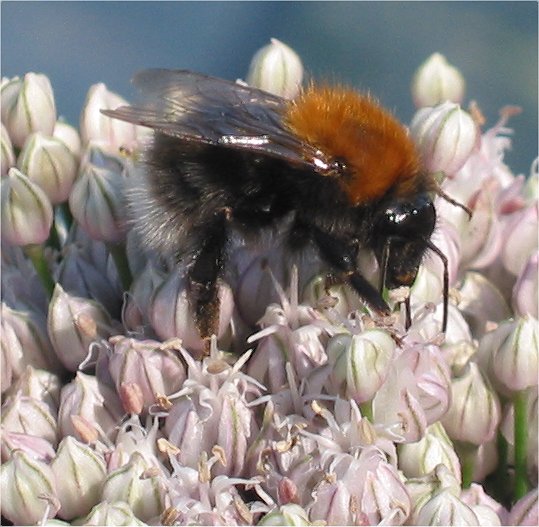
All flowers of the Allium or Onion Family are very attractive to many insects (by Rasbak in Wikipedia)
This is a sub-family within Amaryllidaceae and the family with most species in the B.I. It has 21 species listed in Stace and below follows an account of the most important ones which are also mentioned in the Online Atlas.
All wild members of the Onion Family are edible, especially the young foliage in salads, omelettes, etc. See this link Onion Family from PFAF for some interesting perennial varieties to grow!
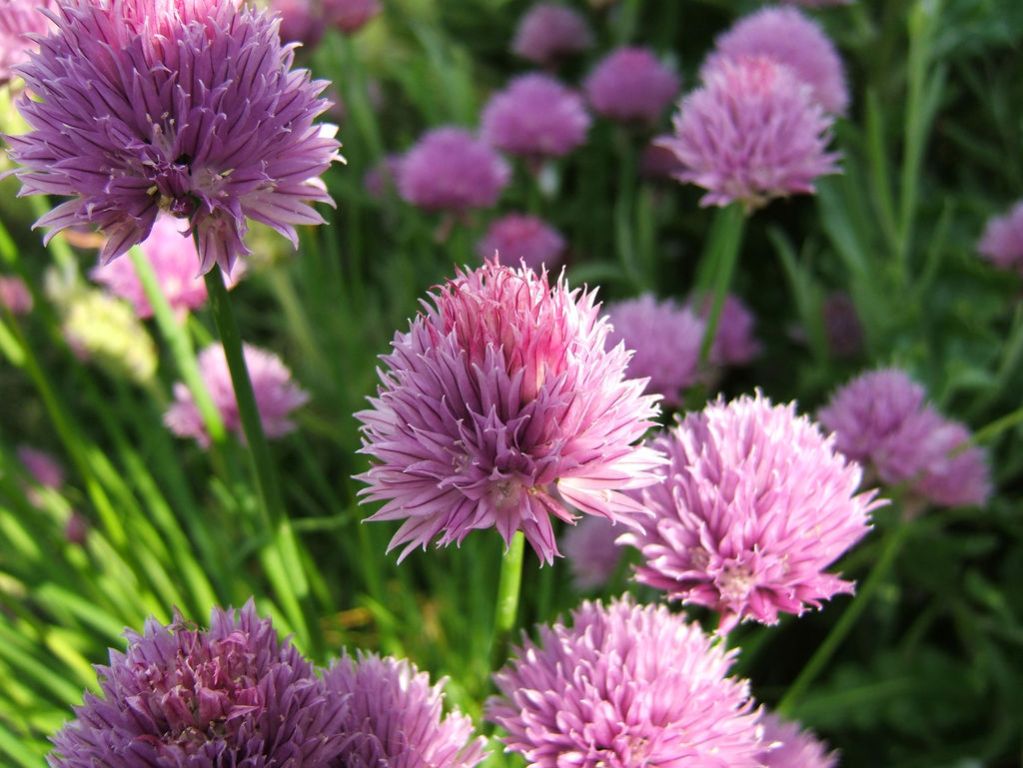
A bulbous perennial herb found as a native in a range of habitats, usually on thin soils over limestone, serpentine and basic igneous rocks; it sometimes grows in rank grass on deeper soils, and in crevices of riverside bedrock. As an alien, garden escape it grows on roadsides and rubbish tips.
It is attractive enough as a flowering plant for in a dry border or a rockery!
Chives are a commonly used herb and can be found in supermarkets or grown in home gardens. In culinary use, the green stalks (scapes) and the unopened, immature flower buds are diced and used as an ingredient for omelettes, fish, potatoes, soups, and many other dishes. The edible flowers can be used in salads.
Chives have insect-repelling properties that can be used in gardens to control pests.
The plant provides a great deal of nectar for pollinators. It was rated in the top 10 for most nectar production (nectar per unit cover per year) in a UK plants survey conducted by the AgriLand project which is supported by the UK Insect Pollinators Initiative.
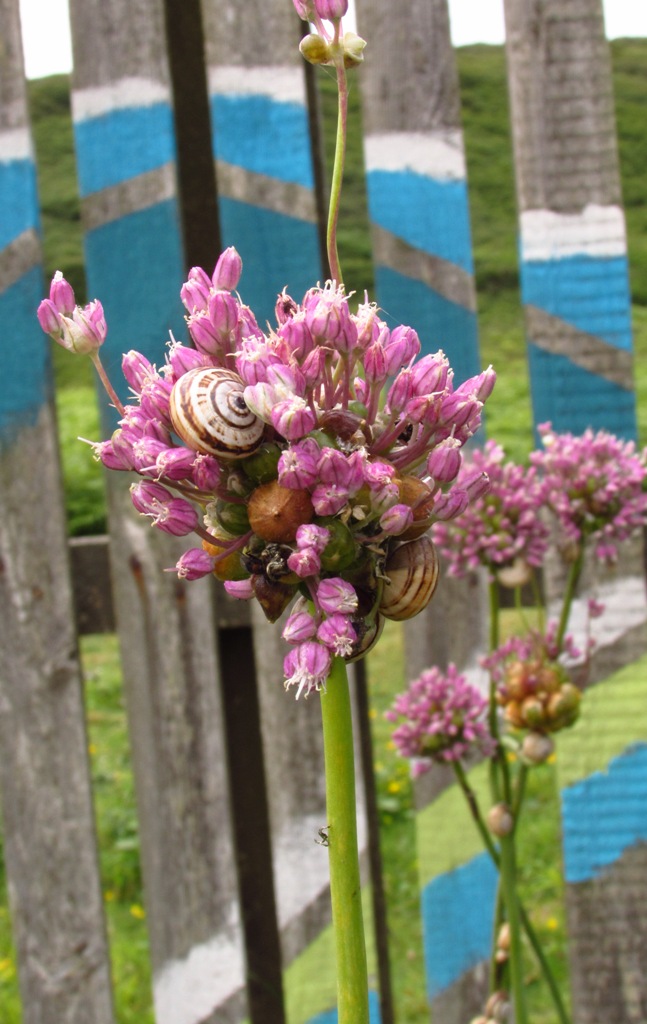
Allium ampeloprasumwith snail as seen in a private garden in Dorset (by Matt Summers)
A robust, bulbous perennial herb of rank vegetation in sandy and rocky places near the sea, especially in old fields and hedge banks, on sheltered cliff-slopes, by paths and tracks and in drainage ditches and other disturbed places. Var. ampeloprasum reproduces mainly by seed, whereas the other varieties, var. babingtonii and var. bulbiferum reproduce mainly by bulbils.
kurrat, or Egyptian leek or salad leek – this variety has small bulbs, and primarily the leaves are eaten.
Persian leek (Allium ampeloprasum ssp. persicum) – a cultivated allium native to the middle east and Iran, grown for culinary purposes and is called tareh in Persian. The linear green leaves have a mild onion flavor and are eaten raw, either alone, or in food combinations.
A bulbous perennial herb and neophyte which becomes naturalised by seed (var. pulchellum) or, perhaps more frequently, by bulbils (var. carinatum) in churchyards, rough and waste ground and on roadsides.
It is cultivated in many places as an ornamental and also for its potently aromatic bulbs used as a food flavoring.
Numerous botanical names have been coined within the species at the varietal level, but only two are recognized:
Allium carinatum subsp. carinatum – most of species range
The Onion was being cultivated in British gardens by 995 (Harvey, 1981) and is very widely grown as a vegetable crop. It was recorded from the wild by 1927 (Oxon) but probably had a long unrecorded history as a casual before that.
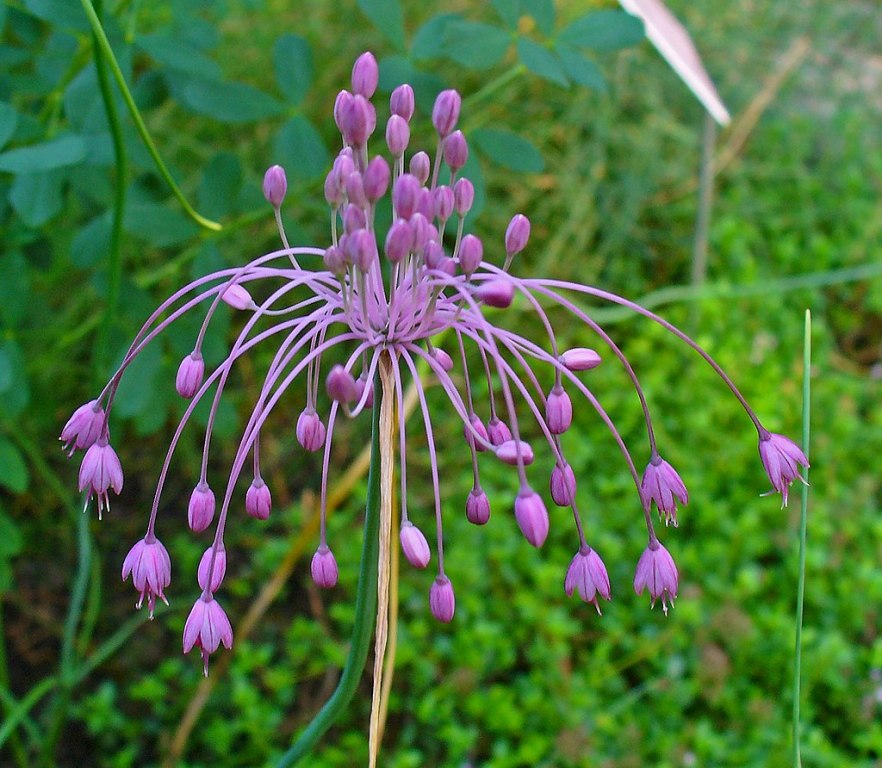
A bulbous perennial herb of dry, usually steeply sloping, calcareous grasslands, and on open sunny banks in river floodplains.
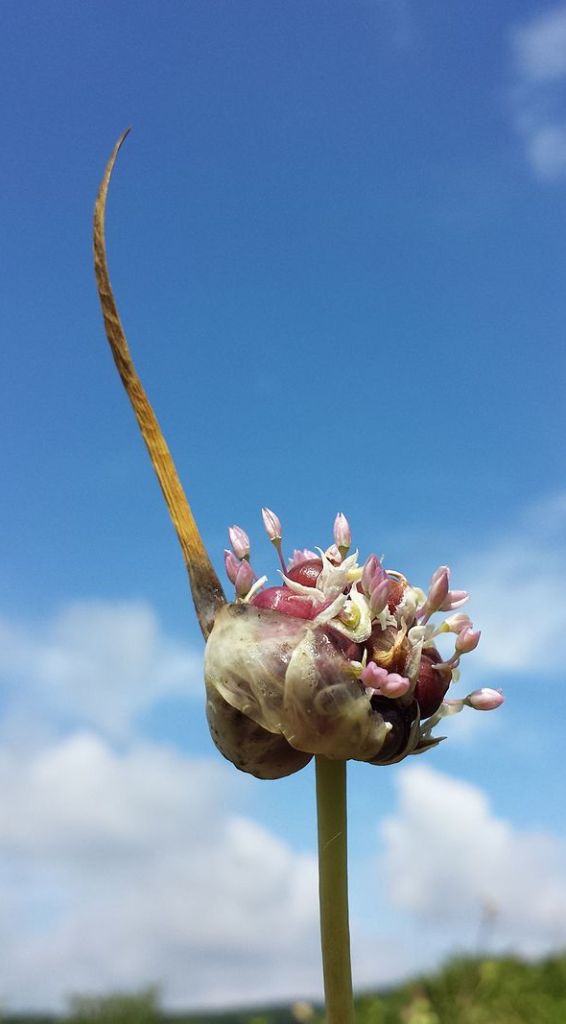
It reproduces by seed, bulbs and by the production of small bulblets in the flower head (similarly to Allium vineale). Unlike A. vineale, it is very rare with A. oleraceum to find flower-heads containing bulbils only. In addition, the spathe in A. oleraceum is in two parts.
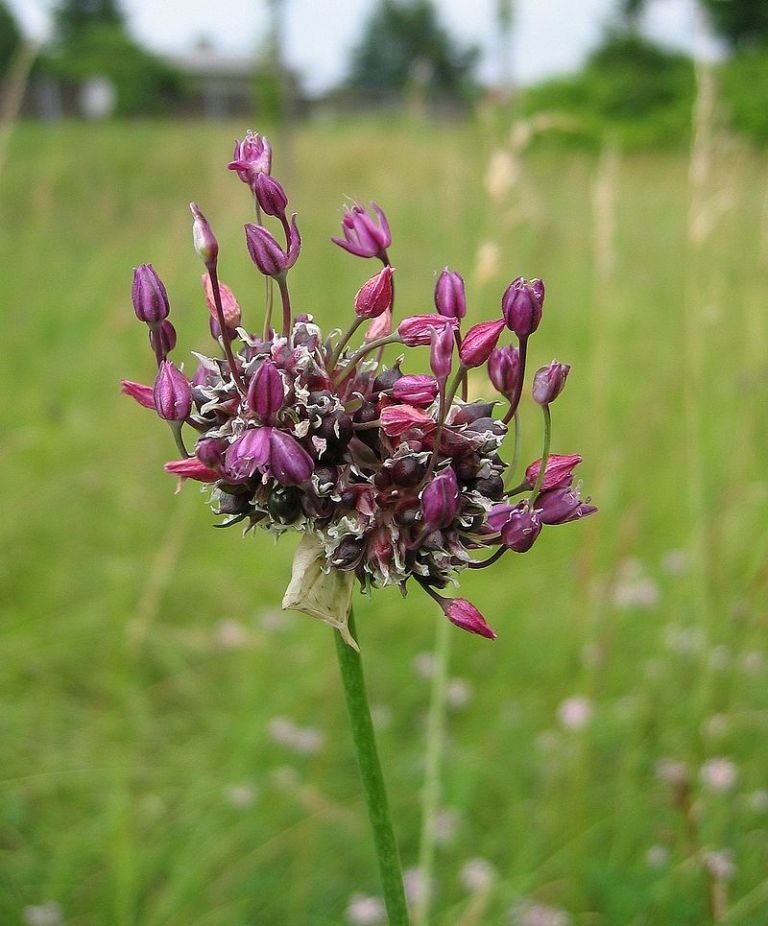
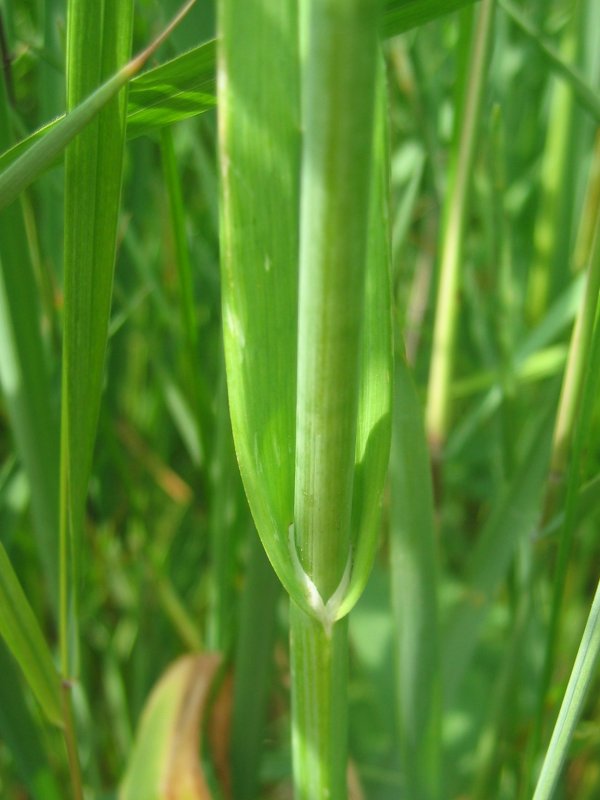
A bulbous perennial herb of dry, neutral or calcareous soils, generally occurring in summer-dry grasslands, hedgerows, roadsides and cultivated ground, and formerly a serious weed of cereal crops in S.E. England. Also found on coastal cliff ledges in W. Scotland. There are few available data to assess the relative abundance of the three varieties recognised in our area, although the exclusively floriferous var. capsuliferum appears to be rare.
When the leaves, bulbs or little bulbils are used sparingly they make a nice addition to the salad bowl. The plant has a strong garlic-like flavour.
Allium vineale ‘Hair’, a cultivated version is sold as an ornamental plant due to the unusual flowerheads which have purple centres and have green hair-like extensions.
It imparts a garlic-like flavour and odour on dairy and beef products when grazed by livestock.
Allium paradoxum(photographed in Sot’s Hole, Sandwell Valley by Mike Poulton)
A. paradoxum was introduced into cultivation in 1823 and was first recorded in the wild near Edinburgh in 1863. A bulbous perennial herb, spreading by means of bulbils in a wide variety of, usually ungrazed, situations such as river-banks, roadsides, field margins, other rough and waste ground, and in woodland.
The few-flowered leek is edible and can be eaten raw as well as made into dishes. It can also be used as a herb to flavour food, much in the same way as other wild garlics.
Leeks were being grown in British gardens by 995 (Harvey, 1981) and they are widely grown as a vegetable crop. It was recorded from the wild by 1935 (Surrey).
A. porrum was almost certainly derived by selection from A. ampeloprasum. Vegetables are rarely preserved in archaeological contexts, so the first evidence for its cultivation comes from Ancient Egyptian illustrations.
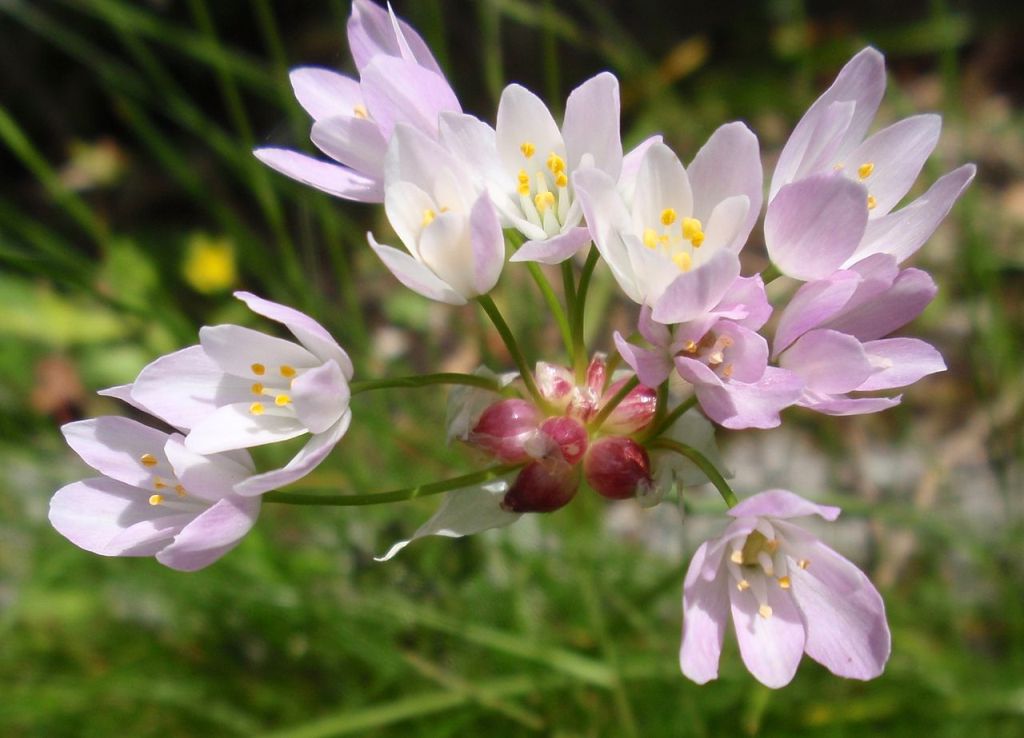
A. roseum was introduced into cultivation by 1752, and first recorded in the wild in 1837. Both var. bulbiferum and var. roseum are commonly cultivated in gardens; var. bulbiferum, in which some of the flowers in the umbel are replaced by bulbils, is particularly likely to be naturalised when planted or discarded in suitable habitats. A. roseum is spreading, especially in S.W. England.
the smell and flavour of the bulb is powerful enough to drive squirrels and browsing deer away from gardens, where they are planted as ornamental flowers.
For this reason, they are suitable as companion plants to tulips and similar species.
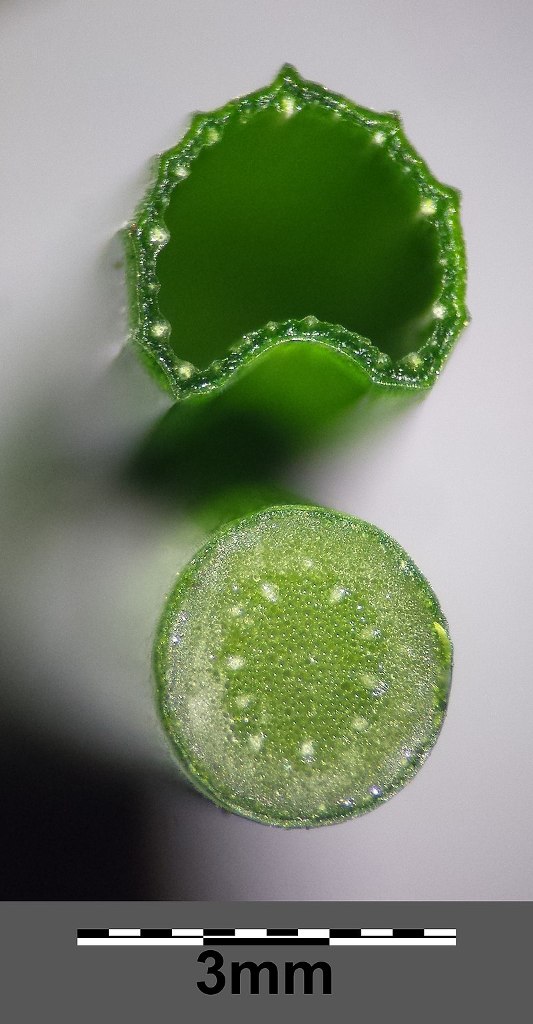
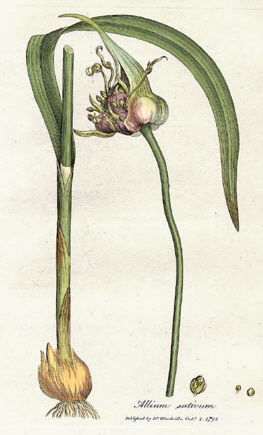
A. sativum was being grown in British gardens by 995 (Harvey, 1981) and is widely grown as a flavouring and a medicinal oil. It was recorded from the wild by 1937 (W. Kent). It is naturalised on the sea shore at Porth Dinllaen (Caerns.) and in a saltmarsh beside the river Lune (W. Lancs.). Elsewhere, it occurs as a relic of cultivation or a food-refuse alien on rubbish tips and waste ground. It is diploid but most cultivars are totally sterile.
It is native to Central Asia and northeastern Iran and has long been a common seasoning worldwide, with a history of several thousand years of human consumption and use. It was known to ancient Egyptians and has been used as both a food flavoring and a traditional medicine.
Although it is unlikely you will be able to find a good Garlic plant growing in the wild; below are some of its uses:
The garlic plant’s bulb is the most commonly used part of the plant. These are normally divided into numerous fleshy sections called cloves. They have a characteristic pungent, spicy flavor that mellows and sweetens considerably with cooking.
Leaves can also be eaten raw or cooked. They are chopped and used in salads, and rather milder than the bulbs. The Chinese often cultivate garlic especially for the leaves, these can be produced in the middle of winter in mild winters. The flowering stems are used as a flavouring and are sometimes sold in Chinese shops. The sprouted seed is added to salads.
Daily use of garlic in the diet has been shown to have a very beneficial effect on the body, especially the blood system and the heart.
Recent research has also indicated that garlic reduces glucose metabolism in diabetics, slows the development of arteriosclerosis and lowers the risk of further heart attacks in myocardial infarct patients.
Externally, the expressed juice is an excellent antiseptic for treating wounds.
A native, bulbous, perennial herb spreading mainly by bulbils in rough grassland and waste ground, on road verges and track sides and by railways. It sometimes occurs in more natural habitats such as sandy river banks, open woodlands on well-drained soils and a variety of coastal situations.
It is a garlic substitute and used as a flavouring in salads, soups etc. The bulbs are smaller than garlic and have a milder flavour, they are produced at the points of the stem as well as at the base.
The plant is digestive and depurative[178]. The bulb is used in the treatment of abscesses, amoebic dysentery, bronchitis, cholera, dysentery, influenza, skin diseases and TB.
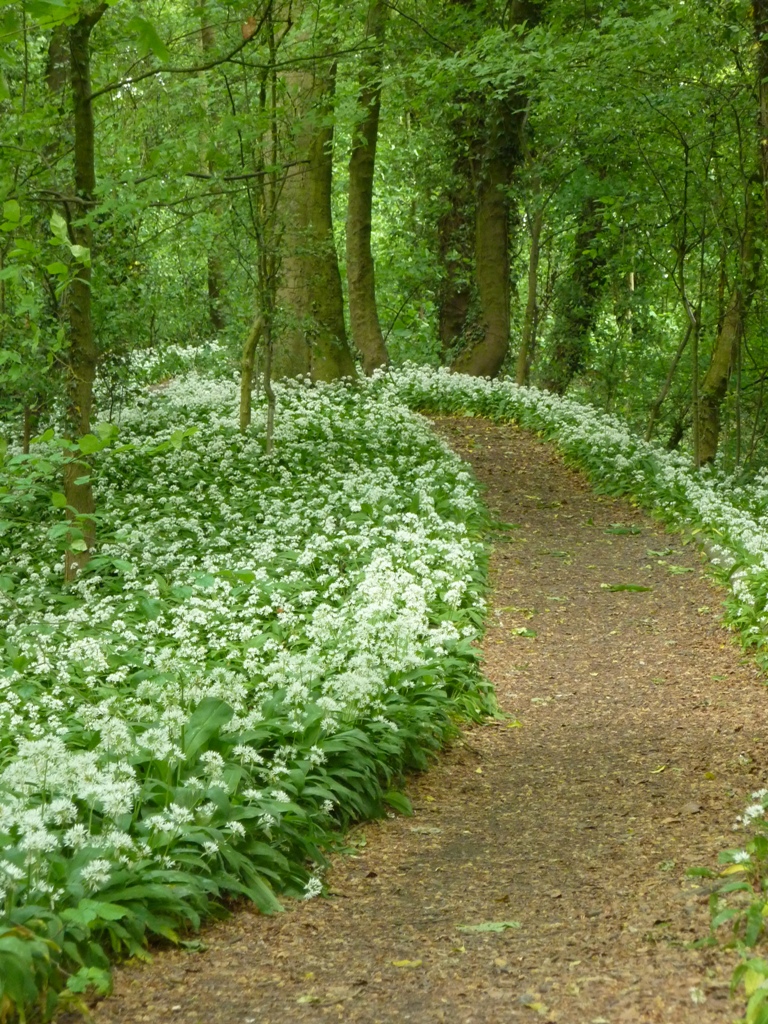
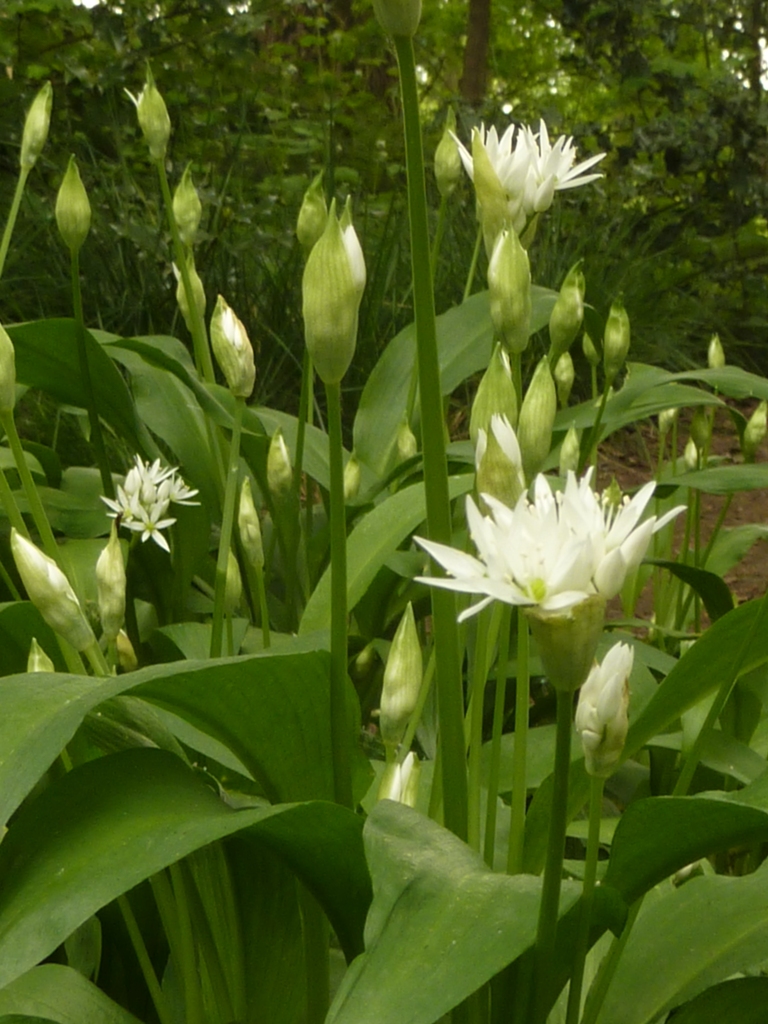
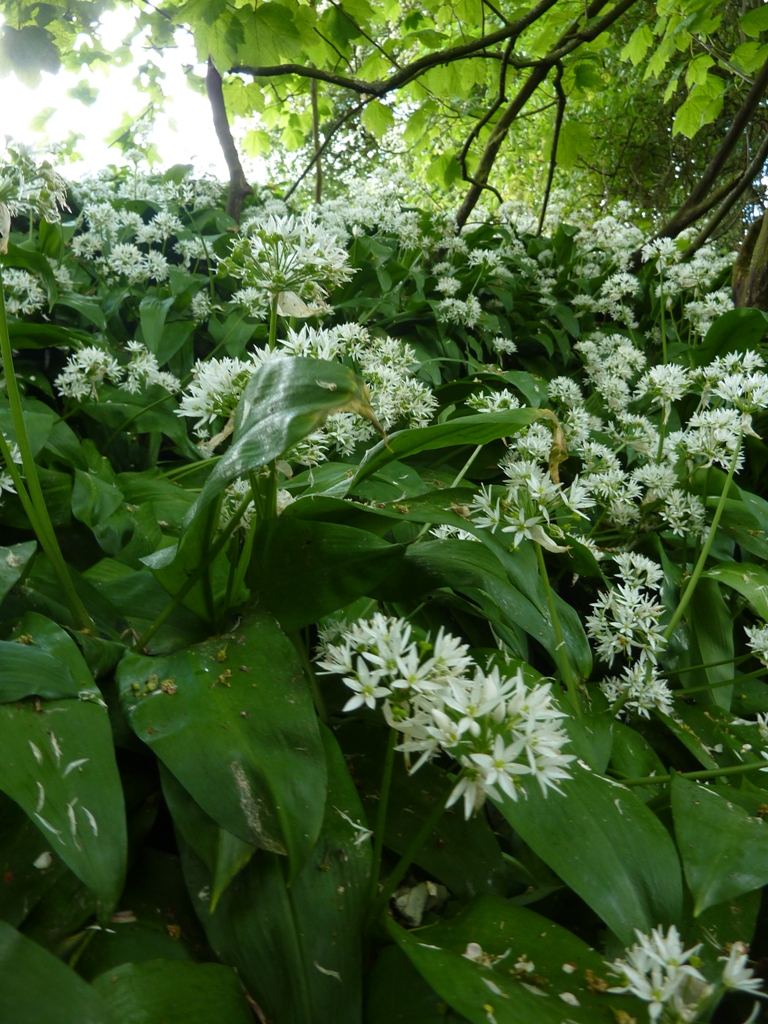
A well-known, bulbous perennial herb of moist woodlands, sometimes growing in more open situations such as riversides and hedge banks and occasionally in rock crevices, in scree and on coastal cliff ledges. Regeneration is primarily by seed.
Usually available from late January. The leaves make a very nice addition to salads, and are especially welcome as a vital and fresh green leaf in the middle of winter[K = Ken Fern from PFAF].
Flowers and foliage close-up (by Matt Summers)
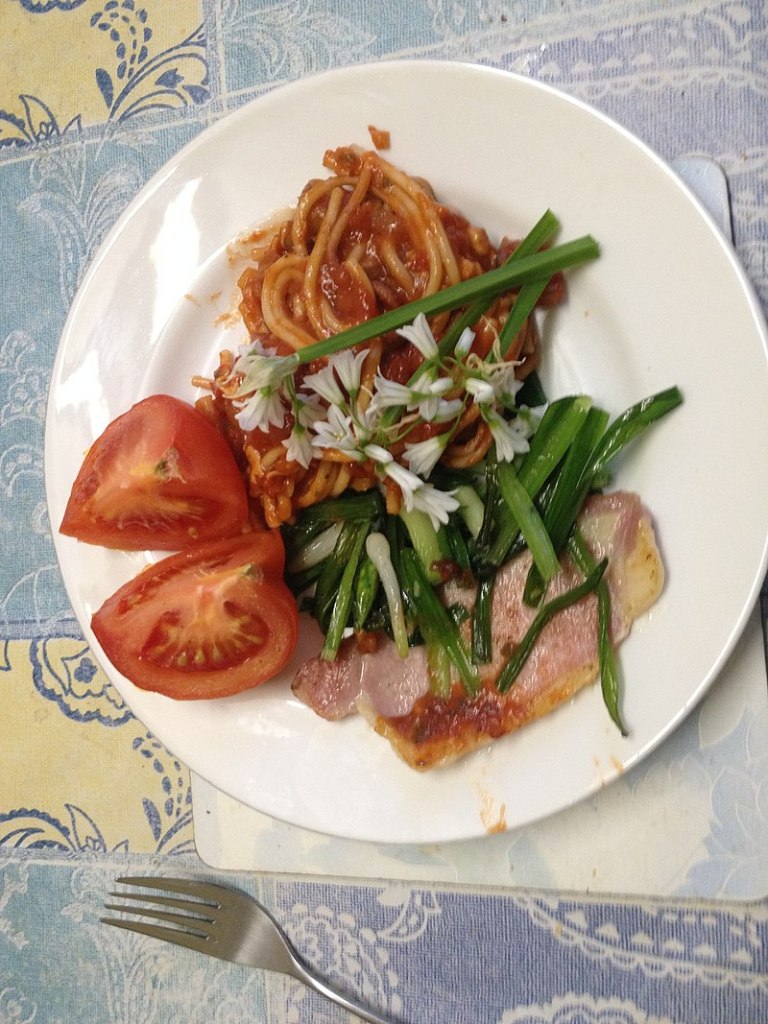
Flowers – raw or cooked. These are somewhat stronger than the leaves, in small quantities they make a decorative and very tasty addition to salads[K]. The flowering heads can still be eaten as the seed pods are forming, though the flavour gets even stronger as the seeds ripen[K].
Bulb – raw or cooked. A fairly strong garlic flavour, though it is quite small and fiddly to harvest[K] The small green bulbils are used as a caper substitute.
Ramsons ease stomach pain and are tonic to the digestion, so they can be used in the treatment of diarrhoea, colic, wind, indigestion and loss of appetite.
The whole herb can be used in an infusion against threadworms, either ingested or given as an enema.
The herb is also beneficial in the treatment of asthma, bronchitis and emphysema.
The juice is used as an aid to weight loss and can also be applied
externally to rheumatic and arthritic joints where its mild irritant action and stimulation to the local circulation can be of benefit.
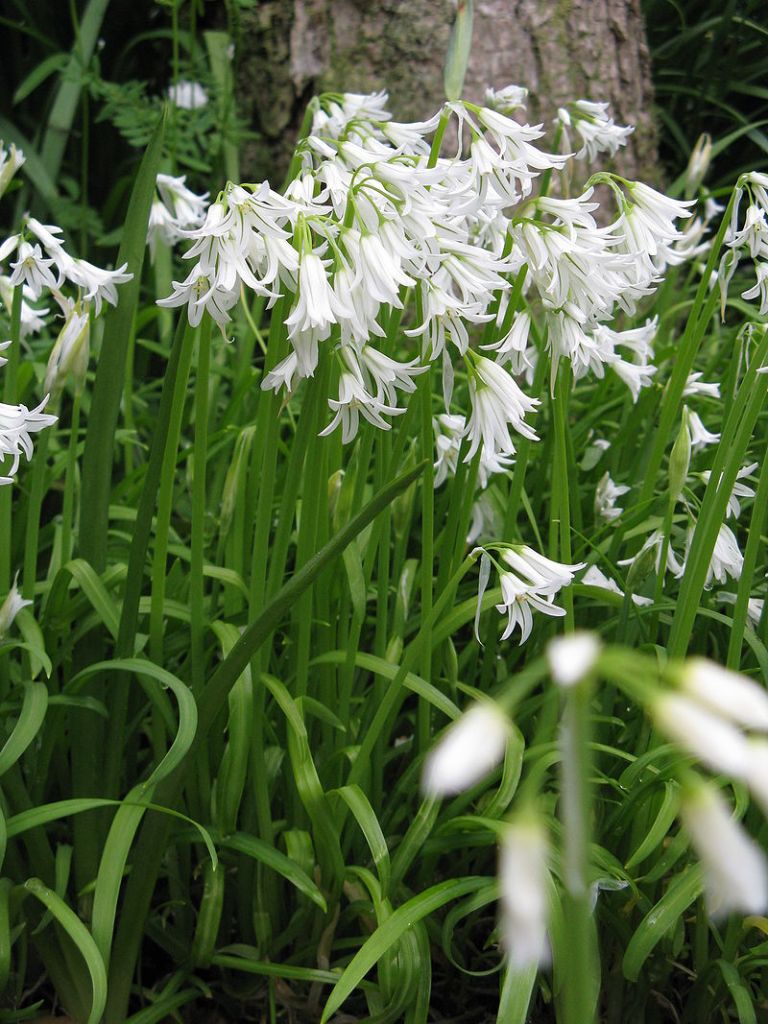
Allium triquetrum can be used as a food (by Ice Dragon)but is an invasive plant in the wild or in gardens! (by KENPEI both from Wikipedia)
Both the English name and the specific epithet triquetrum refer to the three-cornered shape of the flower stalks.
A bulbous perennial herb, spreading by ant-dispersed seed on roadsides, in hedge banks, on field margins and in rough and waste ground.
A. triquetrum was introduced into cultivation by 1759 and noted as established here by 1849, initially in Guernsey. It is now thoroughly naturalised and increasingly abundant and widespread in milder areas with scattered, sometimes short-lived, populations elsewhere. It has considerably increased in numbers and range since it was mapped in the 1962 Atlas
This plant takes over the front-garden for several months of one of my customers. Then it dies back into the ground. Fortunately she can just about tolerate it, but we do need to keep it out of the back garden!!
Bulb – raw or cooked. The rather small bulb is up to 20mm in diameter[200], it has a mild garlic flavour and can be used as a flavouring in salads and cooked foods. It is harvested in early summer when the plant has died down and will store for at least 6 months[K]. Leaves – raw or cooked. A leek substitute. The leaves are available from late autumn until the spring, they are nice in salads when they are young, or cooked as a vegetable or flavouring as they get older[K]. The leaves have a milder and more delicate flavour than onions. Flowers – raw. Juicy with a mild garlic flavour, they make a tasty and decorative garnish on salads[K].
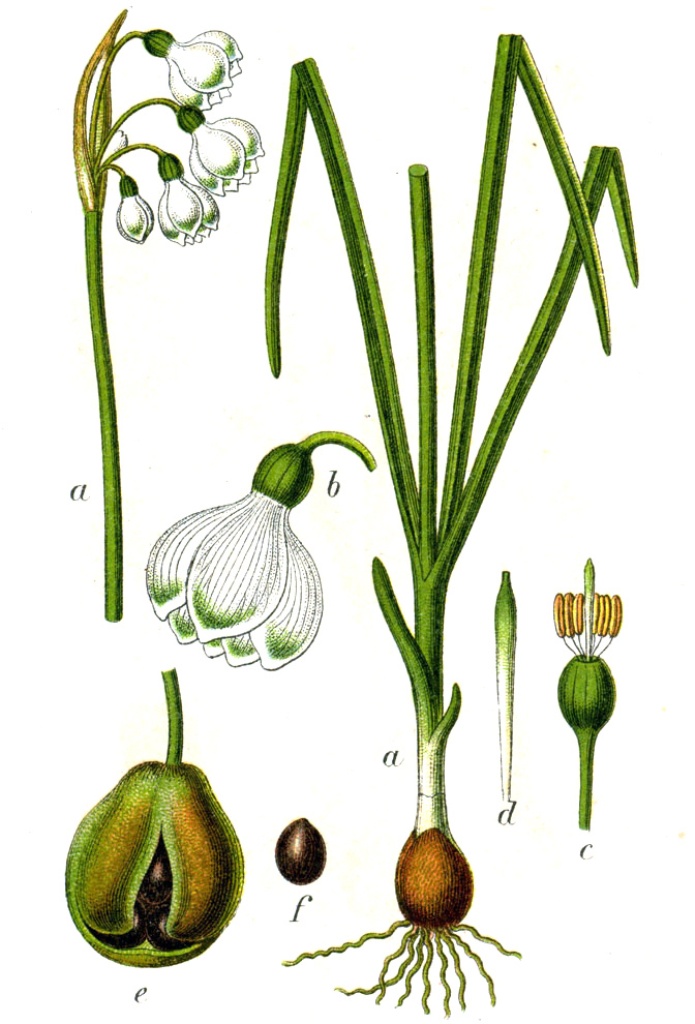
A bulbous perennial herb, occurring as a native mostly in winter-flooded riverside Alnus or Salix carr, but occasionally found in other damp habitats such as meadows and woodland rides. It also occurs as a garden escape near habitation and on rubbish tips.
Leucojum aestivum is cultivated as an ornamental plant for its flowers. It requires a damp position, growing well on clay soils, where it increases rapidly. The cultivar ‘Gravetye Giant’ is robust, growing to 90 cm (35 in) with up to eight flowers on each scape. It is named after Gravetye Manor, an Elizabethan manor house in West Sussex, England, the former home of the gardener William Robinson. ‘Gravetye Giant’ has gained the Royal Horticultural Society‘s Award of Garden Merit.
A bulbous neophyte of damp soils, thoroughly naturalised in woodland and scrub, by watercourses and in grassy places. It was being cultivated in Britain by 1596 and was first recorded in the wild in 1866.
About L. vernum var. vagneri : Makes strong clumps of bulbs, often mistaken for a snowdrop, since it flowers at much the same time, but it has lampshade-like bells, made up of six pointed petals held open wide, showing green tips. It carries two flowers per stem, above lush, strap-shaped leaves. It differs from L. vernum in being larger and more robust.
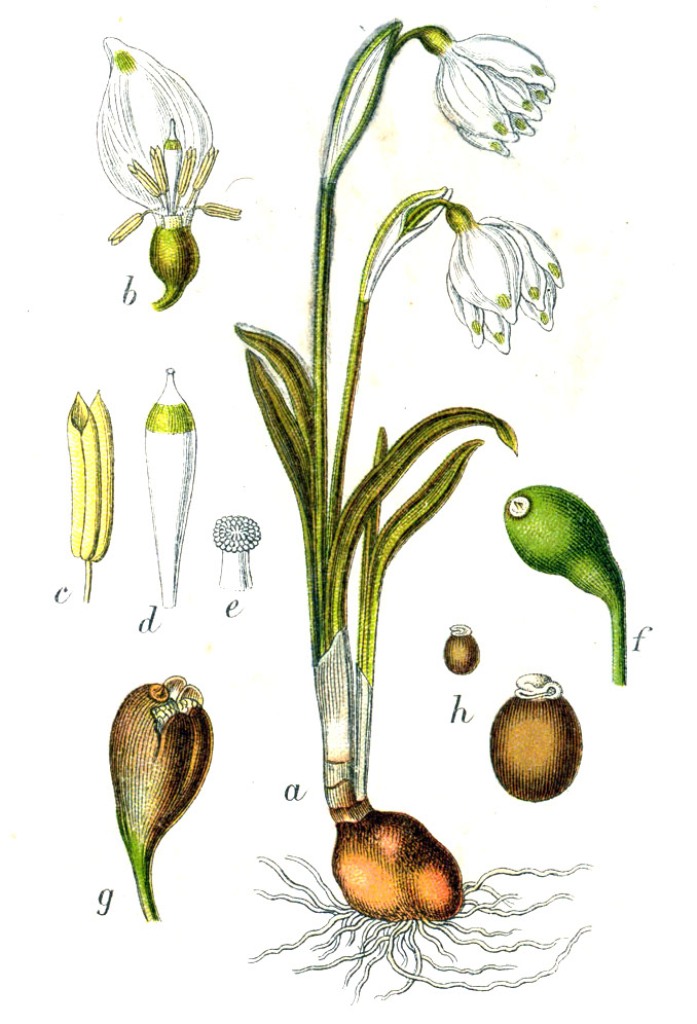
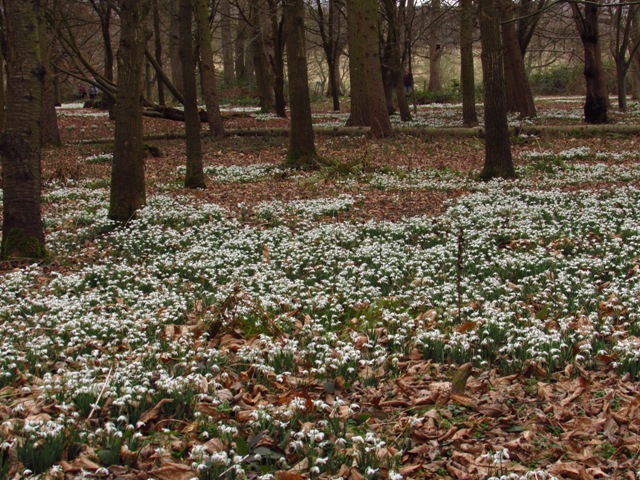
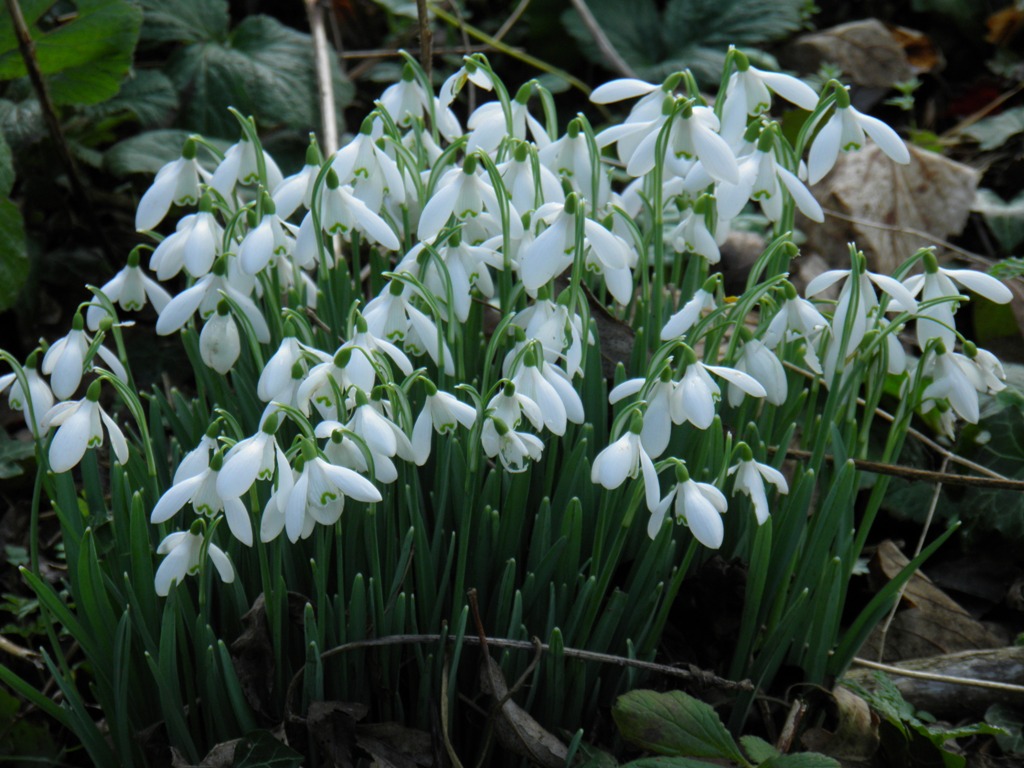
A bulbous perennial herb of moist woodlands and other shaded places. It is especially frequent in parks, large gardens and churchyards, but also occurs on road verges, by watercourses and in damp grassland. Spread is mainly by division of the bulbs, as seed production is poor.
This species was known in cultivation in Britain in 1597 but was not recorded in the wild until 1778. Although it was formerly sometimes regarded as native, it is now considered to be alien.
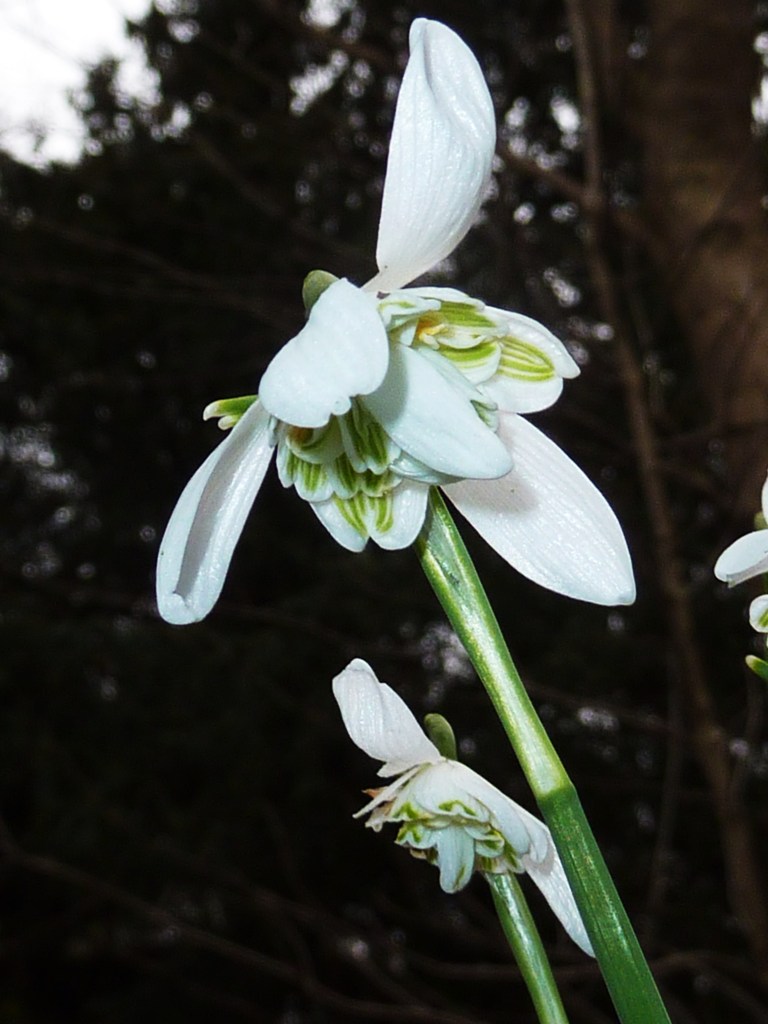
Galanthus nivalis f. pleniflorus ‘Flore Pleno’ as seen in Attingham (by Matt Summers)
The common double snowdrop, Galanthus nivalis f. pleniflorus ‘Flore Pleno’, had appeared by 1703, when it was illustrated in The Duchess of Beaufort’s Book. It spread (and was spread) rapidly through northern Europe (by vegetative means, as it sets no seed). With 3–5 outer segments and 12–21 inner segments, which are often misshapen, the flowers may be less attractive to the eye of the purist than single-flowered or neater double cultivars, but they are good value in the garden as the bulbs spread rapidly and the large flowers show up well.
There are numerous named cultivars of G. nivalis, single, semi-double, double and “poculiform” (meaning goblet or cup-shaped, this refers to flowers with inner segments that are almost the same shape and length as the outer ones). Apart from these traits they differ particularly in the size and markings of the flower and the period of flowering; other characteristics are less obvious to the untrained eye and are mainly of interest to “galanthophiles“.
Snowdrops contain an active substance called galantamine (or galanthamine) which can be helpful in the treatment of Alzheimer’s disease, though it is not a cure.
Other species more commonly found naturalized in the B.I. are listed below and more information can be found through the links.
Galanthus elwesii in St Peter’s churchyard, Harborne (picture by Mike Poulton)
is not mentioned in the Online Atlas but is mentioned in Stace.
A pure white snowdrop, Galanthus woronowii have pretty green marks at the apex. They also have unusual, wide, waxy green leaves that give particularly good ground cover. To add to their many attractions, they are also scented.
Twenty-six species are decribed in Stace which are grown in cultivation in the B.I. and could all potentially be found in the wild in future. The Online Atlas describes several species and hybrids.
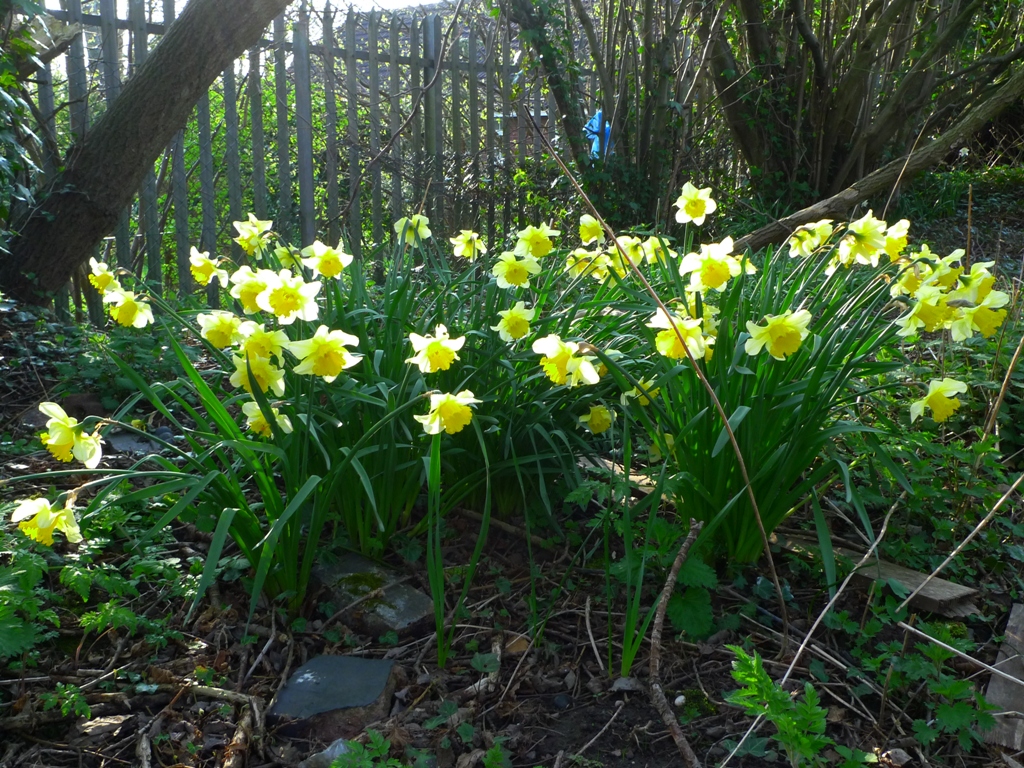
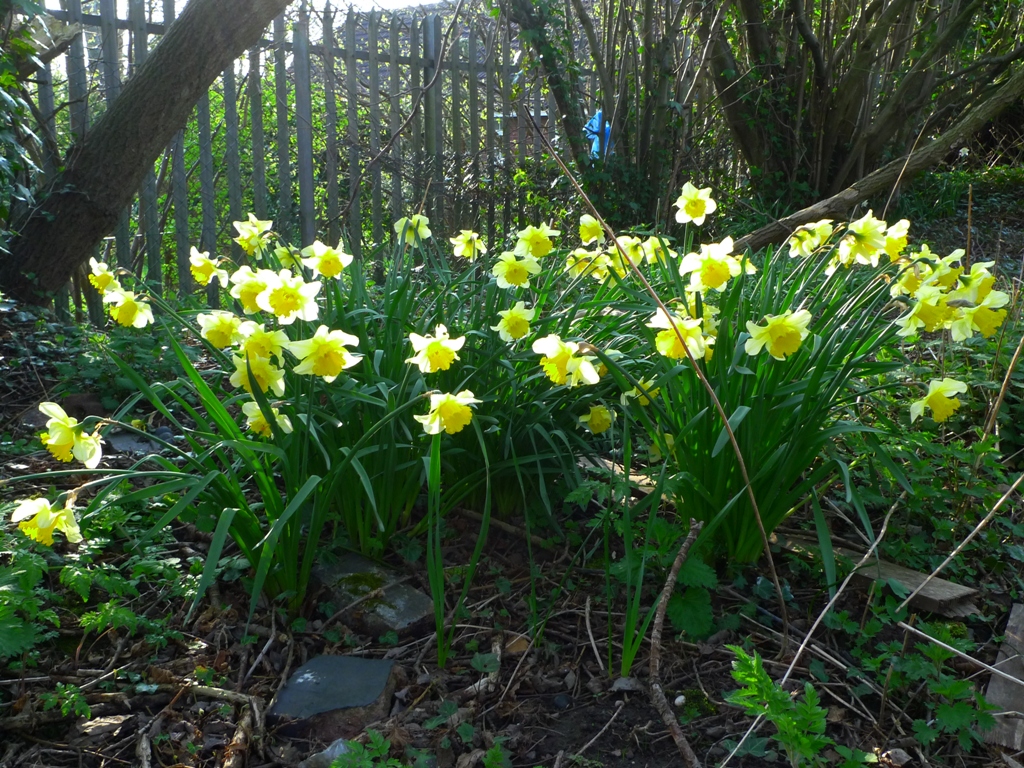
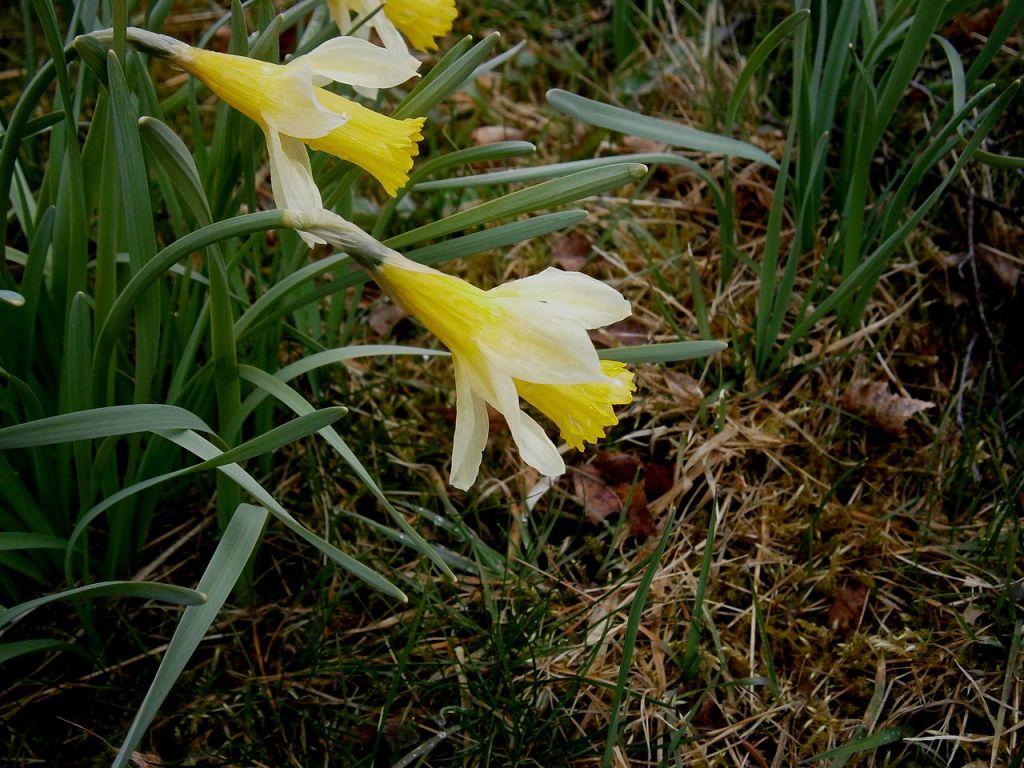
A bulbous perennial herb occurring as a native in ash and oak woodlands, bracken stands, scrubby banks and old pastures, and widely planted in parks, churchyards, amenity grasslands, and on road verges and pathsides; occurring as a throw-out on waste ground and as a relic of cultivation in abandoned gardens. Short, small-flowered plants which are relatively uniform in flower, with pale yellow, often twisted tepals and narrow, deeper yellow, trumpet-shaped coronas may be the only truly native daffodils in Britain and may be attributable to var. humilis.
the Farndale valley in the North York Moors National Park hosts a large population of the species, along the banks of the River Dove. There are several nature reserves in Gloucestershire supporting large populations of the species near Dymock Woods SSSI. There is a Daffodil Walk Trail around several reserves in the spring. Also often replanted on National Trust properties.
Colchicaceae is a family of flowering plants that includes 15 genera with a total of about 285 known species according to Christenhusz and Byng in 2016.
The family is characterized by the presence of colchicine.
Only one genus and species is mentioned in Stace as a native.
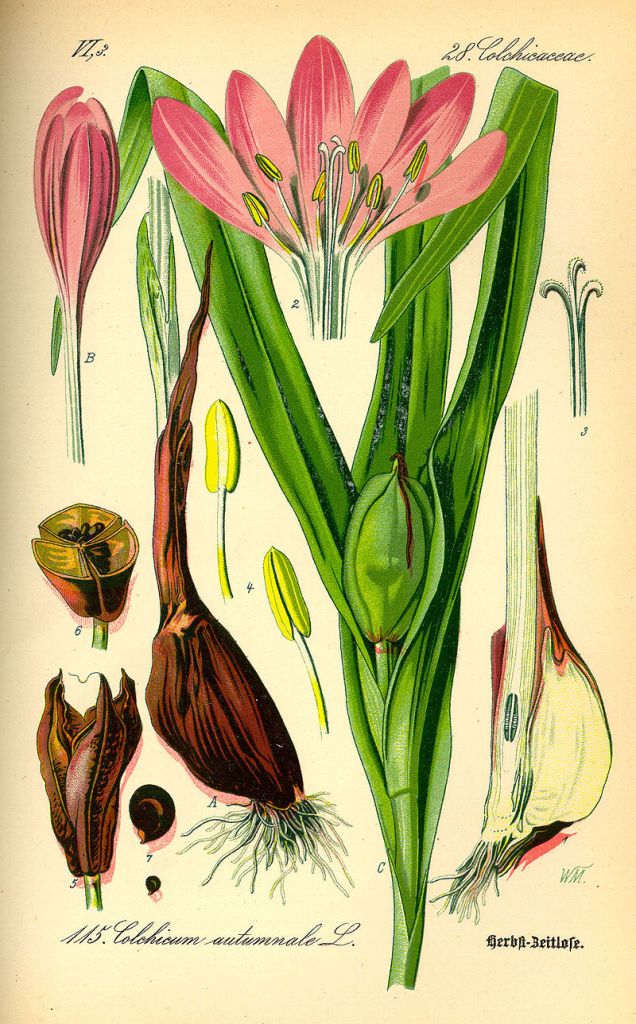
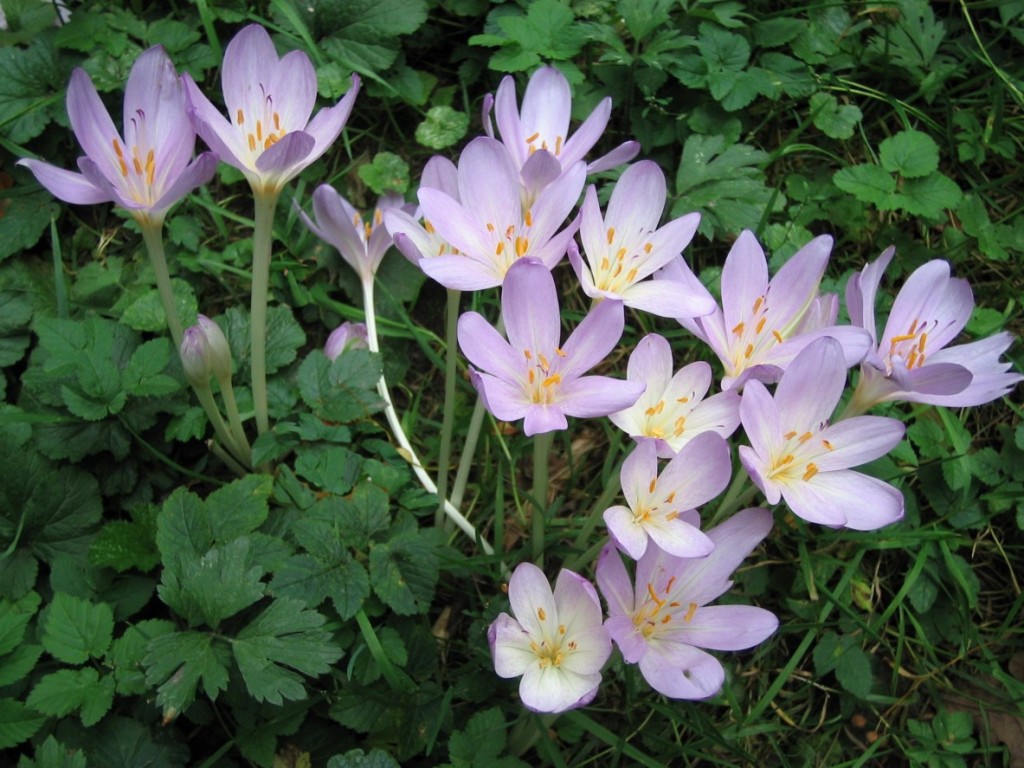
A cormous perennial herb of damp grassy places, including damp meadows and river banks, but most frequently encountered in clearings and rides within woodland, as it is toxic to livestock and often destroyed when found in grazed situations.
This is a toxic autumn flowering plant that resembles the true crocuses, but is a member of the plant family Colchicaceae, unlike the true crocuses, which belong to the family Iridaceae.
The name “naked ladies” is because the flowers emerge from the ground long before the leaves appear. Despite the vernacular name of “meadow saffron”, this plant is not the source of saffron, which is obtained from the saffron crocus, Crocus sativus – and that plant, too, is sometimes called “autumn crocus”.
Colchicum plants are deadly poisonous due to their colchicine content!
The symptoms of colchicine poisoning are similar to those of arsenic, and no antidote is known.
This plant (and colchicine itself) poses a particular threat to felines. The leaves and fruit of meadow saffron contain the highest level of toxins, but all parts of the plant are regarded as poisonous.
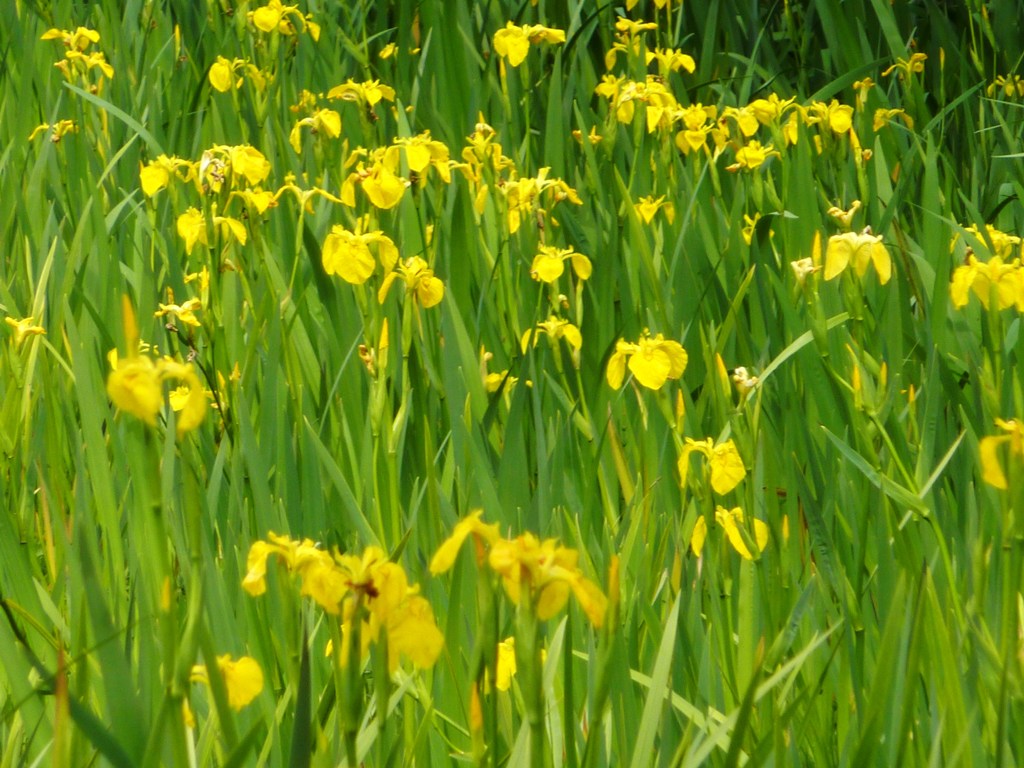
Iris pseudoacorus or Yellow Flag is our best known member of the Iridaceae! (by Matt Summers)
The Iris family or Iridaceae, according to Stace has 15 genera but several genera are clearly escaped garden plants and not yet widely spread in the wild so will mainly mention the real natives and/or the more common introduced ones which are also described in the Wildflower Key.
They are more difficult to identify without flower as of course all have similar, strap-like leaves in various shades of green!
I use colour coding for easy reading! Blue background is general interesting info (although I hope you find it all interesting!!). Green is about all the uses except for medicinal uses or if there is a warning in which case I use a pink background. Pictures by Matt Summers (MS), Mike Poulton (MP) of Ecorecord and Wikipedia Commons