

Amaranthaceae is a family of flowering plants commonly known as the amaranth family, in reference to its type genus Amaranthus. It now includes the former goosefoot family Chenopodiaceae and contains about 165 genera and 2,040 species in the world!
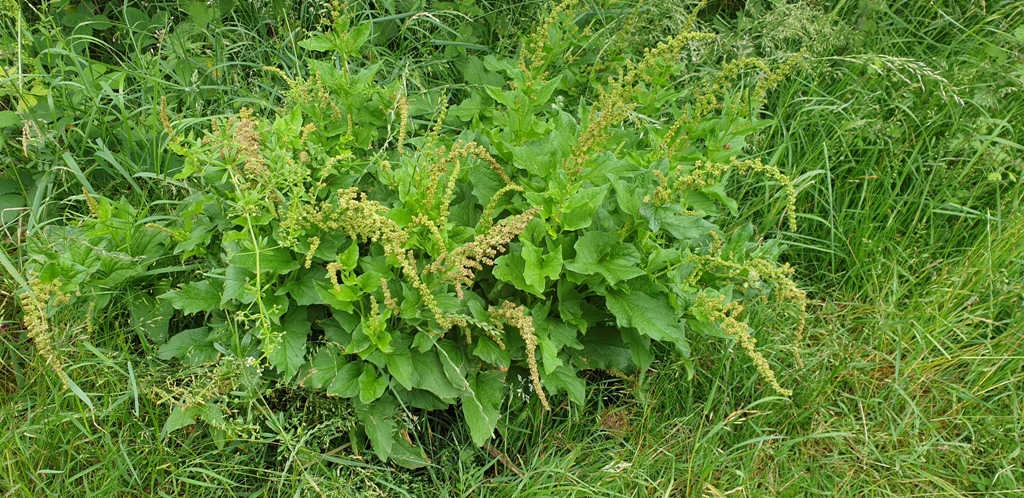
It is not an obviously attractive family but as always when you delve further in all those families there are some fascinating members!
In Stace, 12 genera are described of which many are introduced in the past by accident through wool, soya bean waste, as birdseed and more frequently nowadays they are grown as garden plants and escaped!
Click the links of the plants in the contents below for more info and pictures from various websites. Scientific/Latin Name has a link from the Plant Atlas Online. The origin of the plant has a link from the RBG Kew Plants of the World Online. Pink background means a warning (such as poisonous!) or medicinal use, green for edible, ornamental or other uses and blue for habitat where it can be found in B.I. , for interesting facts or for wildlife use.
Pictures from Mike Poulton and Wikipedia. Edited information mainly from PFAF and Wikipedia.
FBBC added behind names in the Contents below if the plants occur in Flora of Birmingham and the Black Country. Archaeophyte or neophyte (See here key of Botanical terms by BSBI) is added behind the entrees in the main descriptions only if the plants are non natives.
There have been several name changes, especially in the genus Chenopodium which has been split into several genera.
Contents:
The Amaranthaceae
Subfamily Chenopodioideae
Dysphania spp or Goosefoots
‘Chenopodium‘ spp. or Goosefoots:
- Chenopodium album agg. or Fat Hen FBBC
- C. ficifolium or Fig-leaved goosefoot FBBC
- C. giganteum or Tree Spinach FBBC
- C. opulifolium or Grey Goosefoot FBBC
- C. pratericola or Slim-leaf Goosefoot
- C. probstii or Probst’s Goosefoot
- C. quinoa or Quinoa
- C. nuttalliae or Aztec broccoli
- C. strictum or Striped Goosefoot
- C. suecicum or Swedish Goosefoot
- C. vulvaria or Stinking Goosefoot FBBC
- Oxybasis glauca or Oak-leaved Goosefoot FBBC
- Oxybasis rubra or Red Goosefoot FBBC
- Oxybasis chenopodioides or Saltmarsh Goosefoot
- Oxybasis urbica or Upright Goosefoot
- Chenopodiastrum murale or Nettle-leaved Goosefoot
- Chenopodiastrum hybridum or Maple-leaved Goosefoot FBBC
Spinacia oleracea or Spinach FBBC
Atriplex spp. or Oraches
- A. glabriuscula or Babington’s Orache
- A. halimus or Shrubby Orache
- A. hortensis or Garden Orache FBBC
- A. littoralis or Grass-leaved Orache FBBC
- A. longipes or Long-stalked Orache
- A. laciniata or Frosted Orache
- A. patula or Common Orache FBBC
- A. pedunculata or Pedunculate Sea-purslane
- A. portulacoides or Sea-purslane
- A. prostrata or Spear-leaved Orache FBBC
- A. praecox or Early Orache
- A. sagittata or Purple Orache
- A. × gustafssoniana (A. longipes × prostrata) or Kattegat Orache
Subfamily Betoideae
Beta vulgaris or Sea Beet FBBC
- B. vulgaris subsp. maritima or Sea Beet
- B. vulgaris subsp. cicla or Foliage Beet (neophyte)
- B. vulgaris subsp. vulgaris or Root Beet (neophyte)
Subfamily Camphorosmoideae
Bassia scoparia (syn, Kochia scoparia) or Summer-cypress FBBC
Subfamily Corispermoideae
Corispermum intermedium or Bugseed
Subfamily Salicornioideae
Salicornia and Sarcocornia or the Glassworts
- S. disarticulata or One-flowered Glasswort
- S. dolichostachya or Long-spiked Glasswort
- S. emerici or Shiny Glasswort
- S. europaea or Common Glasswort
- S. fragilis or Yellow Glasswort
- S. obscura or Glaucous Glasswort
- S. ramosissima or Purple Glasswort
Sarcocornia perennis or Perennial Glasswort
Subfamily Suaedoideae
Subfamily Salsoloideae
Subfamily Amaranthoideae
Amaranthus spp. or Pigweeds
- Amaranthus retroflexus or Common Amaranth/Callaloo FBBC
- A. hybridus or Green Amaranth, Callaloo FBBC
- A. ozanonii (A. retraflexus x A. hybridus)
- A. caudatus or Love-lies-bleeding FBBC
- A. albus or White Pigweed FBBC