The Figwort Family or Scrophulariaceae and their Uses.

The Figworts or Scrophulariacea is a family wich has many introduced ornamental plants, through planting in the garden. It used to be much larger but has been split since the new molecular system of classification (APG III) came into place.
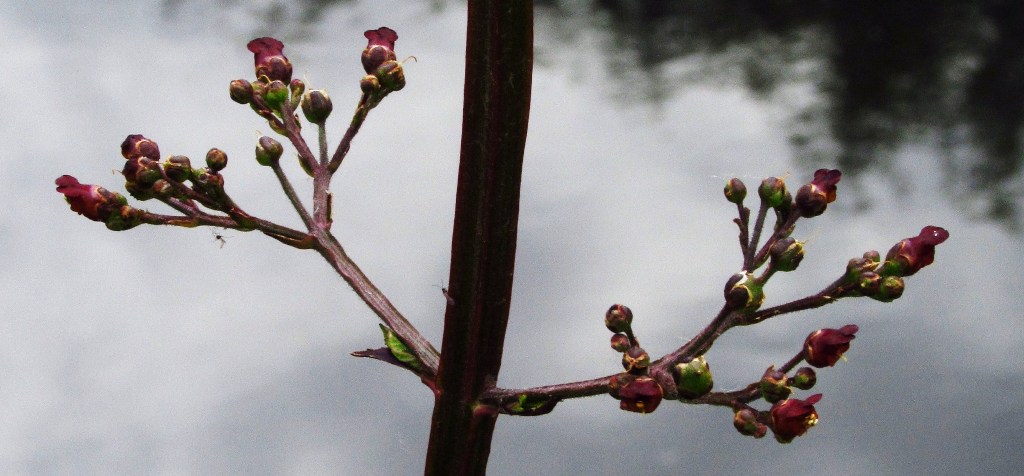
Water Figwort or Scrophularia auriculata (by M.S.)

The name Figwort is only just represented by the genus Scrophularia in the B.I..

The individual genera of Scrophulariaceae are all unique in their general appearance. The uses are mainly for wildlife and garden plants, but the Figworts and Mulleins also have medicinal uses which you can read up about on the next page.

It has been split into four additional families:

  • Paulowniaceae,
  • Phyrtmaceae,
  • Calceolariaceae and last
  • Veronicaceae.

Other changes are:

  • The semi-parasitic Pedicularieae has been moved to the Orobanchaceae family.
  • The Buddlejaceae are now amalgamated with the Scrophulariaceae.

Hopefully more about those families in future blogs.

More info and pictures can be found through the links provided. The pictures used in this post are by Mike Poulton (M.P.) of Ecorecord and Rudi Pilsel (R.P.), Derrick Forster, Matt Summers (M.S.) as well as from Wikipedia Common.

If the plants are found in the Flora of Birmingham and the Black Country a FBBC will be added behind the Common name in the contents page below.

Contents:

Verbascum or Mulleins

  • V. blattaria or Moth Mullein FBBC

V. virgatum or Twiggy Mullein FBBC

  • V. phoeniceum or Purple Mullein (Introduced & Naturalized)
  • V. pyramidatum or Caucasian Mullein
  • V. bombyciferum or Broussa Mullein FBBC
  • V. phlomoides or Orange Mullein FBBC
  • V. densiflorum or Dense-flowered Mullein FBBC

V. thapsus or Great Mullein FBBC

  • V. chaixii or Nettle-leaved Mullein

V. nigrum or Dark Mullein FBBC

  • V. speciosum or Hungarian Mullein (probably the finest species according to Stace)) FBBC

V. pulverulentum or Hoary Mullein FBBC

V. lychnitis or White Mullein FBBC

Scrophularia or Figworts

4 native and 3 Introduced & Naturalized species

S. nodosa or Common Figwort FBBC

S. auriculata or Water Figwort FBBC

S. umbrosa or Green Figwort

S. scorodonia or Balm-leaved Figwort

  • S. scopolii or Italian Figwort
  • S. vernalis or Yellow Figwort FBBC
  • S. peregrina or Mediterranean Figwort

Phygelius capensis or Cape Figwort FBBC

Chaenostoma cordatum (syn. Sutera cordata) or Bacopa FBBC

Nemesia strumosa or Cape Jewels FBBC

Limosella aquatica or Mudwort FBBC

L. australis or Welsh Mudwort

Buddleja or Butterfly-bushes

  • B. davidii or Butterfly-bush FBBC
  • B. alternifolia or Alternate-leaved Butterfly-bush FBBC
  • B. x weyerana or Weyer’s Butterfly-bush FBBC
  • B. globosa or Orange-ball-tree FBBC
Diascia barbarae or Twinspur FBBC


Continue reading “The Figwort Family or Scrophulariaceae and their Uses.”

The Valerian Family and its uses in the B. I.

The Valerian Family is again a small plant family in the B.I. and I choose to do this as it comes before the family of last week which was the Teasel Family.

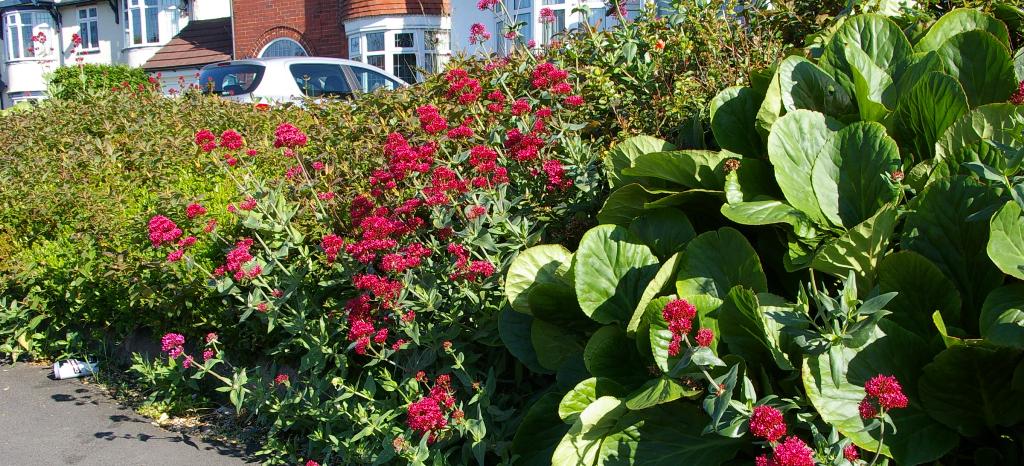
The best known is probably the Common Valerian although perhaps the Red Valerian is now a lot more common, especially here in the Midlands!

Centranthus ruber or Red Valerian on pavement along A458 Halesowen Rd (by M.P.)

More info can be found through the links provided from online websites and the pictures are by Mike Poulton (M.P.) and Ian Trueman (I.C.T.) of Ecorecord and Wikipedia Common.

If the plants are in the Flora of Birmingham and the Black Country a FBBC will be added behind the Common name of the plant in the main contents.

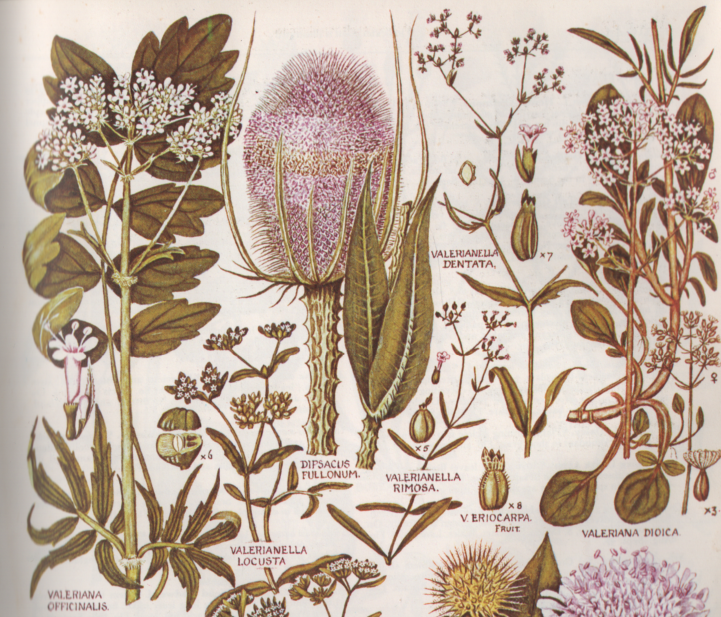
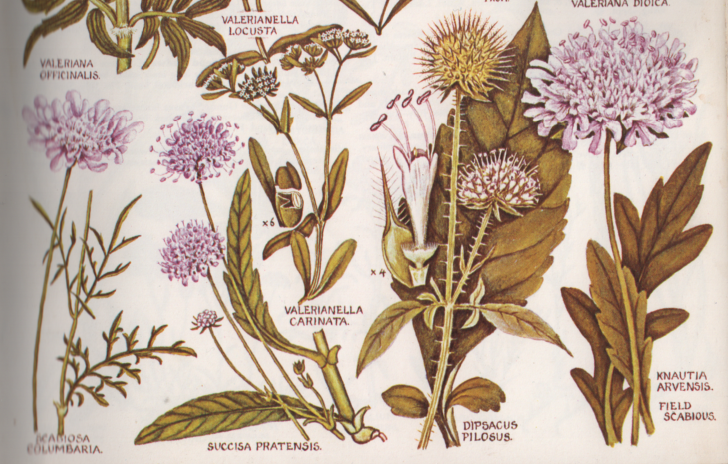
Plate 43 of Valereniaceae and Dipsacaceae families from
The Concise British Flora in Colour by W. Keble Martin

Above also the other half a page of Plate 43 in the Concise British Flora in Colour, showing mainly some members of the Valerian family. In the last post the Teasel family half was shown. The Common Teasel is also mixed in the picture above. This book was aquired by myself for the Kew Diploma Course in 1986 as one of the reference books to get! Still a beautifully illustrated book with 1486 species illustrated in 100 plates of all the flowering plant families of the B. I. The work was completed by W. Keble Martin in 60 years and first published in 1965.

Contents:

The Valerian family only has 3 genera:

Valeriana

Plants of the World Online accepts over 420 species and hybrids. In the B.I. 4 species can be found but 2 are true natives.

Centranthus

There are about twelve species in the genus but we know only C. ruber, which in non native.

and Valerianella

73 species are listed in Wikipedia but in the B.I. we know of 5 species; 2 native and 3 are Archaeophyte. Ripe fruits are essential for determination of the correct species.(Stace)

Continue reading “The Valerian Family and its uses in the B. I.”

The Teasel family and their Uses in the B.I.

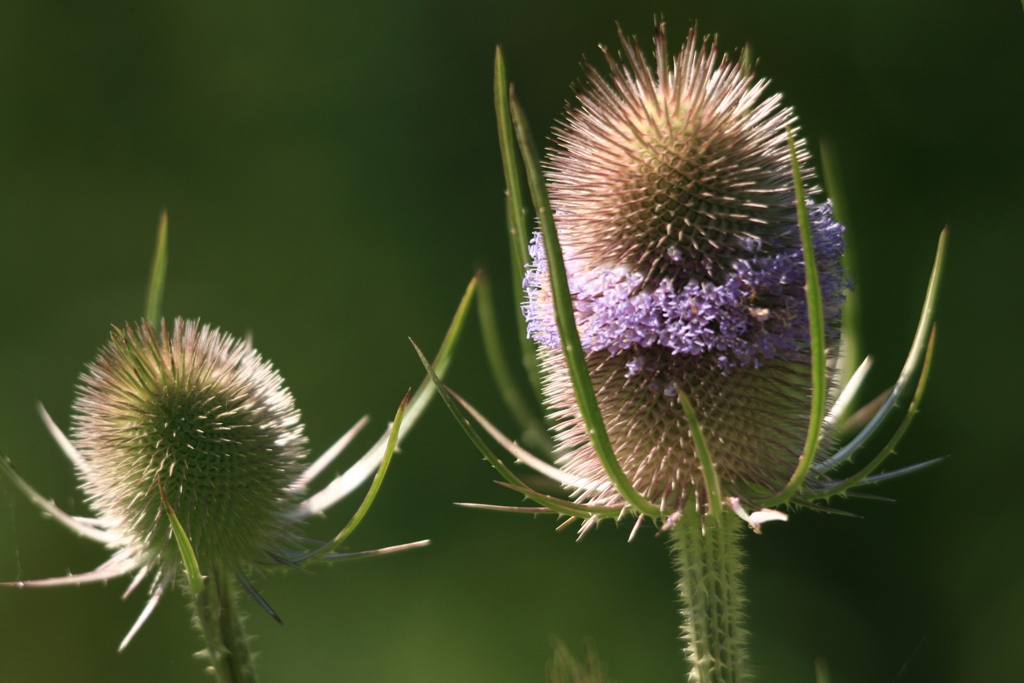
The best know Teasel is Wild Teasel or Dipsacus fullonum (by Matt Summers)
Most of the other native members of the Dipsacaceae or Teasel Family (From The Concise British Flora in Colour, Plate 43, by W. Keble Martin, 4th Edition 1978, designed and produced by George Rainbird Ltd.)

The Teasel family or Dipsacaceae came to my attention again now we are nearing Christmas time and I am hunting around for attractive seedheads to utilize in the yearly Christmas wreaths we are making.

There are many proud stems left in our Bee Garden at my allotment but I had to remove several which were dropping accross the pathways, which won’t go to waste!

I learned from Stace that this family has now moved to be family 140, situated in between the Valerianaceae before and the Griseliniaceae & Pittosporaceae after. These last two are both non-native families, originating from New Zealand. The next family is the Araliaceae or Ivy family, which is very familiar and a post about ivy and its uses can be found here.

More info can be found through links provided from online websites and pictures are by partner Matt Summers (M.S.), Mike Poulton of Ecorecord (M.P.) as well as from Wikipedia Common.

Above also this time half a page of Plate 43 in the Concise British Flora in Colour. This book was aquired by myself for the Kew Diploma Course in 1986 as one of the reference books to get. Still a beautifully illustrated book with 1486 species illustrated in 100 plates of all the flowering plant families of the B. I. The work was completed by W. Keble Martin in 60 years and first published in 1965.

The Teasel family only has 5 genera with few species on the B.I.. Most of the plants below are also found in the Birmingham and Black Country:

Contents

Dipsacus spp. or Teasels

Cephalaria gigantia or Giant Scabious

Knautia arvensis or Field Scabious

Succisa pratensis or Devil’s-bit Scabious

Scabiosa spp. or Scabiouses

Continue reading “The Teasel family and their Uses in the B.I.”