
The uses and misuses of Pennywort (Hydrocotylaceae)!

This week a post about a pennywort which is causing a problem to our waterways!

H. ranunculoides or Floating Pennywort on Stourbridge Extension Canal in September, 2008 (by Mike Poulton)

The Pennyworts are in their own family: The Hydrocotylaceae or Pennywort family according to Stace.

The family is in between Araliaceae (number 143) and Apiaceae (number 145).

Many authorities, including R.B.G. Kew and the R.H.S., however classify it in the Araliaceae!

But Stace writes: ‘Differs from Apiaceae and Araliaceae in its distinctive habit and presence of stipules, and from Apiaceae in its fruits without oil bodies (or carpophore); appears anomalous in either family’.

From Wikipedia: The genus Hydrocotyle has between 75 and 100 species that grow in tropical and temperate regions worldwide. A few species have entered the world of cultivated ornamental aquatics.

There are 4 species in the B.I. according to Stace and only one is native and the other three are introduced. The Floating Pennywort can cause a major problem in our waterways!

Pictures by Mike Poulton, Matt Summers and Wikipedia Commons. Links on Scientific Name from the (online) Plant Atlas 2020 and links on Common Name from Wikipedia or other source. See next page.

Information about habitats and uses also by various sources above and colour-coding is blue background for habitat, wildlife and interesting information. Green for uses and pink for medicinal uses or threat to our waterways.
Contents:

Hydrocotyle vulgaris or Marsh Pennywort

H. ranunculoides or Floating Pennywort

H. moschata or Hairy Pennywort

H. novae-zeelandiae or New Zealand Pennywort

Centella asiatica or Asiatic Pennywort and Gotu Kola

Continue reading “The uses and misuses of Pennywort (Hydrocotylaceae)!”

Mistletoe and its mysteries and uses!

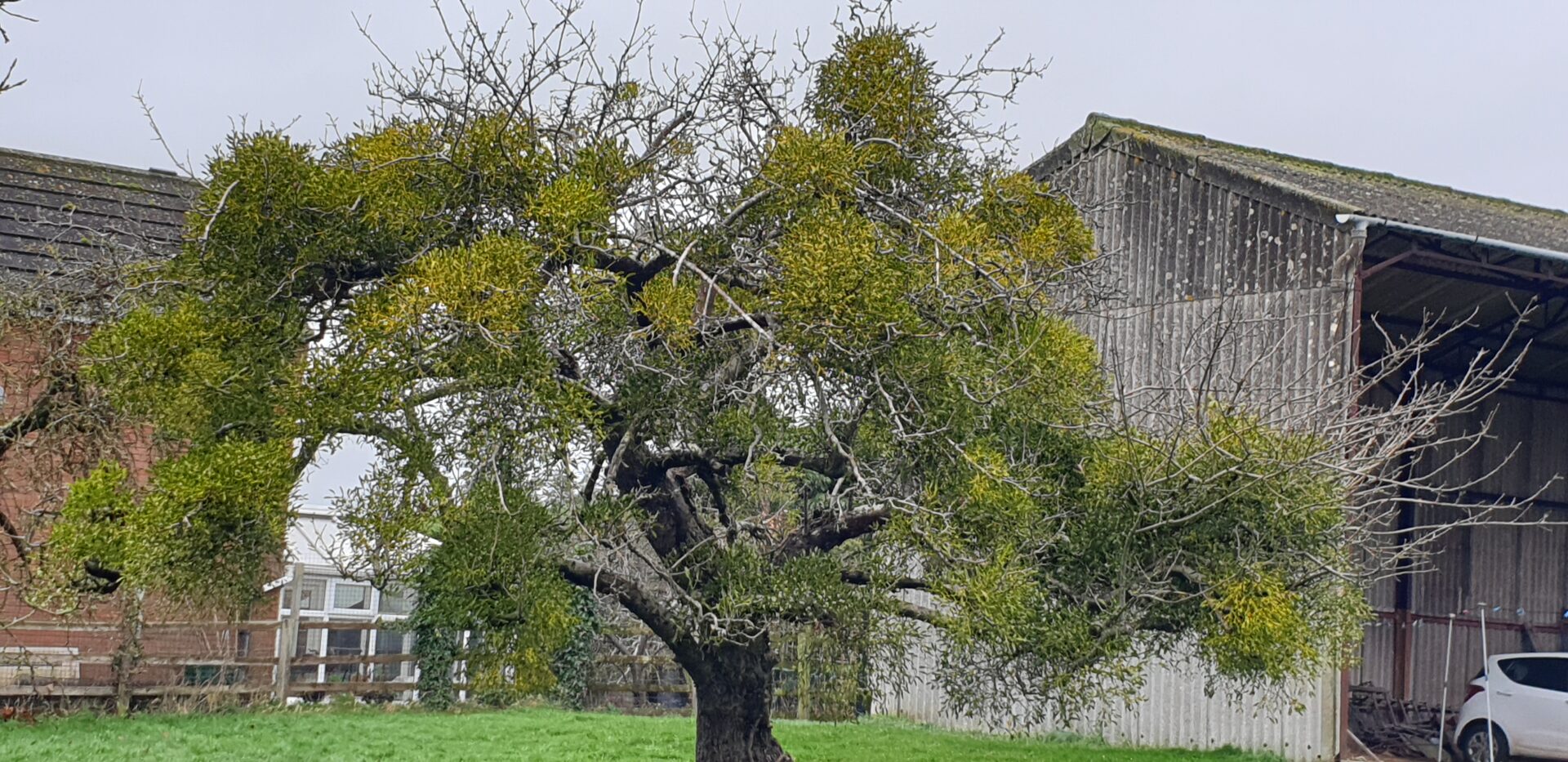
A ‘Mistletoe’ tree (picture by Mike Poulton)

A dear friend suggested writing about this obscure plant: the Mistletoe, after seeing an appletree absolutely loaded with it!

He sent me a picture and then sent some more after he asked the householder to take a few close-ups and then he got kindly invited into his garden.

There were three apple trees in the garden: two covered in both male and female plants of mistletoe. Neither appeared to be suffering in any way and according to the householder, both are producing fruit. The third tree however, which he said has never had any mistletoe growing on it, had recently died!!

That is a bit of a mystery as surely it should have been the other way round?

The mistletoe is semi-parasitic (or hemi?) but also has some other interesting facts which you can read on the next page.

The mistletoe belongs to the Santalaceae or Bastard-toadflax family and the only one other member growing in the B.I.: Thesium humifusum or Bastard-toadflax will also be discussed!

Information and links from various websites and the Medicinal Flora of Britain and Northwestern Europe by J. Barker. The information on habitat and the Scientific Name link is from the Plant Atlas 2020 online. An interesting information sheet about the biodiversity of mistletoe in the U.K. was also used with thanks. See for the entire article: www.mistletoe.org.uk.

Pictures with thanks from Mike Poulton, Ian Trueman as well as from Wikipedia Commons.

Contents

Santalaceae or Bastard-toadflax family

Thesium humifusum or Bastard-toadflax

Viscum album or Mistletoe

Biodiversity value of Mistletoe

So which birds do take mistletoe berries?

Mistletoe abundancy in B.I.

Culture, folklore and mythology

Other Uses

Continue reading “Mistletoe and its mysteries and uses!”