
In this post we’ll talk mostly about the medicinal uses I found in the family of Umbels or Apiaceae as they are now called.
We introduced this family with a post on one of the members, which is generally not liked amongst gardeners, called the Ground Elder which you can find here.
After this came an entire list of our native ones as well as the edible uses of our garden Umbels.
Most of the below information is of the brilliant book by Julian Barker: Medicinal Flora of Britain and Northwestern Europe
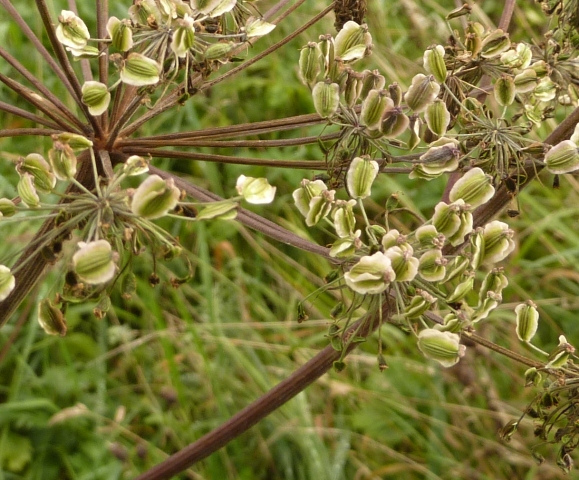
Pictures by Matt Summers unless stated in link. More pictures can be find in Wikipedia Commons and the Gallery of Plant Atlas Online link
Contents:
Eryngium maritimum or Sea-holly
Scandix pecten-veneris or Shepard’s Needle
Coriandrum sativum or Coriander
Pimpinella saxifraga or Burnet-saxifrage
Crithmum maritimum or Rock Samphire
Oenanthe crocata or Hemlock Water-dropwort
Foeniculum vulgare or Fennel
Conium maculatum or Poison Hemlock
Visnaga daucoides or Toothpick Plant
Apium graveolens or Wild Celery
Petroselinum crispum or Parsley
Carum carvi or Caraway
Ligusticum scoticum or Scots Lovage
Angelica sylvestris or Wild Angelica
A. archangelica or Garden Angelica