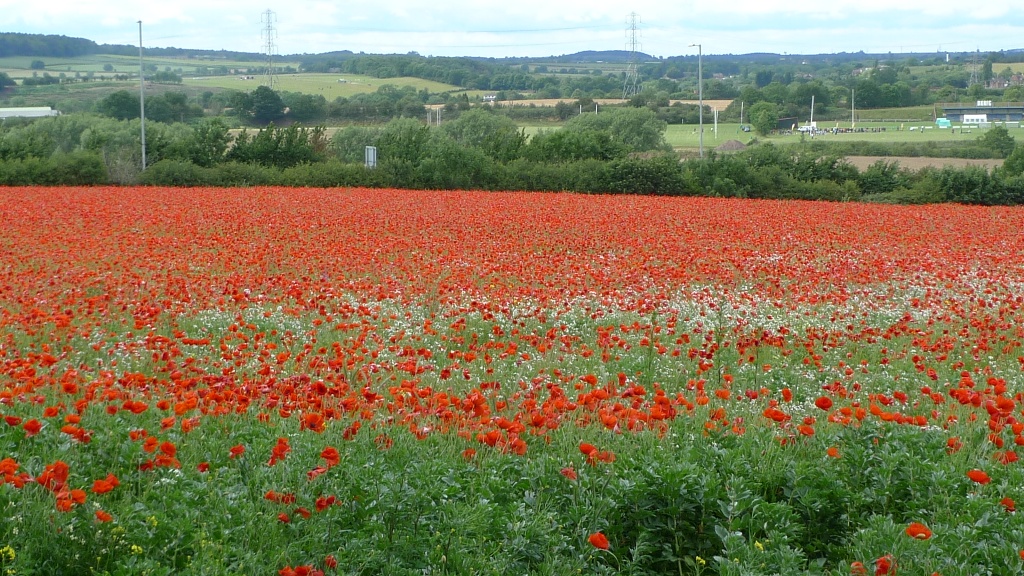
This week I’d like to talk about the Common Poppy or Papaver rhoeas, which is a symbol in Britain for the millions of casualties in the First World War and since.
Due to the extent of ground disturbance in warfare during World War I, red poppies flowered in between the trench lines and no man’s lands on the Western front. Poppies are a prominent feature of “In Flanders Fields” by Canadian Lieutenant Colonel John McCrae, one of the most frequently quoted English-language poems composed during the First World War. During the 20th century, the wearing of a poppy at and before Remembrance Day (sometimes known informally as Poppy Day) each year became an established custom in Britain. It is also used at some other dates in some countries, such as at appeals for Anzac Day in Australia and New Zealand.
This weekend we will have Remembrance Sunday here which is always the nearest Sunday to Armistice * Day (on 11-11). This was signed at 5 am on the 11th November, 1918 to be precise but all the fighting ceased at 11 am, so exactly 100 years ago!
*Armistice means: a Ceasefire or suspension of hostilities or also an agreement made by opposing sites to stop fighting for a certain time or a truce.
The Poppy belongs to the Papaveraceae or Poppy family which is number 34 in Stace.
Follow the links in the Contents page. Thanks to various websites for information on habitat, interesting facts and ‘uses’ for the poppies. Pictures with thanks from Mike Poulton, Matt Summers and Wikipedia Commons. Further pictures can be seen on the links provided. Such as in the gallery of Plant Atlas Online and in Wikipedia Commons. FBBC is added behind the name when the plant occurs in the Flora of Birmingham and the Black Country!
Contents:
The Poppy family or Papaveraceae
‘In Praise’ of the Poppy!
1) Papaver spp.
P. cambricum or Welsh Poppy
- P. dubium s.l.
- P. dubium or Long-headed Poppy FBBC
- P. lecoqii or Yellow-juiced Poppy FBBC
- P. rhoeas or Common Poppy FBBC2)
- P. setiferum or Oriental Poppy FBBC
2) Roemeria argemone or Prickly Poppy FBBC
- R. hispida or Rough Poppy
- R. hybrida or Violet Horned-poppy
* Edible uses: * Medicinal uses: * Other uses:
Papaver somniferum or Opium Poppy
3) Argemone mexicana or Mexican poppy
4) Glaucium flavum or Yellow Horned-poppy
- G. corniculatum or Red Horned-poppy FBBC