The Berberis/Barberry family or Berberidaceae and its uses!

Illustration of our only native Berberis vulgaris from: Otto Wilhelm Thomé: “Flora von Deutschland, Österreich und der Schweiz”, Gera (1885) Public Domain (Wikkipedia Commons).

The Berberidaceae is a small family in the British Isles. Since 2023 it has 2 genera instead of 3 and 15 species.

They are all attractive garden plants and have some other uses as you can find out in this post!

You can find a link on the Scientific name from the Plant Atlas Online which I use for the habitat and other interesting facts (with blue back-ground). Other websites are used for information on different uses, such as Wikipedia, which I have also used for most of the pictures (in Wikipedia Commons).

Pictures of Epimedium spp. by Mike Poulton with thanks! Information about where the plants originate from and parts of the world where they have been introduced, comes from RBG Kew; Plants of the World Online as well as the latest correct scientific name. Please use the link for a worldmap!

Discovered a good website from the Botanical Society of the British Isles for general information and distribution maps. See BSBI website: https://bsbi.org/plants/berberidaceae

Contents:

Berberidaceae

Berberis spp.

Berberis and Wildlife benefits

Berberis vulgaris or Barberry FBBC

  • B. aggregata or Clustered Barberry
  • B. microphylla (syn. B. buxifolia) or Box-leaved Barberry
  • B. darwinii or Darwin’s Barberry FBBC
  • B. × ⁠stenophylla (Berberis darwinii × empetrifolia) or Hedge Barberry FBBC
  • B. gagnepainii or Gagnepain’s Barberry FBBC
  • B. glaucocarpa or Great Barberry
  • B. julianae or Chinese Barberry FBBC
  • B. thunbergii or Thunberg’s Barberry FBBC
  • B. wilsoniae or Mrs Wilson’s Barberry FBBC
  • B. x frikartii (Berberis candidula x B. verruculosa) hybrid found in FBBC

more Berberis formerly known as Mahonia spp. or Oregon-grape

Berberis aquifolium or Oregon-grape

  • B. × ⁠decumbens or Newmarket Oregon-grape
  • Berberis japonica (synonym Mahonia japonica) was recorded in the FBBC

Epimedium spp.

Epimedium alpinum or Barren-wort

Continue reading “The Berberis/Barberry family or Berberidaceae and its uses!”

The Wonderful Weed Weekly Blog

To talk kindly about the weeds in my weekly blog, we first need to identify those weeds of which many people despise…!

I found the RHS website very useful please see here as well as how to tackle them.

I don’t really want to repeat what this brilliant website says, as my weekly blog wants to highlight the positive things about those weeds!

Weeds are also just being ‘themselves’; one of the many native plants of these Isles! They grow in soil and habitat in which they naturally like to grow in and often we are actually helping them greatly by providing a pleasant environment to thrive even more!

Continue reading “The Wonderful Weed Weekly Blog”

LOVE YOUR WEEDS!

In the last blog I explained some scientific terms which you will find throughout my blogs. This time I explain a little more why I want to start a blog all about Ethnobotany and our native plants..

The more I work with all kinds of plants, in my daily life and work, the more I appreciate them, and this even includes ‘WEEDS’, or our native plants as I prefer to call them; or even wild flowers as many are pretty as well as useful…. Or ‘PRETTY USEFUL’!!

Crambe maritima or Sea kale looking stunning in its native habitat!


Continue reading “LOVE YOUR WEEDS!”

‘Heemtuin’ or Wildlife Garden in Nieuwkoop, the Netherlands

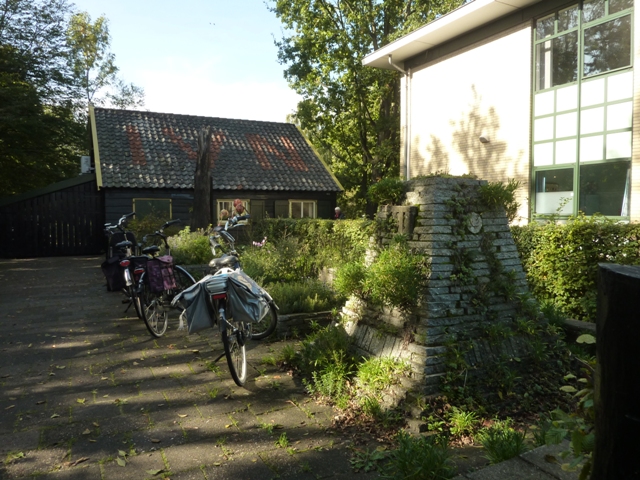
Entrance to the ‘Heemtuin Nieuwkoop’ with some typical Dutch bicycles parked up!

Contents:

What is a Heemtuin?

History of the Heemtuin in the Netherlands

Willows and other features in Heemtuin Nieuwkoop

The plants and habitats re-created at Heemtuin Nieuwkoop

How to create a Heemtuin or Wildlife Garden

Growing and collecting herbs around Nieuwkoop in the last Century:

From an original article by Jan Vork from ‘Heemtuin Nieuwkoop’ (much edited and translated by Y. van der Meer)

With thanks from Wikipedia for information about ‘Heemtuin’

Continue reading “‘Heemtuin’ or Wildlife Garden in Nieuwkoop, the Netherlands”