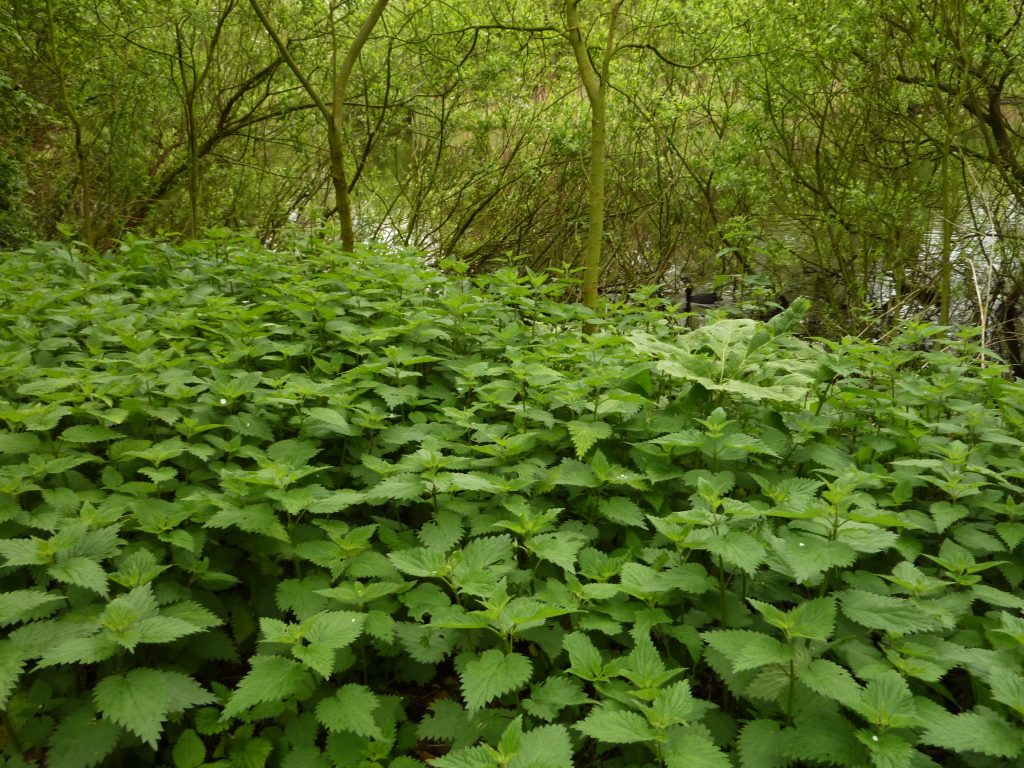
Nettle tops can be used as long as they look like this!
Foraging has been done for centuries but is hopefully getting a bit of a revival!
People like to have a connection with nature again, especially with their daily exercise in lockdown situation and what a better way to do this then to go out there and forage!
So today I would like to introduce you to a document received from fellow botanist Mike Poulton, who used to do training sessions on foraging for wild plants. It is a good, quick reference to the more useful wild plants for food!
The edible parts of the native plants are listed with their common names and categorized in 5 sections: leaves and shoots (1), herbs (2), edible flowers (3), fruits and seeds (4) and roots (5).
This family of the Lamiacea or the Deadnettle family (family 128 in Stace) is one of my favourites for the flowers and herbs it gives us. The insects and in particular the bees also love it for the nectar the flower provides.
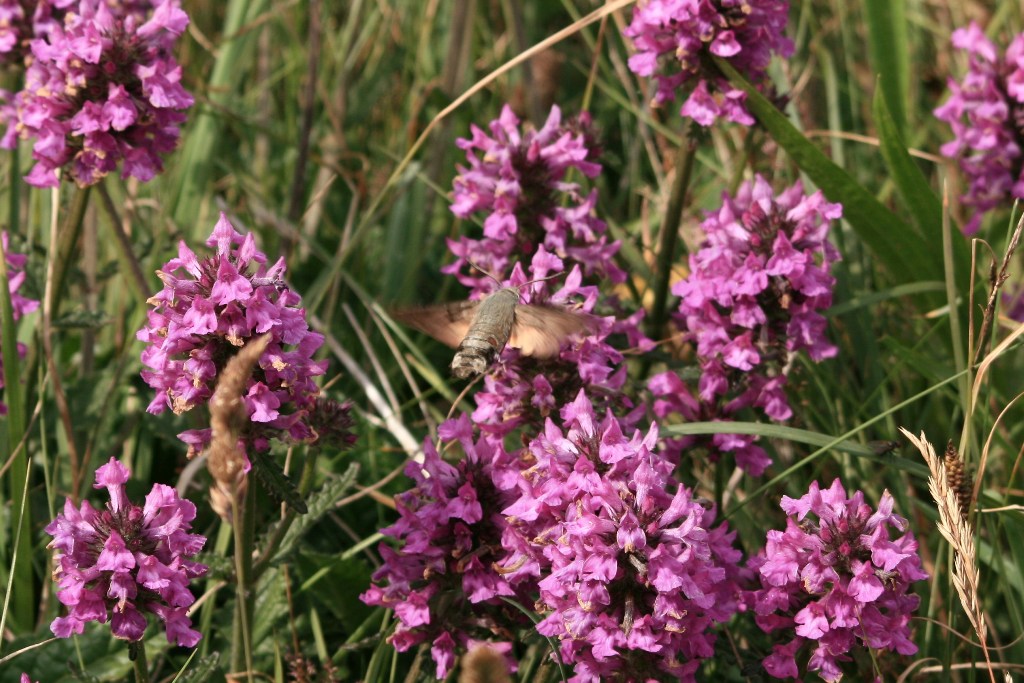
Betony on the Cornish coast attracting Hummingbird moth!
It is a large family in the B.I. with 27 genera. To identify to genus level, Stace has split them into 8 groups. Not all genera are native but may be garden escapes. As it is too large for one week I will spread this family into 3 separate blogs and weeks.
See Part 2 here: https://wonderfulweedweekly.co.uk/the-lamiaceae-or-dead-nettle-family-part-2/ for the following species:
Nepeta cataria or Cat-mint
Prunella spp or Selfheals
Glechoma hederacea or Ground-ivy
Clinopodium spp. or Calamints
Origanum vulgare or Wild Marjoram
Thymus spp or Thymes
See Part 3 here: https://wonderfulweedweekly.co.uk/the-lamiaceae-or-dead-nettle-family-part-3/ for the following species:
Lycopus europaeus or Gypsywort
Mentha or the Mints
Salvia or Sage
To make life even easier for identifying the plants the taxonomists also have sub divided this large family world-wide into 4 Subfamilies, where again the genera in those groups have similar characters.
On the next page you can find the uses for all the members of the first 2 Subfamilies:
Blue background for general interest. Green background for general uses and wildlife. Pink background for medicinal uses. Pictures by Matt Summers, Mike Poulton or Rudi Pilsel unless otherwise stated. This post is updated with jumplinks. Also description info from Plant Atlas Online and see their gallery for pictures as well as in Wikipedia commons found on their website. Also added FBBC behind the names in ‘Contents’ if plants occur in the Flora of Birmingham and the Black Country.
Uses are mainly medicinal so the following information comes mostly from the very useful book by Julian Barker: The Medicinal Flora of Britain and Northwestern Europe. For clarity I will use the order as above in Stace rather than the order in this book. There are many difficult medical terms for which links are provided if you wish to know more about this.